
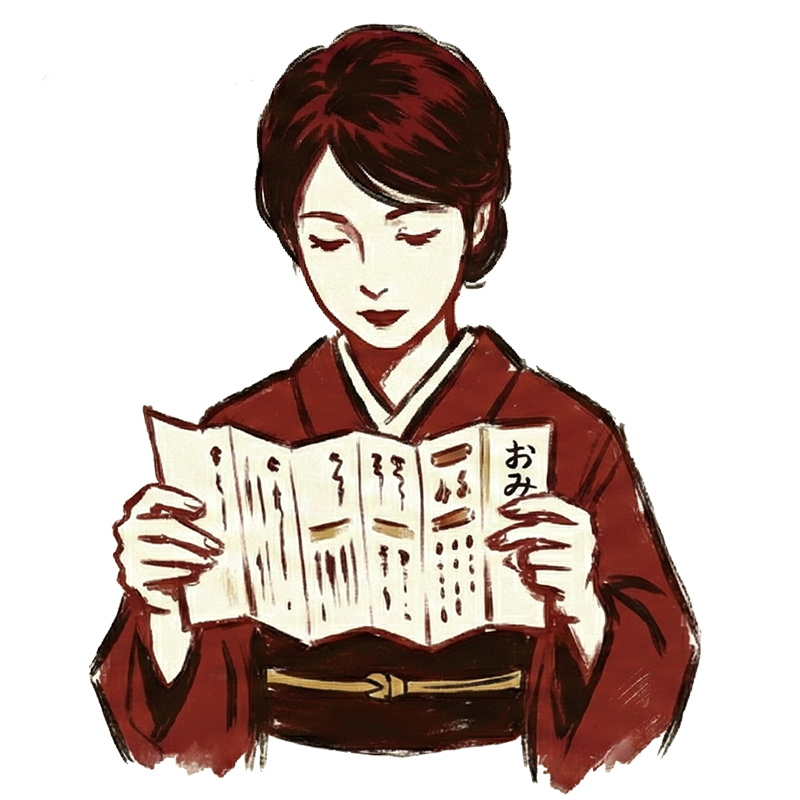
Have you ever been unsure how to interpret what is written in the “Studies” section of your omikuji? The closer you are to an exam or certification test, the more weight those words carry. The key takeaway is this: the “Studies” section of omikuji does not predict pass or fail — it is a “guide” for your approach to studying. This article explains how to read the studies section and how to apply it to entrance exams and professional certifications.
御要旨
- The “Studies” Section Is Not a Pass/Fail Prediction but a Guide for Your Study Approach
- Common Phrases in the Studies Section and How to Interpret Them
- Reading “Studies” and “Desires” Together Reveals Your Direction
- Exam Students Have No Reason to Feel Discouraged by the “Studies” Section
- Omikuji at Shrines Famous for the God of Learning Have Unique Characteristics
- For Exam Season, Drawing Omikuji Before Filing Applications Is Best
- Omikuji and Exam Prayer Charms Serve Different Roles
- The “Studies” Section Also Applies to Certifications, Job Hunting, and Promotion Exams
- Three Actions to Maximize Your Exam Prayer Omikuji
- Omikuji Habits to Avoid Before Exams
- In Closing
The “Studies” Section Is Not a Pass/Fail Prediction but a Guide for Your Study Approach
The “Studies” item on omikuji does not make definitive statements like “You will pass” or “You will fail.” The Association of Shinto Shrines (Jinja Honcho) states that omikuji content should serve as “a guide for one’s future conduct” (Source: Jinja Honcho). In other words, the studies section provides advice on how to approach your studies, not a forecast of your exam results.
Omikuji is like a weather forecast — what matters is how you act after learning the result. If it says “your efforts will be rewarded,” maintain your study routine. If it says “do not rush,” prioritize building a solid foundation.
Common Phrases in the Studies Section and How to Interpret Them
The studies section contains a mix of modern language and classical expressions. Since the wording varies by shrine, here is a comprehensive list of representative phrases.
Modern Language Phrases in the Studies Section
Here are relatively easy-to-read modern phrases with their interpretations and practical study applications.
| Common Phrase | Interpretation | Practical Action |
|---|---|---|
| Doryoku sureba kanau (Effort will be rewarded) | Your current approach is correct. Consistency is key. | Continue your study plan steadily without changing course. |
| Anshin shite hageme (Study with confidence) | Do not let anxiety distract you — focus. | Maintain your own pace without being swayed by others’ results. |
| Yudan suru na (Do not be complacent) | Push further without resting on your laurels. | Strengthen review of weak subjects and past exam papers. |
| Isogazu aseruazu (Do not rush or panic) | Cramming will backfire. | Ensure adequate sleep and rest. Prioritize mastering fundamentals. |
| Hito no tasuke wo kariye (Seek help from others) | Do not insist on studying alone — use others’ strengths. | Ask teachers or tutors questions. Study and teach with peers. |
| Jiki wo mate (Wait for the right time) | Do not fixate on immediate results — keep building. | Do not be discouraged by mock exam scores. Trust in your potential for growth before the real test. |
Classical and Literary Expressions — How to Reinterpret Them
Prestigious shrines and traditional omikuji often use classical or literary language. Since many people find these confusing, here is a reference table translating them into modern Japanese.
| Classical Expression | Modern Meaning | How to Apply to Studying |
|---|---|---|
| Kangaku okotaru koto nakare (Do not neglect your studies) | You must not slack off in your academic pursuits. | Maintain your daily study habit without breaking the rhythm. |
| Sawari nashi (No obstacles) | Everything is going smoothly. | Trust your current study method and keep going. |
| Sawari ari (Obstacles present) | Something is getting in the way. | Review your study environment and schedule for issues. |
| Kanaigatashi (Difficult to achieve) | Hard to reach your goal in the current state. | Time to fundamentally reassess your approach — consider switching from self-study to a tutoring school. |
| Shoujin subeshi (You must make greater effort) | More effort is needed. | Increase study volume or focus intensively on weak areas. |
| Osokaredo jouju su (Slow but successful) | It takes time, but you will ultimately succeed. | Do not react to short-term results. Commit to a long-term plan. |
| Kokoro shizuka ni shite manabe (Study with a calm heart) | Approach your studies with a settled mind. | Reduce anxiety and create an environment where you can focus. |
| Nozomi takaku shite oyobazu (Ambitions too high to reach) | Your goals may be set too high. | Reconsider your target school or set incremental goals instead. |
What all these phrases share is a focus on the “process” rather than the “result.” The studies section of omikuji is best used as an opportunity to reflect on your approach to studying.
Reading “Studies” and “Desires” Together Reveals Your Direction
In addition to “Studies,” omikuji includes sections like “Desires,” “Awaited Person,” and “Lost Item.” For examinees and those preparing for certification tests, reading “Studies” and “Desires” together provides a more specific guide.
While “Studies” shows your approach to learning, “Desires” shows the likelihood of achieving your goal. For example, if “Studies” says “effort will be rewarded” and “Desires” says “things will go as you wish,” it means you should trust your current direction and push forward. Conversely, if “Studies” says “make greater effort” and “Desires” says “curb high expectations,” it is a sign to realistically reassess your goals.
Rather than making judgments from a single section, reading multiple sections together makes the omikuji’s advice more three-dimensional. (Think of the individual sections not as separate pieces of information, but as parts of one unified message.)
Exam Students Have No Reason to Feel Discouraged by the “Studies” Section
It is understandable to feel anxious when the “Studies” section contains harsh words during exam season. However, omikuji does not determine exam results.
Omikuji offers advice about your “current state” — it is not a confirmed prediction of the future. Even if it says “obstacles present” or “difficult to achieve,” that is a warning to “review your current methods.” (Being devastated by a bad omikuji result is like losing hope over a “needs attention” flag on a health checkup. What matters is what you do next.)
Even Dai-kichi Cannot Save a Complacent Student
Conversely, even if the “Studies” section has positive content, that alone will not guarantee you pass. Becoming complacent after drawing dai-kichi (great luck) is the same as thinking “I will pass even without studying.” Exam results are determined by daily study quantity and quality, health management, and focus on test day. Omikuji is a tool for adjusting your mindset — it is no substitute for effort.
Omikuji at Shrines Famous for the God of Learning Have Unique Characteristics
During exam season, many students draw omikuji at Tenmangu shrines, which enshrine Sugawara no Michizane — the god of learning. Michizane displayed talent from an early age while never neglecting hard work, passing numerous examinations to become the foremost scholar and statesman of his era (Source: Dazaifu Tenmangu). The key point is that Michizane became a deity because he achieved academic greatness through relentless effort. When drawing omikuji at a Tenmangu shrine, the appropriate attitude is not “please let me pass” but “I confirm my resolve to study hard, like Michizane.”
Dazaifu Tenmangu’s Omikuji Contains No Bad Fortune
At the nationally famous Dazaifu Tenmangu, omikuji do not include “kyo” (bad fortune). The rankings are dai-kichi, kichi, chu-kichi, sho-kichi, and sue-kichi — five tiers, designed out of consideration for examinees’ feelings. However, the absence of bad fortune does not mean the content is lenient. Strict advice such as “continue to strive” and “do not neglect the basics” is also included. Reading the written content carefully, rather than focusing only on the rank, is what truly matters.
Kitano Tenmangu Features Poetry-style Omikuji that Convey Michizane’s Teachings
Kitano Tenmangu in Kyoto is, alongside Dazaifu Tenmangu, a central shrine of Tenjin worship. Kitano Tenmangu’s omikuji feature accompanying waka poetry that reflects Michizane’s life and teachings. Reading not just the studies section but also the meaning of the poem provides deeper insight. (The waka on omikuji is not a bonus — it is actually the core of the omikuji.)
Yushima Tenjin Is the Most-visited Tenmangu for Kanto-area Students
Yushima Tenjin (Yushima Tenmangu) in Tokyo is the go-to shrine for exam prayers among Kanto-area students. During exam season, the shrine sometimes offers omikuji with content specifically tailored to academic fortune, and the grounds are filled with votive tablets (ema) inscribed with prayers for success.
For Exam Season, Drawing Omikuji Before Filing Applications Is Best
While there is no strict rule on when to draw omikuji, there is an optimal timing for examinees.
The recommended time is before filing your applications. This gives you enough time to adjust your study strategy after reading the studies section, making it easier to translate the advice into actual changes. Drawing omikuji the day before or on the day of the exam is best avoided. If the content is negative, it risks a psychological impact that could undermine all your previous effort.
Etiquette for Shrine Visits and Drawing Omikuji for Exam Prayers
When drawing omikuji for exam prayers, observing basic worship etiquette is a prerequisite.
- Purify your hands and mouth at the temizu (water basin) before worshipping at the main hall.
- When praying, the proper form is to pledge “I will do my very best” rather than requesting “please let me pass.”
- Draw your omikuji after completing your worship. Drawing omikuji without paying respects first goes against proper etiquette.
- Draw only once. Do not keep drawing until you get a favorable result.
- After drawing, read the content carefully and take the advice in the studies section to heart.
Praying for exam success is not a “request” to the deity, but an act of declaring your resolve before the divine. When you view the omikuji as advice in response to your resolve, the message naturally resonates more deeply.
Omikuji and Exam Prayer Charms Serve Different Roles
Two items that examinees commonly acquire are omikuji and exam prayer charms (omamori). Though they seem similar, they serve different functions.
| Item | Omikuji | Exam Prayer Charm |
|---|---|---|
| Role | Advice and guidance for your current situation | A vessel of divine protection to carry with you |
| How to use | Read the content and reflect it in your actions | Keep it close to you at all times |
| How it works | Becomes effective when you act on the advice | Its very presence provides emotional support |
| Duration (approximate) | Guidance for the day drawn (you may draw daily) | Until the wish is fulfilled, or for one year |
In short, omikuji is a “tool for thinking” and a charm is a “tool for reassurance.” There is no need to choose one or the other. Using omikuji to confirm your study direction and carrying a charm for emotional support is a perfectly logical combination.
The “Studies” Section Also Applies to Certifications, Job Hunting, and Promotion Exams
The “Studies” section of omikuji applies not only to school entrance exams but equally to professional certifications pursued by working adults. In fact, because working adults face the challenge of balancing work and study, an omikuji’s single phrase can often prompt a meaningful review of their approach.
“Do Not Rush” Is Especially Relevant for Long-term Certification Study
For certifications that require more than a year of study, such as the bar exam or CPA exam, impatience is the biggest enemy. If your omikuji says “do not rush,” take it as advice to “accumulate progress steadily day by day rather than cramming in a short period.”
What successful certification holders have in common is not exceptional talent but “whether they could sustain the right method consistently.” The advice in the studies section can help calibrate your mindset for each day of studying. (Drawing omikuji as a morning routine and reading the studies section before starting to study is a perfectly logical habit.)
“Seek Help from Others” Is a Warning About the Limits of Self-study
Many people study for certifications independently, but if your omikuji says “seek help from others,” it may be time to consider a correspondence course or preparatory school. Self-study saves money but has the weakness of making it hard to notice when your direction is off. Sometimes a single phrase from the omikuji can bring that blind spot to light.
For Job Hunting and Promotion Exams, the Studies Section Questions the Quality of Your Preparation
Job application essays, interview preparation, promotion exam papers, and written tests all connect to “Studies” in a broad sense. If the studies section says “study with confidence,” it is a boost to face your interview with assurance. If it says “make greater effort,” it is a sign that your company research or self-analysis needs deeper work.
The key is not to limit “Studies” to the narrow definition of entrance exam preparation. When read as advice for all endeavors that involve acquiring knowledge and honing abilities, the studies section becomes a guide for every stage of life.
Three Actions to Maximize Your Exam Prayer Omikuji
Many examinees simply draw their omikuji and move on. To put the studies section to practical use, try the following actions.
Copy the Studies Section and Post It at Your Study Desk
Write the advice from the studies section on a sticky note or memo and place it on your desk or in your notebook. Short phrases like “do not be complacent” or “persist steadily” serve as a reminder every time you see them while studying. The true value of omikuji is realized when you bring it home and revisit the message.
Use the Omikuji Content to Fine-tune Your Study Plan
If it says “do not rush,” review a cramming-heavy plan. If it says “seek help from others,” create a list of questions and bring them to your teacher. If it says “effort will be rewarded,” trust your current plan and continue. By using the omikuji’s advice for small adjustments to your study plan, abstract messages become concrete actions.
Build the Habit of Focusing on Content Rather Than Rank
Reacting only to whether you drew dai-kichi or kyo means you are only utilizing half of your omikuji. What you should truly read are the individual sections — studies, health, awaited person, and so on, where the specific advice holds real value. The rank is a matter of mood; the individual sections are a matter of action.
Omikuji Habits to Avoid Before Exams
When using omikuji during exam preparation, there are certain practices to avoid.
- Drawing repeatedly until you get a good result — This is the same as asking a question over and over until you hear the answer you like, which defeats the purpose of omikuji.
- Using a bad result as a reason to change your target school — Omikuji is not a tool for making admissions decisions. Use mock exam scores and past paper performance instead.
- Comparing ranks with friends and getting emotional — Omikuji messages are personal advice. They are not meant for comparison with others.
- Using a good result as grounds for thinking “I do not need to study” — Even if you draw dai-kichi, skipping studying will lead to failure. This is a fact.
Omikuji is a tool for adjusting your mindset, not a basis for making decisions. Exam outcomes are ultimately determined by the student’s own effort and preparation.
In Closing
The “Studies” section of omikuji is not a fortune-telling prediction of pass or fail, but a guide for how to approach your studies. If it says “effort will be rewarded,” use it as encouragement to keep going. If it says “do not be complacent,” use it as a trigger to tighten your focus. Reading it alongside the “Desires” section clarifies your direction further, and once you understand the meaning of classical expressions, even archaic phrases become precise advice. Whether you are an examinee, a working adult preparing for certifications, or a job seeker, try making the studies section a small daily habit that supports your learning.
Omikuji Sando delivers your personal fortune based on your date of birth — free every day. You can check all sections including the studies section, with a full 12-tier fortune reading. Why not start each morning of your exam preparation or study period with omikuji as your daily guide?
