
Architectural & Decorative Features
Katsuogi
Horizontal log-shaped ornaments placed along the roof ridge, named for their resemblance to dried bonito.
Katsuogi are cylindrical wooden ornaments placed horizontally along the roof ridge of a shrine, complementing the chigi as a hallmark of Shinto architecture. Their name comes from their resemblance to katsuobushi (dried bonito). Folk belief associates odd numbers (3, 5, 7) with male deities and even numbers (4, 6, 8) with female deities.
As with chigi, the gender correlation has notable exceptions — Ise Inner Shrine has 10 katsuogi (even = female, matching) while the Outer Shrine has 9 (odd = male, contradicting, as the deity is female). Originally practical elements for weighing down thatched roofing materials, katsuogi evolved into symbolic architectural features. The silhouette of chigi and katsuogi together is universally recognized by Japanese people as meaning "shrine."
-
Shide
White zigzag paper streamers attached to shimenawa ropes and tamagushi offerings, symbolizing purity and the sacred.
-
Chigi
V-shaped wooden beams projecting from the roof ridge of a shrine, a distinctive feature of Shinto architecture.
-
Katsuogi
Horizontal log-shaped ornaments placed along the roof ridge, named for their resemblance to dried bonito.
-
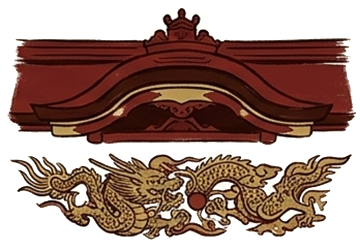
Karahafu
A graceful curved gable used as a decorative element signifying the highest architectural prestige in Japanese buildings.
-
Hengaku
A horizontal plaque hung above a gate or entrance, bearing the name of the shrine or temple in calligraphy.
-
Kairō
A covered walkway encircling the main buildings of a shrine or temple, framing the sacred space.
-
Shinmon
The heraldic crest representing a shrine, analogous to a family crest, found on buildings, lanterns, and sacred objects.
