
Before Visiting & On the Way
Monzenmachi
A commercial district that developed along the approach to a shrine or temple, serving pilgrims and visitors.
Monzenmachi are towns that grew organically around the approach paths of major shrines and temples, lined with inns, teahouses, and souvenir shops catering to pilgrims. The presence of "monzen" in local place names across Japan is evidence of a historical religious center in the area.
Famous examples include the temple town of Nagano's Zenkōji and Ise Grand Shrine's "Oharai-machi" and "Okage Yokochō" districts. Okage Yokochō recreates the atmosphere of an Edo-period streetscape with beloved local specialties like akafuku mochi and Ise udon. These temple towns represent an early Japanese model of community development where faith, commerce, and tourism naturally merged — arguably a precursor to the modern shopping district.
-
Sanpai
Visiting a shrine or temple to pray and pay respects to the deities.
-
Sankei
Making a journey to visit a shrine or temple for worship, with emphasis on the travel itself.
-
Sandō
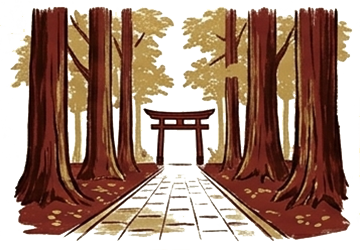
The pathway leading to a shrine or temple, designed to transition visitors from the secular to the sacred.
-
Omote-sandō
The main and most prestigious approach path to a shrine or temple.
-
Seichū
The center of the approach path, considered the pathway reserved for the gods.
-
Shagōhyō
A stone pillar inscribed with the shrine's name, standing near the entrance of the grounds.
-
Keidai
The sacred grounds within the boundary of a shrine or temple.
-
Gejō / Geba
A stone marker instructing visitors to dismount from horses or vehicles before proceeding to worship.
-
Monzenmachi
A commercial district that developed along the approach to a shrine or temple, serving pilgrims and visitors.
