
Places of Worship
Suzu
A large bell hung at the front of the worship hall, rung by visitors to announce their presence to the gods.
The large bell suspended before the haiden is called a “hontsubo-suzu” and is rung by shaking the bell rope. The clear, bright sound is believed to purify the space, ward off evil, and alert the deity to the worshipper's arrival.
Bells hold deep significance in Shinto — the “kagura-suzu” used by shrine maidens in sacred dances traces back to the mythological dance of Ame-no-Uzume before the cave of Amaterasu. There is no strict rule about whether to ring the bell before or after placing your offering, though ringing first and then performing the two-bows-two-claps-one-bow ritual is the most common practice.
-
Haiden
The outer hall of a shrine where visitors offer prayers, typically featuring a bell and offering box.
-
Honden
The innermost sacred building of a shrine where the divine object (goshintai) is enshrined.
-
Heiden
The hall between the haiden and honden where offerings are presented to the deity.
-
Hondō
The central building of a Buddhist temple where the principal image of Buddha is enshrined.
-
Gohonzon
The principal object of worship in a Buddhist temple — a statue, painting, or mandala of Buddha.
-
Saisen
A monetary offering tossed into the offering box as a token of gratitude to the gods or Buddha.
-
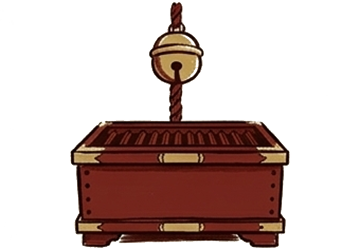
Saisenbako
A sturdy wooden box placed before the worship hall for visitors to deposit monetary offerings.
-
Suzu
A large bell hung at the front of the worship hall, rung by visitors to announce their presence to the gods.
-
Suzuo
The thick rope or cord used to ring the shrine bell before prayer.
-
Waniguchi
A flat, disc-shaped metal gong hung at temple entrances — the Buddhist equivalent of a shrine bell.
-
Nihai-Nihakushu-Ichihai
The standard Shinto worship sequence: two deep bows, two handclaps, and one final bow.
-
Kashiwade
The practice of clapping hands together during shrine worship to show reverence and announce one's presence.
-
Gasshō
The Buddhist prayer posture of pressing both palms together in front of the chest.
-
Shōkō
The ritual of burning incense at a temple or funeral to honor Buddha or the deceased.
-
Senkō
Thin sticks of incense offered before Buddhist altars to purify the space and nourish the spirit.
-
Kōro
A large incense vessel at temple entrances where visitors waft smoke over themselves for purification.
