
Before Visiting & On the Way
Omote-sandō
The main and most prestigious approach path to a shrine or temple.
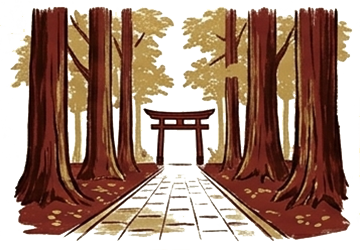
The omote-sandō is the "front entrance" of a shrine or temple and is considered the most formal approach path. Many shrines have multiple paths, with the main one called omote-sandō and secondary ones called ura-sandō (rear approach) or kita-sandō (north approach). The omote-sandō is typically the widest and most elaborately maintained.
Tokyo's famous Omotesandō avenue was originally built in 1920 as the approach to Meiji Jingu shrine. What began as a quiet zelkova-lined path to a shrine has transformed into one of the world's most fashionable shopping streets — a fascinating example of how sacred and secular spaces can evolve and coexist in Japanese culture.
-
Sanpai
Visiting a shrine or temple to pray and pay respects to the deities.
-
Sankei
Making a journey to visit a shrine or temple for worship, with emphasis on the travel itself.
-
Sandō
The pathway leading to a shrine or temple, designed to transition visitors from the secular to the sacred.
-
Omote-sandō
The main and most prestigious approach path to a shrine or temple.
-
Seichū
The center of the approach path, considered the pathway reserved for the gods.
-
Shagōhyō
A stone pillar inscribed with the shrine's name, standing near the entrance of the grounds.
-
Keidai
The sacred grounds within the boundary of a shrine or temple.
-
Gejō / Geba
A stone marker instructing visitors to dismount from horses or vehicles before proceeding to worship.
-
Monzenmachi
A commercial district that developed along the approach to a shrine or temple, serving pilgrims and visitors.
