
Rituals & Annual Events
Chinowa
A large ring woven from miscanthus grass, set up during Ōharae for visitors to walk through for purification.
The chinowa is a large ring woven from kaya (miscanthus grass), typically several meters in diameter, erected along the shrine approach during Ōharae. Visitors pass through it in a figure-eight pattern — left, right, left — to cleanse away six months of accumulated impurities. The traditional chant while passing through is: "Minazuki no nagoshi no harae suru hito wa, chitose no inochi noburu to iu nari."
The chinowa tradition originates from the legend of Somin Shōrai — a humble man who showed hospitality to the wandering god Susanoo and received a grass ring to ward off plague. This tale gave rise to the custom of displaying "Somin Shōrai shison nari" protective amulets at doorways in various regions.
-
Reitaisai
The most important annual festival of a shrine, held on a date significant to the enshrined deity.
-
Hatsumōde
The tradition of making the first shrine or temple visit of the New Year to pray for blessings.
-
Setsubun
The eve of spring celebrated by throwing beans to drive out evil and invite good fortune.
-
Shichi-Go-San
A rite of passage celebrating children's growth at ages 3, 5, and 7 with a shrine visit.
-
Ōharae
A biannual purification ceremony (June 30 and December 31) cleansing the accumulated sins and impurities of six months.
-
Chinowa
A large ring woven from miscanthus grass, set up during Ōharae for visitors to walk through for purification.
-
Yakuyoke
A prayer ritual performed during unlucky years to ward off misfortune and protect against disaster.
-
Jichinsai
A Shinto ritual performed before construction to appease the land deity and pray for building safety.
-
Oharai
A ritual of cleansing sin and impurity using prayer words and the waving of a purification wand.
-
Kitō
A formal prayer ceremony conducted by a priest to petition the gods or Buddha for specific blessings.
-
Norito
Sacred words spoken aloud by Shinto priests to communicate with the gods during ceremonies.
-
Tamagushi Hōten
The Shinto ritual of offering a sakaki branch adorned with paper streamers to the gods — comparable to Buddhist incense offering.
-
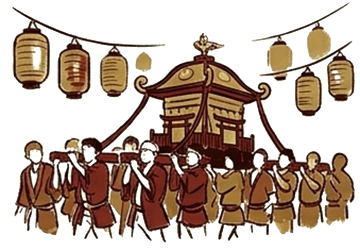
Mikoshi
A sacred palanquin carried through the streets during festivals, believed to transport the deity among the people.
-
Obon
A Buddhist observance honoring ancestral spirits who return home during mid-August.
-
Ohyakudo-mairi
An intense devotional practice of walking 100 round trips between a stone marker and the shrine while praying.
