
Architectural & Decorative Features
Shide
White zigzag paper streamers attached to shimenawa ropes and tamagushi offerings, symbolizing purity and the sacred.
Shide are white paper streamers cut into a distinctive zigzag pattern and attached to shimenawa (sacred ropes), tamagushi (ritual offering branches), and gohei (wooden wands used in purification rites). The zigzag shape is said to represent lightning, which connects to the ancient Japanese belief that thunder makes rice grow — in fact, the Japanese word for lightning, "inazuma" (稲妻), literally means "wife of rice."
There are three major schools of shide folding: the Yoshida, Shirakawa, and Ise styles, each differing in the direction of folds and number of steps. The specific style used varies by shrine, and close observation of the shide can reveal which tradition a shrine follows. Shide are typically handmade from washi (traditional Japanese paper), and in some shrines, the priests themselves fold each one.
Shide hung on the shimenawa of a household kamidana (home shrine) are also considered markers for the New Year deity. Of all Shinto decorative elements, shide are perhaps the most commonly encountered in everyday Japanese life — from New Year's shimekazari door decorations to the grand shimenawa of Izumo Taisha.
-
Shide
White zigzag paper streamers attached to shimenawa ropes and tamagushi offerings, symbolizing purity and the sacred.
-
Chigi
V-shaped wooden beams projecting from the roof ridge of a shrine, a distinctive feature of Shinto architecture.
-
Katsuogi
Horizontal log-shaped ornaments placed along the roof ridge, named for their resemblance to dried bonito.
-
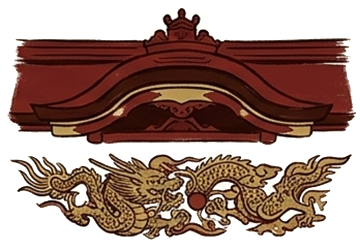
Karahafu
A graceful curved gable used as a decorative element signifying the highest architectural prestige in Japanese buildings.
-
Hengaku
A horizontal plaque hung above a gate or entrance, bearing the name of the shrine or temple in calligraphy.
-
Kairō
A covered walkway encircling the main buildings of a shrine or temple, framing the sacred space.
-
Shinmon
The heraldic crest representing a shrine, analogous to a family crest, found on buildings, lanterns, and sacred objects.
