
Rituals & Annual Events
Setsubun
The eve of spring celebrated by throwing beans to drive out evil and invite good fortune.
Setsubun literally means "seasonal division" — originally all four seasonal transitions were setsubun, but the eve of spring (around February 3) gained special significance due to its proximity to the lunar new year. The custom of throwing roasted soybeans while chanting "Oni wa soto, fuku wa uchi!" (Demons out, fortune in!) dates to the Muromachi period.
In Hokkaido and Tōhoku, peanuts replace soybeans — they're easier to find in the snow and simpler to collect and eat. The custom of eating "ehōmaki" (lucky direction sushi rolls) has spread nationwide, though it was popularized only in the 1990s through a convenience store marketing campaign and is surprisingly recent in origin.
-
Reitaisai
The most important annual festival of a shrine, held on a date significant to the enshrined deity.
-
Hatsumōde
The tradition of making the first shrine or temple visit of the New Year to pray for blessings.
-
Setsubun
The eve of spring celebrated by throwing beans to drive out evil and invite good fortune.
-
Shichi-Go-San
A rite of passage celebrating children's growth at ages 3, 5, and 7 with a shrine visit.
-
Ōharae
A biannual purification ceremony (June 30 and December 31) cleansing the accumulated sins and impurities of six months.
-
Chinowa
A large ring woven from miscanthus grass, set up during Ōharae for visitors to walk through for purification.
-
Yakuyoke
A prayer ritual performed during unlucky years to ward off misfortune and protect against disaster.
-
Jichinsai
A Shinto ritual performed before construction to appease the land deity and pray for building safety.
-
Oharai
A ritual of cleansing sin and impurity using prayer words and the waving of a purification wand.
-
Kitō
A formal prayer ceremony conducted by a priest to petition the gods or Buddha for specific blessings.
-
Norito
Sacred words spoken aloud by Shinto priests to communicate with the gods during ceremonies.
-
Tamagushi Hōten
The Shinto ritual of offering a sakaki branch adorned with paper streamers to the gods — comparable to Buddhist incense offering.
-
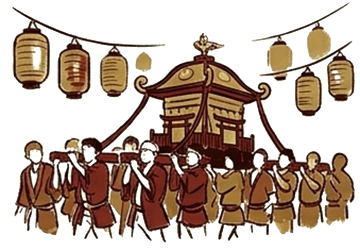
Mikoshi
A sacred palanquin carried through the streets during festivals, believed to transport the deity among the people.
-
Obon
A Buddhist observance honoring ancestral spirits who return home during mid-August.
-
Ohyakudo-mairi
An intense devotional practice of walking 100 round trips between a stone marker and the shrine while praying.
