
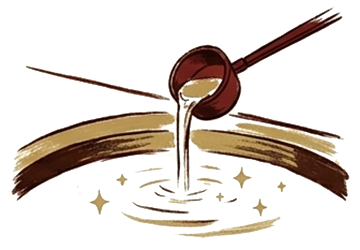
Purification Rituals
Misogi
A purification ritual involving immersion in water to cleanse the body and spirit of impurities.
Misogi is the most fundamental purification practice in Shinto, involving bathing in river or ocean water to wash away sins and spiritual impurities. In Japanese mythology, the god Izanagi performed misogi in the seas of Tsukushi after returning from the underworld, and from this act the three noble deities — Amaterasu, Tsukuyomi, and Susanoo — were born.
The tradition of misogi lives on today in practices such as waterfall meditation and midwinter cold-water ablutions. At Ise Grand Shrine, visitors can purify their hands directly in the Isuzu River at a designated spot called the "mitarashi-ba." While the everyday temizuya rinse is a simplified version of misogi, the original practice carries a much deeper meaning of complete spiritual rebirth through total immersion in water.
-
Temizuya
A water pavilion where visitors cleanse their hands and mouth before worship.
-
Chōzu
The ritual act of purifying hands and mouth with water before worship.
-
Hishaku
A long-handled ladle used to scoop water at the temizuya for ritual purification.
-
Suiban
The stone basin at a temizuya that holds the purification water.
-
Misogi
A purification ritual involving immersion in water to cleanse the body and spirit of impurities.
-
Kegare
A concept of ritual impurity caused by contact with death, illness, or blood, which can be cleansed through purification.
-
Saikai
The practice of abstaining from certain foods and activities to purify oneself before a sacred ritual.
