
Before Visiting & On the Way
Shagōhyō
A stone pillar inscribed with the shrine's name, standing near the entrance of the grounds.
The shagōhyō serves as the "nameplate" of a shrine, a stone pillar typically found near the torii gate or the beginning of the approach path. Shrine names carry specific titles such as "jingū," "taisha," "gū," "jinja," or "sha," each reflecting different levels of prestige and the nature of the enshrined deity.
The highest designation is "jingū," originally used exclusively for Ise Grand Shrine. "Taisha" once referred only to Izumo Taisha but has been applied more broadly since World War II. The calligraphy on many shagōhyō was written by renowned calligraphers or members of the imperial family, making the pillars themselves culturally significant artifacts.
-
Sanpai
Visiting a shrine or temple to pray and pay respects to the deities.
-
Sankei
Making a journey to visit a shrine or temple for worship, with emphasis on the travel itself.
-
Sandō
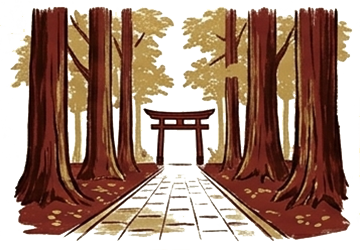
The pathway leading to a shrine or temple, designed to transition visitors from the secular to the sacred.
-
Omote-sandō
The main and most prestigious approach path to a shrine or temple.
-
Seichū
The center of the approach path, considered the pathway reserved for the gods.
-
Shagōhyō
A stone pillar inscribed with the shrine's name, standing near the entrance of the grounds.
-
Keidai
The sacred grounds within the boundary of a shrine or temple.
-
Gejō / Geba
A stone marker instructing visitors to dismount from horses or vehicles before proceeding to worship.
-
Monzenmachi
A commercial district that developed along the approach to a shrine or temple, serving pilgrims and visitors.
