
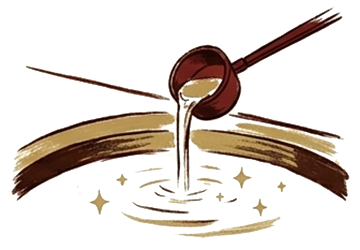
Purification Rituals
Suiban
The stone basin at a temizuya that holds the purification water.
The suiban is a large stone vessel at the temizuya designed to hold a constant supply of clean water for ritual purification. Many are carved from a single block of stone, ranging from rustic natural rock to elaborately sculptured pieces featuring dragons or turtles. The water must remain pure, so the basins are typically designed with a continuous flow.
The most famous water basin in Japan is arguably the tsukubai at Ryōan-ji temple in Kyoto, inscribed with the characters "吾唯足知" (ware tada taru wo shiru — "I only know contentment"). The central square hole serves as the shared radical for all four characters, creating an ingenious visual puzzle. This basin eloquently expresses the Zen teaching that true wealth lies in knowing when you have enough.
-
Temizuya
A water pavilion where visitors cleanse their hands and mouth before worship.
-
Chōzu
The ritual act of purifying hands and mouth with water before worship.
-
Hishaku
A long-handled ladle used to scoop water at the temizuya for ritual purification.
-
Suiban
The stone basin at a temizuya that holds the purification water.
-
Misogi
A purification ritual involving immersion in water to cleanse the body and spirit of impurities.
-
Kegare
A concept of ritual impurity caused by contact with death, illness, or blood, which can be cleansed through purification.
-
Saikai
The practice of abstaining from certain foods and activities to purify oneself before a sacred ritual.
