
Gates & Entrances
Rōmon
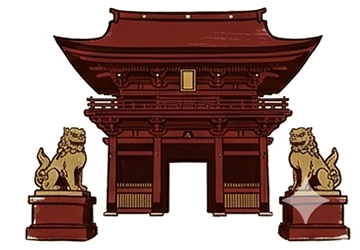
A two-story gate structure with an upper level, signifying the grandeur and prestige of a shrine.
A rōmon is an imposing two-story gate where the upper level contains an enclosed space, creating a grand architectural statement at the shrine entrance. Though technically distinct from a "nijūmon" (two-tiered gate), the terms are often used interchangeably. The rōmon's visual splendor serves to convey the dignity and historical weight of the shrine it guards.
Among the most famous is Kashima Jingū's rōmon, one of Japan's three great tower gates, a striking vermilion structure donated by Tokugawa Yorifusa, the first lord of the Mito domain. The other two are typically identified as those at Aso Shrine and Hakozaki-gū. Far more than mere entryways, rōmon embody the prestige of a shrine through their architectural beauty.
-
Torii
The iconic gate marking the entrance to a shrine, serving as the boundary between the sacred and secular worlds.
-
Ichi-no-Torii
The outermost torii gate of a shrine, marking the very beginning of the sacred approach.
-
Ni-no-Torii
The second torii gate along the approach, marking deeper entry into the sacred grounds.
-
Sanmon
The main gate of a Buddhist temple, symbolizing the entrance to enlightenment.
-
Niōmon
A temple gate flanked by fierce guardian statues (Niō) that protect the sacred grounds from evil.
-
Zuijinmon
A shrine gate guarded by armed deity statues that serve the same protective role as Niō in temples.
-
Rōmon
A two-story gate structure with an upper level, signifying the grandeur and prestige of a shrine.
-
Karamon
An ornate gate featuring a distinctive curved "karahafu" gable, symbolizing the highest architectural prestige.
-
Komainu
A pair of stone guardian creatures placed at shrine entrances to ward off evil spirits.
-
A-Un
A concept representing the beginning and end of all things, expressed through paired open and closed-mouth figures.
-
Tōrō
Lanterns placed along shrine and temple paths to provide illumination and serve as offerings of light.
