
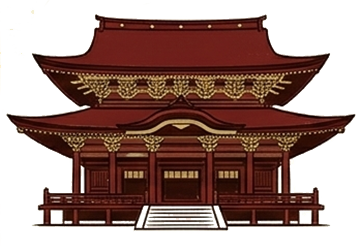
Shrine & Temple Buildings
Bonshō
A large bronze bell cast for Buddhist temples, prized for its deep, resonant tone.
Bonshō are massive cast-bronze bells suspended in temple bell towers. The prefix "bon" (梵) comes from Sanskrit meaning "pure" or "sacred." Their ideal tone quality is called "ōshiki-chō" — a solemn, resonant pitch achieved through masterful casting techniques. Inscriptions and lotus patterns are often cast into the surface.
Japan's oldest bonshō belongs to Myōshin-ji in Fukuoka, bearing a 698 CE inscription. The three greatest bonshō are said to be those at Chion-in and Hōkō-ji in Kyoto, and Tōdai-ji in Nara. Hōkō-ji's bell is historically notorious — its inscription "kokka ankō" was accused of splitting Tokugawa Ieyasu's name, becoming a pretext for the siege of Osaka Castle. The inscription remains visible today. A bonshō's sound carries approximately two kilometers.
-
Sessha
A sub-shrine closely related to the main deity, ranking higher than massha in the shrine hierarchy.
-
Massha
A small sub-shrine on the grounds enshrining deities without direct kinship to the main god.
-
Keidaisha
A collective term for all sub-shrines (sessha and massha) within a shrine's grounds.
-
Shaden
A collective term for the buildings of a shrine, including the main sanctuary, worship hall, and related structures.
-
Garan
The layout of a temple's main buildings, derived from the Sanskrit word for “monastery garden.”
-
Juyosho
The counter where visitors receive amulets, talismans, goshuin stamps, and other sacred items.
-
Shamusho
The administrative office of a shrine handling ceremonies, amulet distribution, and daily operations.
-
Kaguraden
A stage building within shrine grounds dedicated to performances of sacred music and dance for the gods.
-
Hōmotsuden
A museum within shrine or temple grounds displaying historically and artistically significant treasures.
-
Emakake
A rack or board where visitors hang their ema prayer tablets within shrine grounds.
-
Goshinboku
A venerated tree within shrine grounds believed to house a divine spirit, often marked with a shimenawa rope.
-
Shimenawa
A rope of twisted rice straw marking the boundary of a sacred space, hung on torii, trees, and buildings.
-
Shinkyo
A sacred bridge on shrine grounds symbolizing the passage from the mortal world to the divine realm.
-
Ishidan
Stone stairways leading to elevated shrine or temple buildings, often serving as a form of physical devotion.
-
Taikobashi
A bridge with a steep arch resembling a drum, found in shrine and temple gardens symbolizing the link between worlds.
-
Tamagaki
A decorative fence enclosing the most sacred areas of a shrine, often bearing the names of donors.
-
Hojochi
A sacred pond within temple or shrine grounds used for the compassionate release of captured creatures.
-
Shoro
A tower structure housing a temple's large bronze bell, rung to mark time and on special occasions.
-
Bonshō
A large bronze bell cast for Buddhist temples, prized for its deep, resonant tone.
-
Gojūnotō
An iconic five-tiered Buddhist tower originally built to enshrine relics of the Buddha.
-
Sanjūnotō
A three-tiered Buddhist pagoda, more numerous than five-story pagodas and often found at regional temples.
-
Hyakudo-ishi
A stone pillar marking the starting point for the devoted practice of making 100 round trips to the shrine in prayer.
