
Purification Rituals
Saikai
The practice of abstaining from certain foods and activities to purify oneself before a sacred ritual.
Saikai is the practice of restraining one's diet and behavior to maintain physical and spiritual purity before participating in sacred rites. Traditionally, this meant avoiding meat, alcohol, and entertainment, and maintaining a calm, focused state of mind in preparation for encountering the divine.
The character "sai" (斎) also reads "itsuki," meaning to maintain a pure state. The Saikū (斎宮) of Ise Grand Shrine was the residence of the Saiiō — an unmarried imperial princess who served the gods on behalf of the emperor, maintaining years of strict saikai discipline. While modern worshippers are not expected to observe such rigorous purification, the spirit of saikai lives on in the simple act of tidying one's appearance and calming one's thoughts before visiting a shrine.
-
Temizuya
A water pavilion where visitors cleanse their hands and mouth before worship.
-
Chōzu
The ritual act of purifying hands and mouth with water before worship.
-
Hishaku
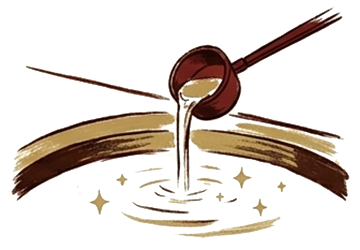
A long-handled ladle used to scoop water at the temizuya for ritual purification.
-
Suiban
The stone basin at a temizuya that holds the purification water.
-
Misogi
A purification ritual involving immersion in water to cleanse the body and spirit of impurities.
-
Kegare
A concept of ritual impurity caused by contact with death, illness, or blood, which can be cleansed through purification.
-
Saikai
The practice of abstaining from certain foods and activities to purify oneself before a sacred ritual.
