
Architectural & Decorative Features
Hengaku
A horizontal plaque hung above a gate or entrance, bearing the name of the shrine or temple in calligraphy.
Hengaku are horizontal plaques mounted above gates and building entrances, inscribed with the shrine or temple name or a meaningful phrase. Often executed by renowned calligraphers, high-ranking monks, or even emperors, the plaque serves as the architectural "face" that greets every visitor.
The hengaku at Kenchō-ji in Kamakura — bearing the characters "Kofukusan" — is attributed to Emperor Go-Fukakusa, with the character "ko" (巨) cleverly modified with an extra dot to suggest "100" (百), embedding the wish for "a mountain of great fortune a hundredfold." Looking upward when entering a shrine or temple gate often reveals hengaku hiding stories and wordplay centuries old.
-
Shide
White zigzag paper streamers attached to shimenawa ropes and tamagushi offerings, symbolizing purity and the sacred.
-
Chigi
V-shaped wooden beams projecting from the roof ridge of a shrine, a distinctive feature of Shinto architecture.
-
Katsuogi
Horizontal log-shaped ornaments placed along the roof ridge, named for their resemblance to dried bonito.
-
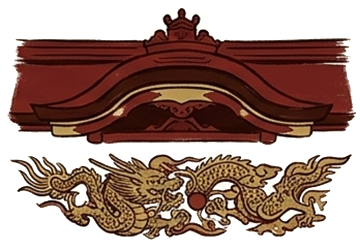
Karahafu
A graceful curved gable used as a decorative element signifying the highest architectural prestige in Japanese buildings.
-
Hengaku
A horizontal plaque hung above a gate or entrance, bearing the name of the shrine or temple in calligraphy.
-
Kairō
A covered walkway encircling the main buildings of a shrine or temple, framing the sacred space.
-
Shinmon
The heraldic crest representing a shrine, analogous to a family crest, found on buildings, lanterns, and sacred objects.
