
Architectural & Decorative Features
Kairō
A covered walkway encircling the main buildings of a shrine or temple, framing the sacred space.
Kairō are roofed corridors that enclose and connect the principal buildings of a shrine or temple, serving both as protective enclosures for the sacred space and as practical covered walkways for worshippers during rain. Rows of vermilion pillars and white walls create a strikingly photogenic frame for the buildings within.
Itsukushima Shrine's approximately 275-meter vermilion corridor over the sea is among the most iconic — its appearance shifting with the tides as a UNESCO World Heritage treasure. Kasuga Taisha's corridor is hung with approximately 1,000 bronze lanterns that transform the passageway into a corridor of light during the Mantōrō festival. Walking through a kairō is itself a form of worship — the views framed between pillars resemble paintings set within their own architectural frames.
-
Shide
White zigzag paper streamers attached to shimenawa ropes and tamagushi offerings, symbolizing purity and the sacred.
-
Chigi
V-shaped wooden beams projecting from the roof ridge of a shrine, a distinctive feature of Shinto architecture.
-
Katsuogi
Horizontal log-shaped ornaments placed along the roof ridge, named for their resemblance to dried bonito.
-
Karahafu
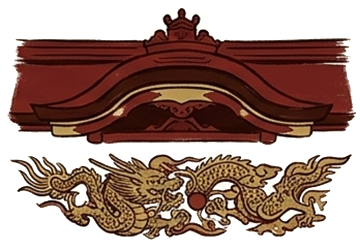
A graceful curved gable used as a decorative element signifying the highest architectural prestige in Japanese buildings.
-
Hengaku
A horizontal plaque hung above a gate or entrance, bearing the name of the shrine or temple in calligraphy.
-
Kairō
A covered walkway encircling the main buildings of a shrine or temple, framing the sacred space.
-
Shinmon
The heraldic crest representing a shrine, analogous to a family crest, found on buildings, lanterns, and sacred objects.
