
Before Visiting & On the Way
Sankei
Making a journey to visit a shrine or temple for worship, with emphasis on the travel itself.
Sankei places emphasis on the journey to a sacred site rather than the act of worship itself. The character "kei" (詣) means "to arrive at a destination," giving sankei a nuance of pilgrimage. Expressions like "Ise sankei" or "Kumano mode" highlight this travel-oriented aspect of sacred visits.
During the Edo period, pilgrimages to Ise Grand Shrine became a major cultural phenomenon, with ordinary people saving money through mutual aid groups called "kō" (講) for a once-in-a-lifetime trip. Along the pilgrimage routes, teahouses and inns flourished, creating a unique Japanese travel culture where faith and tourism were inseparably intertwined.
-
Sanpai
Visiting a shrine or temple to pray and pay respects to the deities.
-
Sankei
Making a journey to visit a shrine or temple for worship, with emphasis on the travel itself.
-
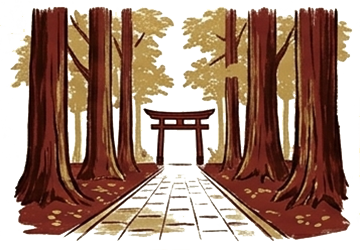
Sandō
The pathway leading to a shrine or temple, designed to transition visitors from the secular to the sacred.
-
Omote-sandō
The main and most prestigious approach path to a shrine or temple.
-
Seichū
The center of the approach path, considered the pathway reserved for the gods.
-
Shagōhyō
A stone pillar inscribed with the shrine's name, standing near the entrance of the grounds.
-
Keidai
The sacred grounds within the boundary of a shrine or temple.
-
Gejō / Geba
A stone marker instructing visitors to dismount from horses or vehicles before proceeding to worship.
-
Monzenmachi
A commercial district that developed along the approach to a shrine or temple, serving pilgrims and visitors.
