
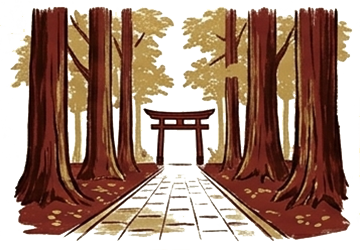
Before Visiting & On the Way
Sanpai
Visiting a shrine or temple to pray and pay respects to the deities.
The character "san" (参) in sanpai carries the meaning of "going to a place of higher status," while "pai" (拝) means "to bow in worship." Together, sanpai describes the act of personally visiting a sacred place to offer prayers with reverence. A similar term, "sankei" (参詣), emphasizes the journey itself, while sanpai focuses specifically on the act of worship upon arrival.
Today, the word sanpai is used interchangeably for both shrine and temple visits, though strictly speaking, worship at a shrine may be called "shinpai" (神拝) and at a temple "raihai" (礼拝). Formal worship known as "shōden sanpai" involves entering the haiden (worship hall), where a priest recites norito prayers and the visitor offers a tamagushi branch.
Meiji Jingu in Tokyo consistently draws the most New Year worshippers in Japan, with approximately three million visitors during the first three days of January alone — a testament to how deeply the culture of sanpai remains woven into modern Japanese life.
-
Sanpai
Visiting a shrine or temple to pray and pay respects to the deities.
-
Sankei
Making a journey to visit a shrine or temple for worship, with emphasis on the travel itself.
-
Sandō
The pathway leading to a shrine or temple, designed to transition visitors from the secular to the sacred.
-
Omote-sandō
The main and most prestigious approach path to a shrine or temple.
-
Seichū
The center of the approach path, considered the pathway reserved for the gods.
-
Shagōhyō
A stone pillar inscribed with the shrine's name, standing near the entrance of the grounds.
-
Keidai
The sacred grounds within the boundary of a shrine or temple.
-
Gejō / Geba
A stone marker instructing visitors to dismount from horses or vehicles before proceeding to worship.
-
Monzenmachi
A commercial district that developed along the approach to a shrine or temple, serving pilgrims and visitors.
