
Architectural & Decorative Features
Chigi
V-shaped wooden beams projecting from the roof ridge of a shrine, a distinctive feature of Shinto architecture.
Chigi are the crossed wooden beams extending from either end of a shrine roof, forming a V-shape visible from afar as an unmistakable sign of a Shinto shrine. A popular belief holds that horizontally cut tips (uchisogi) indicate a female deity while vertically cut tips (sotosogi) indicate a male deity.
This gender correlation, however, is not academically reliable and has numerous exceptions. At Ise Grand Shrine, the Inner Shrine has uchisogi (Amaterasu = female, matching the theory) but the Outer Shrine has sotosogi (Toyouke = also female, contradicting it). Chigi originally served a structural function in roof construction before evolving into decorative Shinto symbols. Regardless of gender theories, spotting chigi while exploring makes for an enjoyable part of shrine-hopping.
-
Shide
White zigzag paper streamers attached to shimenawa ropes and tamagushi offerings, symbolizing purity and the sacred.
-
Chigi
V-shaped wooden beams projecting from the roof ridge of a shrine, a distinctive feature of Shinto architecture.
-
Katsuogi
Horizontal log-shaped ornaments placed along the roof ridge, named for their resemblance to dried bonito.
-
Karahafu
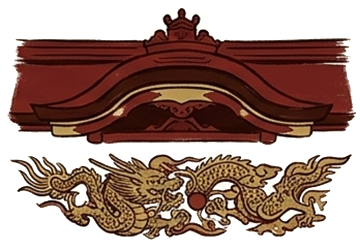
A graceful curved gable used as a decorative element signifying the highest architectural prestige in Japanese buildings.
-
Hengaku
A horizontal plaque hung above a gate or entrance, bearing the name of the shrine or temple in calligraphy.
-
Kairō
A covered walkway encircling the main buildings of a shrine or temple, framing the sacred space.
-
Shinmon
The heraldic crest representing a shrine, analogous to a family crest, found on buildings, lanterns, and sacred objects.
