
Gates & Entrances
Ni-no-Torii
The second torii gate along the approach, marking deeper entry into the sacred grounds.
The ni-no-torii is the second gate visitors encounter along the sandō, indicating progressive passage deeper into the sacred realm. The arrangement of multiple torii along an approach path creates a spatial expression of increasing sanctity — each gate passed brings the visitor one step closer to the divine.
Offering a small bow before passing through each torii is considered polite etiquette. The space between the ichi-no-torii and ni-no-torii serves as a transitional zone, a "path of mental preparation" where visitors leave behind the noise of daily life and gradually settle into a contemplative state suitable for worship.
-
Torii
The iconic gate marking the entrance to a shrine, serving as the boundary between the sacred and secular worlds.
-
Ichi-no-Torii
The outermost torii gate of a shrine, marking the very beginning of the sacred approach.
-
Ni-no-Torii
The second torii gate along the approach, marking deeper entry into the sacred grounds.
-
Sanmon
The main gate of a Buddhist temple, symbolizing the entrance to enlightenment.
-
Niōmon
A temple gate flanked by fierce guardian statues (Niō) that protect the sacred grounds from evil.
-
Zuijinmon
A shrine gate guarded by armed deity statues that serve the same protective role as Niō in temples.
-
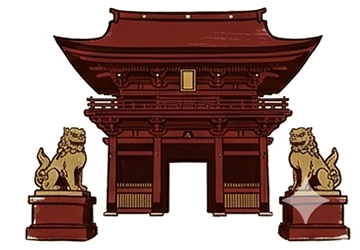
Rōmon
A two-story gate structure with an upper level, signifying the grandeur and prestige of a shrine.
-
Karamon
An ornate gate featuring a distinctive curved "karahafu" gable, symbolizing the highest architectural prestige.
-
Komainu
A pair of stone guardian creatures placed at shrine entrances to ward off evil spirits.
-
A-Un
A concept representing the beginning and end of all things, expressed through paired open and closed-mouth figures.
-
Tōrō
Lanterns placed along shrine and temple paths to provide illumination and serve as offerings of light.
