
Before Visiting & On the Way
Gejō / Geba
A stone marker instructing visitors to dismount from horses or vehicles before proceeding to worship.
These stone markers bear the message "dismount here and proceed on foot," placed near the entrance of shrines and temples. In the era when horses and palanquins were the primary means of transportation, even persons of high rank were expected to dismount before entering the sacred grounds, reflecting the principle that all are equal before the gods.
The place name "Geba" still exists in various locations throughout Japan, including the Geba district in Setagaya, Tokyo, which is believed to derive from a historical horse-tying post in the area. While these markers no longer serve a practical function in the age of automobiles, they remain preserved as cultural artifacts offering a glimpse into the customs of worship in centuries past.
-
Sanpai
Visiting a shrine or temple to pray and pay respects to the deities.
-
Sankei
Making a journey to visit a shrine or temple for worship, with emphasis on the travel itself.
-
Sandō
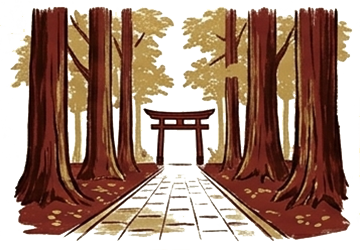
The pathway leading to a shrine or temple, designed to transition visitors from the secular to the sacred.
-
Omote-sandō
The main and most prestigious approach path to a shrine or temple.
-
Seichū
The center of the approach path, considered the pathway reserved for the gods.
-
Shagōhyō
A stone pillar inscribed with the shrine's name, standing near the entrance of the grounds.
-
Keidai
The sacred grounds within the boundary of a shrine or temple.
-
Gejō / Geba
A stone marker instructing visitors to dismount from horses or vehicles before proceeding to worship.
-
Monzenmachi
A commercial district that developed along the approach to a shrine or temple, serving pilgrims and visitors.
