
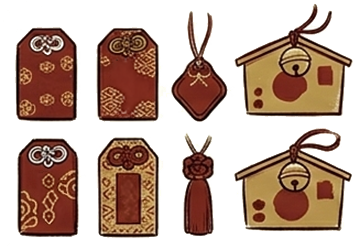
Amulets & Lucky Charms
Omamori
A small fabric amulet containing a sacred inscription, carried for divine protection and good fortune.
Omamori are small cloth pouches containing a goshinji — a sacred inscription or talisman — carried on the person to receive constant divine protection. They come in countless varieties: love, academic success, traffic safety, safe childbirth, longevity, and more.
Opening an omamori to peek inside is discouraged — exposure to human eyes is believed to diminish its purity. Like ofuda, omamori are typically replaced after one year, ideally returned to the shrine where they were received. Modern variations include crystal omamori, card-type omamori, and other contemporary designs adapted to fit modern lifestyles.
-
Goshuin
A hand-brushed calligraphy stamp and seal given as proof of worship at a shrine or temple.
-
Goshuinchō
An accordion-fold booklet for collecting goshuin stamps from various shrines and temples.
-
Ofuda
A paper or wooden talisman enshrining divine power, meant to be placed on the home altar or a high, clean location.
-
Omamori
A small fabric amulet containing a sacred inscription, carried for divine protection and good fortune.
-
Omikuji
A paper fortune drawn at shrines and temples revealing one's luck and guidance from the gods.
-
Ema
A wooden prayer tablet hung at shrines, originally a substitute for the offering of real horses.
-
Hamaya
A decorative arrow received at New Year's to ward off evil spirits and bring good fortune.
-
Kumade
An ornate bamboo rake sold at Tori-no-Ichi festivals, symbolizing the raking in of good fortune and prosperity.
-
Taima
A purification implement used in Shinto rituals, or the sacred talisman distributed by Ise Grand Shrine.
-
Sakaki
An evergreen tree sacred to Shinto, used for ritual offerings and tamagushi branches.
-
Omiki
Sake offered to the gods at shrines, later shared with worshippers as a form of communion with the divine.
