
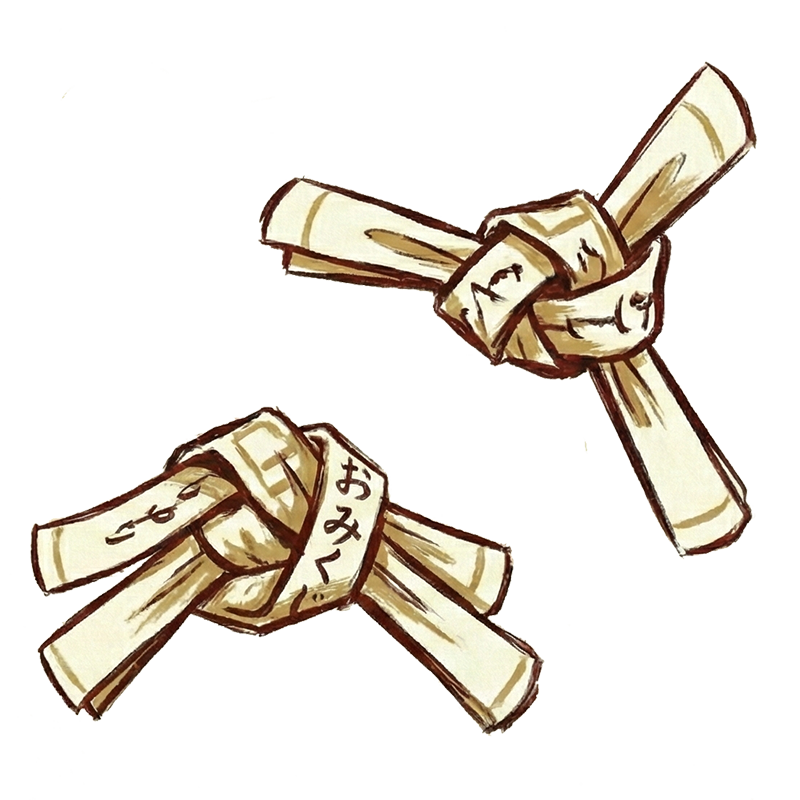
After drawing an omikuji, have you ever wondered whether to tie it at the shrine or take it home? Seeing other people tying theirs to tree branches or tying racks, you might worry that taking it home would be disrespectful. The conclusion is simple: both tying and taking home are correct practices. However, each has its own meaning and background. This article explains the proper handling of omikuji from both perspectives — the reasons for tying and the reasons for taking home.
御要旨
- There Is No Problem with Either Tying or Taking Home Your Omikuji
- The Reason for Tying Omikuji Is to “Tie a Bond with the Deity”
- Taking Your Omikuji Home Is Actually Closer to Its Original Purpose
- Proper Etiquette When Choosing to Tie Your Omikuji
- Proper Storage and Disposal of Omikuji You Take Home
- A Guide to Deciding Whether to Tie or Take Home
- In Closing
There Is No Problem with Either Tying or Taking Home Your Omikuji
To be clear from the start, there is no single “correct answer” for whether to tie or take home your omikuji. The official website of the Association of Shinto Shrines (Jinja Honcho) states: “There is a custom of tying omikuji at the designated spots within the shrine grounds before leaving, but taking them home is also perfectly acceptable” (Source: Jinja Honcho).
In other words, both tying and taking home are officially recognized options by shrines. The popular belief that “you should tie kyo but take daikichi home” is a custom that spread later, not a rule established by shrines. (Whichever you choose, there is no need to worry about divine punishment.)
Looking at shrines across the country, the stance on handling omikuji varies from shrine to shrine. Some actively encourage “please take it home,” while others prompt “please tie it at the designated spot within the grounds.” It is not a question of which is correct — both exist as legitimate parts of shrine culture.
The Reason for Tying Omikuji Is to “Tie a Bond with the Deity”
The act of tying omikuji within the shrine grounds has long carried the wish of “tying bonds.” The word “musubu” (to tie) itself carries the meaning of connecting people to people and people to deities. By tying the omikuji, the intent is to strengthen the bond with the deity and pray for the fulfillment of wishes. This custom became widely established from the Edo period onward, and as shrine visits became a common form of entertainment for ordinary people, the act of tying omikuji became ingrained as a “finishing touch to the visit.”
Tying to Tree Branches Means “Drawing on the Tree’s Life Force”
The sight of omikuji tied to tree branches is common at many shrines. This is based on the idea of entrusting one’s wishes to the life force of the tree. By tying to branches that will continue to grow, the prayer is “may my wishes grow along with this tree.”
However, in recent years, more shrines are prohibiting tying omikuji directly to tree branches. The weight of omikuji and the friction from tying can damage branches and negatively affect the health of the trees. When a dedicated “omikuji tying rack” or “mikuji-kake” is set up within the grounds, using that is the proper etiquette.
“Tie Kyo Results” Is a Folk Belief, but Has Some Logic
You often hear that “if you draw kyo or daikyo, tie it at the shrine and leave the bad luck behind for the deity to hold.” This is more of a folk belief that spread naturally among the public than a formal practice. However, the interpretation that “tying with your non-dominant hand serves as a form of spiritual discipline, helping you gain the strength to overcome difficulties” gives it some basis.
When you draw kyo and feel downcast, if the act of tying helps you think “I am leaving the bad luck here and heading home with a positive attitude,” that is a perfectly valid way of using your omikuji. (As a psychological turning point, the physical action of tying makes good sense.)
Taking Your Omikuji Home Is Actually Closer to Its Original Purpose
It may come as a surprise, but taking your omikuji home and reading it repeatedly is actually closer to the original use. The prototype of omikuji dates back to the “Ganzan Daishi Hyakusen” (Hundred Lots) devised by the Heian-period monk Ryogen (Ganzan Daishi). At that time, omikuji were important enough to be used in national policy decisions — they were not something to be read and discarded. Today’s omikuji share the same essence: they are “messages from the deity needed for your current self.” Rather than reading once and forgetting, revisiting them from time to time serves the original purpose of using them as guidelines for daily action.
Onoteru Jinja in Iriya, Tokyo, positions omikuji as “letters from the deity” and recommends taking them home to re-read at important junctures (Source: Onoteru Jinja). The idea is that since you have received words of guidance from the deity, you should keep them close and cherish them.
The “Waka Poetry” Contains the True Message of the Omikuji
Most people focus only on the ranking — daikichi, kyo, etc. — but the true core of an omikuji is actually the “waka poetry” section. Even the omikuji produced by Joshidosha (the omikuji manufacturer based at Nisho Yamada Jinja in Shunan City, Yamaguchi Prefecture, which produces approximately 70% of omikuji distributed to shrines nationwide) always include waka poetry. The waka contains advice from the deity regarding your current situation, and re-reading it can yield new insights each time.
Similarly, individual items like “awaited person: will come” or “business: be moderate” often cannot be applied to real life after just one reading. Keeping the omikuji in your wallet or planner and re-reading it when facing a decision can prove surprisingly fitting. If you think of using omikuji like a weather forecast, it is the same as not just checking the forecast but actually deciding whether to bring an umbrella.
Proper Etiquette When Choosing to Tie Your Omikuji
If you decide to tie your omikuji, knowing a few points of etiquette will make the act more respectful. Rather than casually tying it to the nearest tree, tying in the correct place and manner shows respect to the deity.
Use the Designated “Omikuji Tying Rack”
Many shrines have dedicated omikuji tying racks (mikuji-kake) set up. Since tying directly to tree branches damages the trees, you should always use the tying rack when one is available. Especially during the New Year period, when visitors are concentrated, there have been reports from various locations of sacred trees and other shrine trees being weakened by the mass of omikuji tied to them. If you cannot find a tying rack, the most reliable approach is to ask at the shrine office, “Where should I tie my omikuji?”
A Tradition Says Tying with Your Non-Dominant Hand Is a Form of “Spiritual Discipline”
An old tradition holds that “tying your omikuji with your non-dominant hand serves as spiritual discipline to gain the strength to overcome difficulties.” Tying with your non-dominant hand is naturally difficult, and that “difficulty” is said to carry the meaning of discipline.
While this is not a mandatory practice, it can be worth trying when you draw kyo and want to “shake off bad luck,” as it also helps shift your mindset. (If you actually try it, you will find it surprisingly challenging, so it is best attempted when you have time to spare.)
Do Not Tie on Top of Other People’s Omikuji
If the tying rack is already full of omikuji, avoid layering yours on top of someone else’s. Each omikuji carries the wishes of the person who drew it, so covering them up is not considered appropriate. Look for an open space, or if the rack is completely full, taking your omikuji home is another valid choice.
Proper Storage and Disposal of Omikuji You Take Home
Once you decide to take your omikuji home, knowing how to store and eventually dispose of it properly will give you peace of mind. Many people think “I took it home, but I am not sure what to do with it.”
Store in Your Wallet, Planner, or Kamidana
There are no strict rules about where to store an omikuji you have taken home. However, the following are common storage locations.
| Storage Location | Benefit |
|---|---|
| Inside your wallet | Always with you, so you can re-read it at any moment |
| Planner or smartphone case | Kept in a place you see every day |
| Kamidana (household shrine shelf) | The most respectful storage method. Treats the deity’s words with care |
| Desk drawer | Convenient when you want to re-read at home at leisure |
Regardless of which location you choose, treating the omikuji with care is essential. Avoid crumpling it up and shoving it to the bottom of a pocket where it stays forgotten. Since it is a message from the deity, handling it with the same care as an omamori (charm) is the proper attitude.
Return Old Omikuji to a Shrine
When you feel the omikuji has served its purpose (a good benchmark is when you next draw an omikuji or when the year changes), the standard practice is to return it to a shrine. Here is how to return it.
- Bring it to the “old talisman collection box” (kosatsu osame-sho) at the shrine where you drew it
- If you cannot visit the original shrine, bringing it to a nearby shrine’s collection box is also fine
- Timing it with the New Year “otakiage” (sacred burning) period makes the process smooth
- Some shrines accept returns by mail, so checking in advance is worthwhile
Under no circumstances should you simply throw it in the household garbage. An omikuji is something received at a shrine with the deity’s blessing. Think of it the same way you would never throw an omamori in the trash. (If you truly cannot visit a shrine, wrapping it in white paper or an envelope and sprinkling salt before disposing of it is another method based on the Japanese tradition of “purification.”)
A Guide to Deciding Whether to Tie or Take Home
Based on everything covered so far, here is a framework for deciding “what should I do?”
| Situation | Recommended Choice | Reason |
|---|---|---|
| You want to read the omikuji’s content carefully over time | Take home | Can be used as a guideline in daily life |
| You drew kyo and want to reset your feelings | Tie | The act of tying provides psychological closure |
| You want to keep it as a souvenir from a shrine visited during travel | Take home | Preserves a memory of the trip |
| You want to strengthen your bond with the deity | Tie | Embodies the original meaning of “tying bonds” |
| You drew daikichi and are happy | Either is fine | Taking it home as a lucky charm or tying it in gratitude are both correct |
The deciding factor comes down to “how do you want to make use of it?” Omikuji are not fortune-telling or gambling — they are a catalyst for reflecting on yourself. Whether you tie or take home is merely the method; what truly matters is how you receive the words written on the omikuji and how you translate them into action. (Worrying too much about formalities is less important than sincerely engaging with the omikuji’s message.)
Incidentally, there is no issue with keeping multiple omikuji at the same time. Comparing a previous omikuji with a new one can give you a sense of how your fortune has shifted — a pleasure unique to taking them home. Like keeping a diary, maintaining a record of your omikuji makes it easier to notice changes in yourself.
In Closing
There is no “absolute right answer” to whether you should tie or take home your omikuji. Tying is an act of binding your bond with the deity; taking home is an act of applying the deity’s message to daily life — both carry proper meaning. Rather than reacting to the ranking alone, reading the waka poetry and individual items carefully and using them as personal guidelines is the true way to enjoy omikuji.
Omikuji Sando offers a personalized daily fortune derived from your date of birth, covering all 12 tiers, completely free of charge. Even on days when you cannot visit a shrine, why not take a moment to reflect on yourself through omikuji?
