
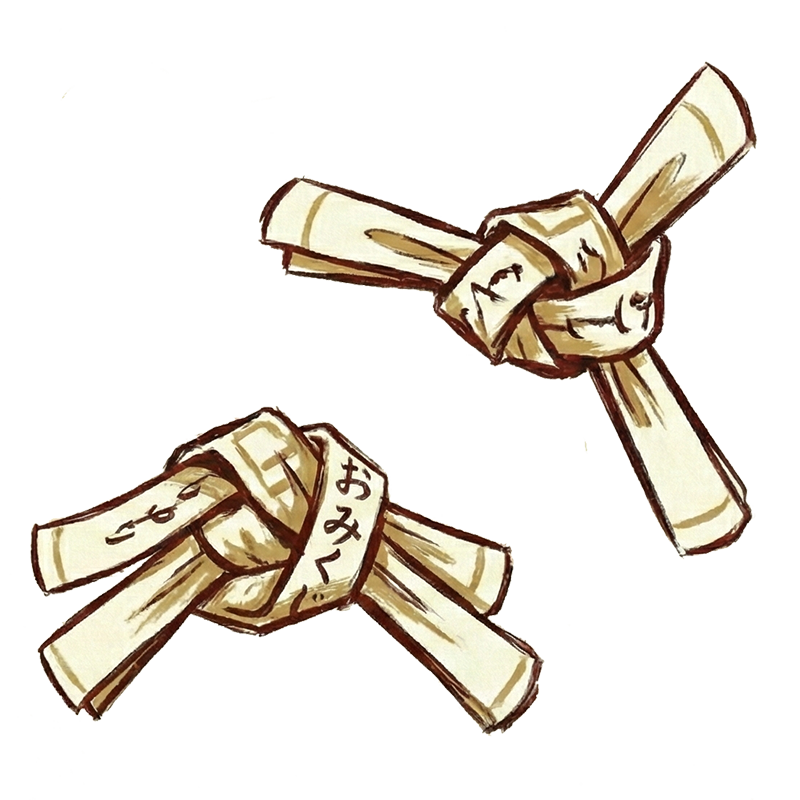
When drawing an omikuji, have you ever wondered which hand you should use, or whether there is any particular etiquette to follow beforehand? The conclusion is that the Association of Shinto Shrines (Jinja Honcho) has not established a unified rule for how to draw omikuji. However, there are indeed traditional practices considered “the more respectful way” to draw. This article covers everything from which hand to use, to the proper worship procedure, to how to handle your omikuji after drawing.
御要旨
- Drawing with Your Non-Dominant Hand Is Considered More Respectful
- Pre-Draw Worship Etiquette Changes How You Receive the Result
- The Proper Way to Draw: “Calm Your Mind, Then Select Just One”
- There Is No Major Difference in Omikuji Etiquette Between Shrines and Temples
- After Drawing: Both Keeping and Tying Are Acceptable
- Ways You Should Not Draw Omikuji
- In Closing
Drawing with Your Non-Dominant Hand Is Considered More Respectful
For the question “which hand should I use to draw omikuji,” the answer is that using your non-dominant hand (left hand if right-handed) is considered more respectful. However, this is not an absolute rule but rather a customary preference.
The Reason for Using the Left Hand: The “Hand Closer to the Gods”
In Japanese Shinto, the left side is regarded as “superior” and “sacred.” At shrines, walking on the left side of the approach path is standard, and when priests dress in ceremonial garments, the left side goes on top. Extending this thinking, “the left hand is the hand closer to the gods and therefore more suitable for receiving divine will.”
Additionally, using your non-dominant hand is thought to make it “harder for personal will or worldly thoughts to interfere.” Since your non-dominant hand is less dexterous, you are less likely to unconsciously pick and choose, bringing you closer to a posture of “entrusting yourself to heaven.” (Whether this is rational or not, as a mindset it makes sense.)
Using Your Right Hand Is Not a Problem
While using the left hand is considered more respectful, drawing with your right hand does not diminish the omikuji’s effectiveness. In practice, most shrines do not specify which hand to use. For the cylinder-shaking type where you shake out a single stick, using both hands is natural, and for the box type where you reach in and select one, there is generally no specification either.
What matters more than which hand you use is the mindset with which you draw. If you calm your heart and draw with the intention of seeking guidance from the gods, either hand is perfectly fine.
Pre-Draw Worship Etiquette Changes How You Receive the Result
Many people draw omikuji “while they happen to be visiting,” but the correct order is to “complete your worship first, then draw the omikuji.” The Association of Shinto Shrines positions omikuji not as mere fortune-telling but as “seeking the divine will of the gods” (Source: Jinja Honcho). By worshipping first, you show respect to the gods before receiving your omikuji.
The Temizu Hand-Washing Procedure
After passing through the torii gate, first purify your hands and mouth at the temizusha (purification fountain). The Association of Shinto Shrines prescribes the following temizu procedure (Source: Jinja Honcho, Worship Methods):
- Hold the ladle in your right hand and scoop water to wash your left hand
- Switch the ladle to your left hand and wash your right hand
- Switch the ladle back to your right hand, pour water into your cupped left palm, and rinse your mouth
- Wash your left hand once more, then tilt the ladle upright to let water flow down the handle before returning it
Ideally, the entire sequence should be completed with a single scoop of water. Scooping water multiple times during the process deviates from the proper form. (Until you get used to it, you may run short of water, but scooping a generous amount at the start gives you comfortable room.)
Worship with Two Bows, Two Claps, One Bow
After completing temizu, worship at the main hall using the “two bows, two claps, one bow” procedure. The specific steps are:
- Gently place your offering in the offertory box (place it in gently rather than throwing it)
- Ring the bell if there is one
- Stand upright, then bow deeply at a 90-degree angle twice (two bows)
- Bring your hands together at chest height, offset your right fingertips slightly downward, and clap twice (two claps)
- With hands still together, offer your prayer
- Bow deeply once more (one bow)
Offsetting your right fingertips slightly during the clap represents that “gods and humans are not yet united.” When pressing hands together for prayer, align the fingertips. Being mindful of these subtle movements makes your worship significantly more respectful.
Drawing Omikuji After Worship Is the Correct Order
The correct order is to draw your omikuji after completing worship. Drawing omikuji before worshipping reverses the proper sequence. Since drawing omikuji is an act of receiving words from the gods, it makes sense to first offer your greetings and prayers (worship) before drawing.
Following this order makes it easier to receive the omikuji result as “a response from the gods.” Like checking test answers, the response (omikuji) only gains meaning when preceded by the question (worship).
The Proper Way to Draw: “Calm Your Mind, Then Select Just One”
After completing worship, it is time to draw your omikuji. The drawing method is simple, but keeping a few points in mind brings you closer to the original act of “receiving divine will.”
Silently State What You Want to Know Before Drawing
Just before drawing, the respectful approach is to clearly formulate in your mind what you want to ask. Whether it is “I want to know about my career fortune this year” or “I am torn about a romantic decision,” having a specific theme in mind before drawing makes it easier to interpret the result in relation to your situation.
If you simply wish “I hope I get a good one,” the result may feel vague and unclear in terms of practical application. Like a weather forecast, omikuji is more useful when you approach it with a specific concern, such as “do I need an umbrella today?” rather than just glancing at it casually.
For Cylinder-Type Omikuji, Calmly Shake Out Just One Stick
For cylinder-type omikuji (the hexagonal cylinder you shake until a numbered stick comes out), follow these steps:
- Hold the cylinder with both hands
- Calm your mind and focus on what you want to know
- Shake the cylinder slowly up and down
- Continue shaking until just one stick emerges from the hole
- Check the number on the stick and receive the corresponding omikuji
Shaking too vigorously may cause multiple sticks to come out. If two or more emerge, the common practice is to take the first one that came out, or return them all and try again.
For Box-Type, Mix Well Before Selecting One
For the type where folded omikuji are placed in a box, reach in and mix them thoroughly before selecting one. Rather than quickly grabbing one from the top, reach down to the bottom and mix the entire contents, entrusting your selection to chance rather than personal choice.
Though all the omikuji may look the same, the essence of the practice is believing that “this one particular slip carries the message I need.” (Touching several and putting them back before choosing is not the most graceful approach.)
There Is No Major Difference in Omikuji Etiquette Between Shrines and Temples
“Is the drawing method different at shrines versus temples?” some may worry, but there is no major difference in how omikuji are drawn. Both shrines and temples use the same methods: either shaking a stick from a cylinder or drawing one from a box.
The Difference Lies in Worship Etiquette
While the omikuji drawing method itself is the same, the worship etiquette beforehand differs.
| Item | Shrine | Temple |
|---|---|---|
| Basic etiquette | Two bows, two claps, one bow | Press palms together and bow once |
| Clapping | Yes (two claps) | No (silent prayer with palms together) |
| Offering | Place in offertory box | Place in offertory box |
| Temizu | Purify at temizusha | Purify if temizusha is available |
The most common mistake is “clapping at a temple.” Clapping (kashiwade) is a Shinto practice; at Buddhist temples, the correct form is to quietly press your palms together in gassho. Please be mindful of this distinction when visiting temples.
Omikuji Actually Originated at Temples
It may come as a surprise, but omikuji originated not at shrines but at temples. The “Ganzan Daishi Hyakusen” (Ganzan Daishi’s Hundred Lots) devised by the Heian-period monk Ryogen (Ganzan Daishi) is considered the prototype of modern omikuji. At that time, it was a sacred divination method used to decide important matters of state.
Over time, the practice spread to shrines as well, and today omikuji can be drawn at both shrines and temples. Approximately 70% of omikuji supplied to shrines nationwide are manufactured by Joseidosha in Shunan City, Yamaguchi Prefecture, while temples often prepare their own original omikuji.
After Drawing: Both Keeping and Tying Are Acceptable
After drawing your omikuji, many people wonder “should I tie it or take it home?” The conclusion is that either is fine. However, each option has its own meaning, so choosing based on your purpose is recommended.
Taking It Home and Re-Reading Is Closer to the Original Use
The Association of Shinto Shrines states that it is most important to use the omikuji’s content as “a guideline for future life.” Following this philosophy, taking it home, keeping it in your wallet or planner, and re-reading it from time to time is closer to the omikuji’s original intended use.
The individual categories like “awaited person,” “business,” and “studies” serve as guidelines for daily decisions. Whether daikichi or kyo, re-reading the content repeatedly and applying it to real life is the key to getting the most from your omikuji.
Tying at the Shrine Means “Forming a Bond with the Gods”
The custom of tying omikuji to trees or mikuji-kake (omikuji tying racks) at the shrine is said to derive from the wordplay of “tying a bond (en wo musubu) with the gods.” This practice spread from the Edo period onward and is a relatively recent custom in the overall history of omikuji.
When tying, always use the designated mikuji-kake (dedicated tying rack). Tying directly to shrine trees can damage them, so many shrines now provide dedicated racks. (The folk belief that “you should tie kyo results” exists, but in reality, you may tie any result, whether good or bad.)
How to Dispose of Old Omikuji
There is no strict rule for how long to keep a taken-home omikuji, but many people use “until the next omikuji drawing” or “until the year changes” as their cutoff. When disposing, the following methods are appropriate:
- Return it to the old talisman collection box (kosatsu-osame-sho) at a shrine or temple
- Include it in the New Year’s ritual burning (otakiage)
- Sprinkle salt, wrap it in paper, and dispose of it with gratitude
There is no problem returning it to a different shrine than where you drew it. What matters is the respect of “not discarding it carelessly as trash.”
Ways You Should Not Draw Omikuji
While few practices are explicitly “forbidden,” some drawing methods should be avoided based on the original purpose of omikuji.
Drawing Repeatedly Until You Get a Result You Like Defeats the Purpose
The basic practice is to draw omikuji once per day. Drawing again at the same shrine because you did not like the result goes against the omikuji’s purpose. Like getting a medical diagnosis and then asking for another one because you did not like it, the proper attitude is to accept the result and think about how to act accordingly.
However, drawing at a different shrine or on a different day is perfectly fine. Since omikuji reflect your fortune and guidance at that moment, the message changes with a new day.
Avoid Discarding Your Omikuji Immediately
Some people check only the rank immediately after drawing and discard it without reading the content. This greatly diminishes the omikuji’s value. The essence of an omikuji is not the rank (daikichi, kyo, etc.) but the individual messages and waka poem written on it. Looking only at the rank and reacting emotionally is like looking at the envelope of a letter without reading its contents.
Drawing Only the Omikuji Without Worshipping Reverses the Order
As mentioned above, omikuji should be drawn after completing worship. “Drawing only the omikuji and leaving” is akin to asking your own questions without listening to the other party and then walking away—a disrespectful approach. Even if you are short on time, at least offer a bow before the main hall; please do not skip worship entirely.
In Closing
While there are no strict rules for drawing omikuji, being mindful of practices like “drawing with your non-dominant hand,” “worshipping first,” and “calming your mind before selecting just one” elevates the omikuji experience significantly. What matters more than which hand you use is the mindset you bring. If you develop the habit of re-reading the content as a daily life guideline, omikuji transcends mere fortune-telling.
Omikuji Sando offers a free daily fortune based on your date of birth, with all 12 levels of authentic fortune readings. Even on days when you cannot visit a shrine, why not incorporate omikuji as a morning guideline?
