
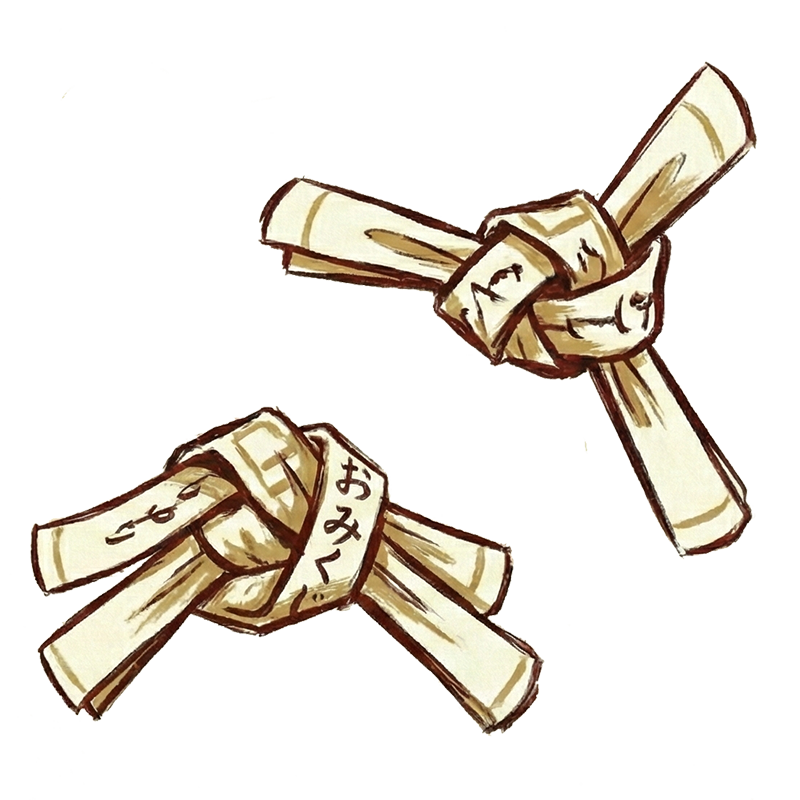
After drawing an omikuji, many people wonder, “Where should I keep it?” or “Does a Daikichi need special treatment?” The answer is straightforward: keeping your omikuji somewhere you can reread it regularly makes the most sense. This article covers the pros and cons of each storage option — wallet, planner, kamidana (home shrine), and more — along with specific advice for handling results from Daikichi to Kyo.
御要旨
- Taking Your Omikuji Home Is the Original Way to Use It
- Keeping It in Your Wallet Is the Most Practical Option
- Planners and Phone Cases Are Also Excellent Storage Options
- For Home Storage, Choose a Kamidana or a Visible Spot
- A Daikichi Omikuji Should Be Taken Home as a “Protective Charm”
- It Is Also Fine to Keep a Kyo Omikuji
- How to Let Go of an Omikuji That Has Served Its Purpose
- Final Thoughts
Taking Your Omikuji Home Is the Original Way to Use It
Many people believe that omikuji should be tied to a tree at the shrine, but this is a folk custom rather than an official rule. The Jinja Honcho (Association of Shinto Shrines) website states that “there is no problem with taking your omikuji home” and makes clear that “using the content as a guide for your daily life is what matters most” (Source: Jinja Honcho).
The custom of tying omikuji to trees became widespread only from the Edo period onward, making it a relatively recent practice in the long history of omikuji. During the Heian period, when Ganzan Daishi Ryogen devised the “Ganzan Daishi Hyakusen” (hundred-lot oracle), omikuji were used as decision-making tools for national affairs and religious ceremonies. Taking them home and rereading them was the norm.
The essence of omikuji is “advice from the gods and buddhas.” Checking only the rank and immediately tying it up is like receiving a letter and throwing it away without reading it. Taking it home and rereading it multiple times allows you to discover that a line you barely noticed on the day you drew it suddenly speaks to you later.
There Is No Right or Wrong Answer Between Tying and Taking Home
This is not to say that taking it home is definitively “correct.” Tying an omikuji at the shrine carries the meaning of “entrusting your wish to the gods,” and either choice is perfectly fine. However, knowing the benefits that come from taking it home will help you enjoy your omikuji on a deeper level.
Here is a summary of when each option makes sense:
| Choice | Best For | Reason |
|---|---|---|
| Take home | Those who want to apply the advice to daily life | Rereading it regularly turns it into a practical guide |
| Take home | Those who want it as a protective charm | Especially Daikichi or Kichi can serve as a source of confidence |
| Tie at shrine | Those who want to entrust a Kyo result to the gods | Tying symbolizes “leaving the bad luck at the shrine to be turned around” |
| Tie at shrine | Travelers who cannot easily carry it | Tying it respectfully at the shrine gives a sense of closure |
Keeping It in Your Wallet Is the Most Practical Option
The most popular storage spot for omikuji is the wallet, for the simple reason that you handle your wallet every day. Every time you open it, the omikuji catches your eye, naturally reminding you of its message.
The Best Spot in Your Wallet Is a Card Pocket
Avoid stuffing your omikuji loosely into the coin compartment. Contact with coins will damage the paper quickly, adding creases and making it hard to read.
The recommended approach is to fold the omikuji neatly and slide it into a card pocket. If you fold it to match the size of a standard card, it will stay flat and in good condition without adding bulk to your wallet.
- Card pocket – Protects the paper and makes it easy to pull out and reread
- Between bills – Thin and fits well, but risk of accidentally dropping it when paying
- Coin compartment – Avoid; moisture and friction cause rapid deterioration
No Need to Worry About “Being Disrespectful by Keeping It with Money”
Some people wonder whether keeping an omikuji in a wallet alongside money is disrespectful to the gods. The answer is no. A wallet is something most people treat with care, so placing your omikuji inside one is not “treating it carelessly.” On the contrary, keeping it in something you carry every day shows that you value the omikuji’s message. (Stashing it in the back of a drawer and forgetting about it entirely would be far more wasteful.)
Planners and Phone Cases Are Also Excellent Storage Options
Beyond wallets, any item you handle daily can serve as an effective storage spot. Planners and phone cases are particularly popular alternatives.
A Planner Encourages the Habit of Reflection
Slipping your omikuji into a planner means you will see it every time you check your schedule. If you develop the habit of rereading it at the start of each week or at the end of each month, you will naturally begin comparing the omikuji’s advice with what actually happened — a built-in “reflection” practice.
Tucking it into the back pocket of your planner or using it as a bookmark for the current week’s page works well. If you draw an omikuji daily, slipping each one between the pages by date creates your own personal “fortune diary.”
A Phone Case Keeps It Always Within Reach
If you use a folio-style phone case, you can place your omikuji in the card pocket. Since most people pick up their phone even more often than their wallet, opportunities to notice the omikuji’s message increase naturally.
Some people fold it small and tuck it behind a clear phone case. Opinions on the look may vary, but it provides a sense of reassurance from “always having it with you.”
For Home Storage, Choose a Kamidana or a Visible Spot
If you prefer to keep your omikuji at home rather than carrying it, the most respectful option is a kamidana (home Shinto altar). However, since many households do not have one, knowing alternative spots is helpful.
If You Have a Kamidana, Place It Near Your Ofuda
In homes with a kamidana, placing your omikuji near your ofuda (sacred tablets) and omamori (charms) feels natural. A kamidana is a “sacred, clean space for enshrining the gods,” and there is no better place to store your omikuji.
When placing omikuji on a kamidana, wrapping them in white paper or an envelope adds an extra layer of care. To avoid accumulating too many, establish a cycle of returning old omikuji to a shrine whenever you draw a new one.
Without a Kamidana, Choose a “Clean Spot Above Eye Level”
If you do not have a kamidana, choose a storage spot that meets these criteria:
- Above eye level – The top shelf of a bookcase or the top of a dresser. Items related to the gods should be placed high up as a general principle.
- Clean and dry – Humid spots cause paper to deteriorate. Avoid areas near the kitchen or bathroom.
- Visible daily – If you are going to store it, pick a spot where you will actually see and reread it.
Some people set up a small tray on their desk to keep their omikuji and omamori together, creating a “personal mini kamidana” that blends naturally into daily life. (What matters most is not the specific location but the intention of “not treating it carelessly.”)
Places You Should Definitely Avoid
Given that omikuji carry a “message from the gods and buddhas,” the following storage spots should be avoided:
| Place to Avoid | Reason |
|---|---|
| Pants pocket (left indefinitely) | High risk of the paper being destroyed in the washing machine |
| Near a trash can | Considered an impure location; not ideal emotionally either |
| On the floor or at foot level | Risk of stepping on it. Items related to the gods should not be placed at your feet. |
| Bathroom or toilet area | Humidity damages the paper, and these are considered impure spaces |
A Daikichi Omikuji Should Be Taken Home as a “Protective Charm”
When you draw Daikichi (great blessing), some people think, “I should tie it at the shrine so this good luck does not escape.” However, Daikichi is precisely the result you should take home and keep close. The reason is clear: rereading the positive message regularly keeps your spirits high and positively influences your actual behavior.
“Tying Daikichi Makes the Luck Stick” Is a Folk Belief
You may have heard claims like “tying Daikichi helps the luck take root” or “tying it to a tree shows gratitude to the gods.” These are not official shrine teachings. The culture of tying omikuji to trees only became common from the Edo period, and there is no basis for the idea that tying improves your fortune.
The best response to drawing Daikichi is to “reread the positive content multiple times and continue working hard without becoming complacent.” Pay special attention to advice about “things to watch out for during good times,” which Daikichi omikuji often include. (Getting overconfident after drawing Daikichi is like assuming you will pass a test without studying.)
Recommended Storage Spots for Daikichi
Keeping Daikichi close by as a “protective charm” is the most effective approach:
- Wallet card pocket – You see it every time you open your wallet, maintaining a positive mindset
- Inside planner cover – It is the first thing you see when you open your planner, setting a positive tone for the day
- Desk area – Having it in your line of sight during work helps maintain a proactive attitude
The key is not to let the joy of drawing Daikichi be a one-time event. Taking it home and rereading it transforms the omikuji from a “one-off result” into “daily guidance.”
It Is Also Fine to Keep a Kyo Omikuji
When you draw Kyo (bad luck) or Daikyo (great misfortune), the natural impulse is to “tie it and let it go.” However, holding a Kyo omikuji will not make your luck worse.
Kyo Is Especially Worth Rereading
Kyo omikuji contain specific guidance about “what to be careful about right now.” In romance, it might say “do not rush”; in career, “judge carefully.” These serve as highly useful daily reminders.
Feeling devastated by a Kyo result is like giving up after a health checkup shows “needs attention.” What matters is what you do afterward. Simply being mindful of the caution points your omikuji revealed is more than enough. (In fact, the common interpretation at shrines is that Kyo means “you are at rock bottom, and things can only go up from here.”)
Recommended Storage by Result
Here is a summary of storage approaches by omikuji result:
| Result | Recommended Storage | Perspective |
|---|---|---|
| Daikichi | Carry daily in your wallet or planner | Use as a protective charm. Reread the positive message regularly. |
| Kichi / Chukichi / Shokichi | Keep in wallet or planner | Use as a daily action guide |
| Suekichi / Hankichi | Wallet or visible spot at home | A reminder that “things are about to improve” |
| Kyo / Daikyo | Take home or tie at shrine; either is fine | If taking home, use as a personal “caution note”; if tying, you are “entrusting it to the gods” |
Regardless of the result, your storage method will not change your fortune. “My luck escaped because I treated a Daikichi carelessly” or “Things got worse because I took a Kyo home” — these things simply do not happen. How you apply the written advice to your daily actions is far more important than where you store it.
How to Let Go of an Omikuji That Has Served Its Purpose
Once you have been keeping an omikuji for a while, the question arises: “When should I let it go?” There is no official expiration date for omikuji, but the following are natural turning points:
- When you draw a new omikuji – The newest one becomes “the current message for you”
- During the New Year period – Return last year’s omikuji and welcome the new year’s fortune
- When your wish has been resolved – The advice has served its purpose
- When the paper has become worn – A sign that you have reread it thoroughly. Let it go with gratitude.
Returning It to a Shrine’s “Kosatsu Osamejo” Is the Most Respectful Option
The most respectful way to part with an omikuji that has served its purpose is to place it in the “Kosatsu Osamejo” (old charm collection box) or bring it for “Otakiage” (ritual burning) at a shrine. You do not need to return it to the same shrine where you drew it; any nearby shrine will accept it. Most shrines have collection boxes set up year-round, accepting returns outside of the New Year period as well.
For Home Disposal, Wrap It in White Paper with Salt
If visiting a shrine is not an option, home disposal is also acceptable. Wrap the omikuji in white paper or an envelope, sprinkle a small amount of salt, and dispose of it with gratitude. Throwing it in the trash will not bring bad luck, but handling it with care provides a clean sense of closure.
Returning a temple omikuji to a shrine, or a shrine omikuji to a temple, is generally not a problem. However, some institutions may have a policy of only accepting items from their own establishment, so checking in advance is more reliable.
Final Thoughts
There is no single “correct” place to keep your omikuji. A wallet, planner, phone case, or kamidana are all respectable choices. What matters most is not letting your omikuji become a “draw and forget” experience, but rereading its contents and applying them to your daily actions. If you drew Daikichi, take it home as a protective charm. If you drew Kyo, keep it as a personal reminder. Omikuji are like weather forecasts: what truly counts is how you act after learning the result.
Omikuji Sando offers a personalized fortune based on your date of birth, with 12 tiers of results available to draw for free every day. It is the perfect way to start a new habit of “carrying today’s omikuji in your wallet.” Go ahead and draw today’s fortune.
