
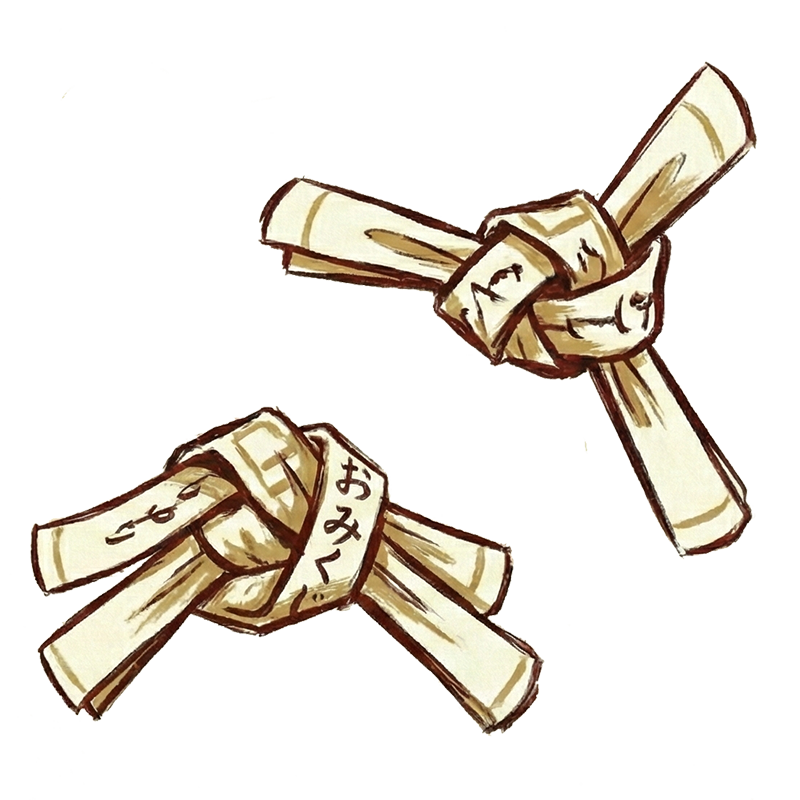
When drawing an omikuji, have you ever thought, “The person next to me might get the same result”? Shrine omikuji are fundamentally random. Because the system involves drawing a single stick from a box, anyone who draws has the same probability of getting the same result. However, with an omikuji based on your date of birth, the result becomes uniquely yours. This article explains in detail how date-of-birth-based omikuji work, how they differ from traditional omikuji, the effects of a daily drawing habit, and their connection to Japan’s traditional divination methods.
御要旨
- Date-of-birth omikuji produce “your personal fortune” rather than a completely random result
- The mechanism that derives fortune from a date of birth lies in the “destiny cycle”
- Traditional omikuji and date-of-birth omikuji serve different “roles”
- A daily omikuji habit becomes “a time to reflect on yourself”
- All of Japan’s traditional divination systems start from “date of birth”
- Date-of-birth omikuji also display lucky items and lucky colors
- Sharing results on social media creates “omikuji communication”
- If you want to draw omikuji daily, building it into your morning routine is the key to consistency
- Date-of-birth omikuji sit at the intersection of “divination” and “self-dialogue”
- In closing
Date-of-birth omikuji produce “your personal fortune” rather than a completely random result
Shrine omikuji work by randomly drawing from a box of lots. Since everyone draws from the same box, the result is determined entirely by probability regardless of your date of birth or name. There is no element of “you got Dai-Kichi because of who you are.”
In contrast, date-of-birth-based omikuji calculate fortune by combining your date of birth with today’s date, so even on the same day, people with different birthdates get different results. This is similar to weather forecasts. Just as weather forecasts give different predictions for “Tokyo” and “Osaka,” date-of-birth omikuji derive different fortunes for “a person born March 15, 1990” and “a person born July 22, 1985.”
Tracing the origins of omikuji leads back to the “Ganzan Daishi Hyakusen” devised by the Heian-period priest Ganzan Daishi Ryogen. Originally used to consult divine will on matters of state policy, the practice later spread for the purpose of divining individual fortunes (Source: Ganzan Daishi Hall, Mount Hiei Enryaku-ji). Date-of-birth omikuji can be seen as the digital evolution of this tradition of “fortune personalized to the individual.”
The mechanism that derives fortune from a date of birth lies in the “destiny cycle”
At the core of date-of-birth omikuji is the concept of “destiny cycles.” The number of days elapsed from your date of birth to today is divided into 12 cycles, and your fortune trend changes depending on which cycle you are currently in.
The 12 destiny cycles and their relationship to fortune
| Cycle | Fortune Trend | Image |
|---|---|---|
| Cycles 1-4 | Favorable period. Positive fortune results are more likely | A time when the wind is at your back |
| Cycles 5-8 | Standard period. Balanced fortune without bias | A time of calm waters |
| Cycles 9-12 | Subdued period. Negative results are slightly more common | A time calling for caution |
The important point is that even during subdued periods, the possibility of getting Dai-Kichi is not zero, and during favorable periods, Kyo can still appear. Cycles determine only the “tendency” and do not fix results 100%. Because daily results include moderate variation, the fun of wondering “what will today’s result be?” is preserved.
This system shares common ground with biorhythm theory. Biorhythm is the idea that a person’s physical, emotional, and intellectual states fluctuate in fixed cycles, proposed in the late 19th century by German physician Wilhelm Fliess and others. While scientific verification remains insufficient, the concept that “a person’s state is not constant but changes cyclically” has existed since ancient times in Eastern calendars and divination. (The cycles in date-of-birth omikuji also incorporate these traditional cyclical worldviews.)
A full 12-level ranking system expresses fortune in fine detail
Typical shrine omikuji use a 7-level system: Dai-Kichi, Kichi, Chu-Kichi, Sho-Kichi, Sue-Kichi, Kyo, and Dai-Kyo. However, some date-of-birth omikuji services employ a full 12-level system that adds Han-Kichi, Sue-Sho-Kichi, Sho-Kyo, Han-Kyo, and Sue-Kyo.
| Rank | Meaning |
|---|---|
| Dai-Kichi (Great Blessing) | The best fortune. A time to be proactive in all things |
| Chu-Kichi (Middle Blessing) | Good fortune. Steady progress ahead |
| Sho-Kichi (Small Blessing) | Gentle good fortune. Notice the small joys |
| Kichi (Blessing) | Stable fortune. Diligent effort will bear fruit |
| Han-Kichi (Half Blessing) | Good fortune but slightly restrained. Proceed without complacency |
| Sue-Kichi (Ending Blessing) | Modest now, but signs of improvement ahead |
| Sue-Sho-Kichi (Ending Small Blessing) | Midway through a slow upward trend |
| Kyo (Misfortune) | A time requiring caution. Can be overcome through careful action |
| Sho-Kyo (Small Misfortune) | Not as severe as Kyo, but remain vigilant |
| Han-Kyo (Half Misfortune) | With care, nothing serious will arise |
| Sue-Kyo (Ending Misfortune) | The lightest of the Kyo ranks. Signs of improvement are visible |
| Dai-Kyo (Great Misfortune) | Maximum caution required. Conversely, it cannot go any lower than this |
With 12 levels, subtle nuances like “between Kichi and Chu-Kichi” and “the lightest among Kyo” can be expressed. In terms of test grades, a 12-level system of “A+, A, A-, B+…” gives a more precise sense of where you stand than a simple “A, B, C” three-grade system.
Traditional omikuji and date-of-birth omikuji serve different “roles”
Traditional shrine omikuji and date-of-birth omikuji are not about which is better; they serve fundamentally different roles.
| Comparison | Shrine Omikuji | Date-of-Birth Omikuji |
|---|---|---|
| How results are determined | Completely random (drawn blindly from a box) | Calculated from date of birth + today’s date |
| Personalization | None (same probability for everyone) | Yes (different results per date of birth) |
| Drawing frequency | Only during shrine visits (typically a few times per year) | Can be drawn daily |
| Cost | Typically 100-300 yen offering | Many services are free |
| Location | Must visit a shrine or temple | Anytime from smartphone or PC |
| Atmosphere and sanctity | The air of the shrine grounds, wooden box, paper lot | Digital, but can recreate a Japanese atmosphere through design |
| Record keeping | Paper storage (risk of loss) | Automatically recorded by app |
Shrine omikuji are “part of the shrine visit experience,” and the act of drawing one while feeling the atmosphere of the grounds holds value in itself. Date-of-birth omikuji, on the other hand, have a stronger aspect as “a habit integrated into daily life,” suited for checking your fortune each morning like a weather forecast. (Ideally, draw at a shrine on special occasions, and digitally for daily use.)
A daily omikuji habit becomes “a time to reflect on yourself”
When you hear about drawing omikuji every day, you might wonder, “Is there any point in drawing so frequently?” However, a daily drawing habit offers benefits beyond just “whether the fortune is accurate.”
Omikuji serve as a tool for seeing “today’s self” objectively
Drawing omikuji daily is like keeping a diary. If a diary is a tool for reflecting on “what happened today,” an omikuji is a tool that presents “what advice I need today.”
In the field of psychology, there is a concept called “self-monitoring”: objectively observing and recording your own behaviors and emotions to become aware of unconscious habits and patterns. Checking your omikuji results daily and consciously thinking, “Work fortune is low today, so I’ll proceed carefully” or “Romance is good, so I’ll be proactive” is a form of self-monitoring.
The messages written on omikuji carry greater value as “triggers for action” than as predictions of accuracy. If it says “Awaited person – coming,” you might think about going out a bit more than usual. If it says “Studies – effort brings good fortune,” you feel motivated to concentrate on studying. By receiving results not as “will it come true or not” but as “an action guide,” omikuji become a tool for positively transforming daily life.
Drawing daily reveals the “waves of fortune”
Drawing omikuji just once gives you only a single data point of good or bad. But drawing continuously for 30 days reveals patterns like, “The first half of the month had many positive results, but the second half was more subdued.”
This is similar to stock chart analysis. Looking at a single day’s stock price reveals nothing about the overall trend, but viewing a month of data shows whether it is an upward or downward trend. Similarly with omikuji, accumulating results over a period makes it easier to understand what phase your fortune is currently in.
With date-of-birth omikuji, because 12 destiny cycles exist, fortune trends shift approximately every two weeks. Recording daily results helps you develop a sense of “I’ve entered a favorable period” or “It’s time to be more cautious.” (This is the same logic as checking a long-range weather forecast to plan a trip.)
All of Japan’s traditional divination systems start from “date of birth”
The idea of divining fortune from a date of birth is not a modern digital invention. Many of Japan’s traditionally beloved divination methods use date of birth as foundational information.
Kyusei Kigaku derives your “honmeisei” (birth star) from your date of birth
Kyusei Kigaku (Nine Star Ki) is a divination system that identifies one of nine “birth stars” from the year of birth and uses it to determine annual fortune and auspicious directions. The nine stars are Ippaku Suisei, Jikoku Dosei, Sanpeki Mokusei, Shiroku Mokusei, Goo Dosei, Roppaku Kinsei, Shichiseki Kinsei, Happaku Dosei, and Kyushi Kasei, automatically determined by birth year.
Kyusei Kigaku uses the first day of spring (Risshun, around February 4th) as the start of the year, the point at which each year’s fortune shifts. This concept of “fortune changing cyclically based on the calendar” shares the same fundamental thinking as the destiny cycles in date-of-birth omikuji.
The Chinese zodiac (Junishi) marks 12-year cycles from birth year
The Chinese zodiac (eto) also uses birth year as a starting point to read fortune through 12-year cycles. The 12 animals cycle in order: Rat, Ox, Tiger, Rabbit, Dragon, Snake, Horse, Sheep, Monkey, Rooster, Dog, and Boar, with the year of your own zodiac animal (toshi-otoko/toshi-onna) carrying special significance.
Furthermore, combining the 10 Heavenly Stems (jikkan) with the 12 Earthly Branches (junishi) creates 60 possible combinations, completing one full cycle in 60 years. The celebration of “kanreki” (60th birthday) originates from completing one full cycle of this system, illustrating how deeply the concept that date of birth determines life cycles is rooted in Japanese culture (Source: National Diet Library, “Japanese Calendar”).
Rekichu (calendar notes) assign fortune directly to dates themselves
The six-day calendar cycle (rokuyo) familiar through terms like “Taian” (great safety), “Butsumetsu” (Buddha’s death), and “Tomobiki” (friend-pulling) is also a system that assigns fortune to dates. Rokuyo is determined by dividing the sum of the lunar month and day by six, so fortune is directly tied to the date itself.
Beyond rokuyo, the Japanese calendar contains various fortune-determining systems such as “Junichoku” (twelve day-signs) and “Nijuhasshuku” (twenty-eight lunar mansions). All of these read fortune based on “dates” and “celestial cycles,” and date-of-birth omikuji, which cross-reference date of birth with today’s date to derive fortune, lie on the natural extension of these traditional Japanese calendar cultures.
(Some may think “divination is unscientific,” but calendar notes and Kyusei Kigaku are systems of wisdom that have provided guidance for people’s lives for hundreds of years. Their value lies not in “whether they are scientifically correct” but in “whether they function as triggers for action.”)
Date-of-birth omikuji also display lucky items and lucky colors
In addition to the fortune ranking, shrine omikuji include categories like “Awaited Person,” “Lost Items,” “Travel,” and “Business.” Date-of-birth omikuji follow this tradition while adding fortune-boosting information adapted to modern life.
Each omikuji category becomes a daily guideline
| Category | Meaning | How to Apply in Daily Life |
|---|---|---|
| Wishes | How your current wish will progress | Check before making big decisions |
| Romance | Romantic fortune trends | Reference for planning confessions or dates |
| Awaited Person | Whether the person you await will come | Mental preparation for new encounters |
| Work | Work fortune trends | Timing for presentations or negotiations |
| Travel | Fortune for travel | Planning business trips or vacations |
| Studies | Academic fortune | Motivation for exam prep or certification studies |
| Health | Health-related cautions | Awareness for health management |
In addition to these, some services display information like “Today’s Lucky Item,” “Lucky Color,” “Lucky Food,” “Lucky Person,” “Auspicious Direction,” “Lucky Fragrance,” and “Lucky Outfit Coordination.” Drawing an omikuji in the morning and seeing “Today’s lucky color is blue” might inspire you to wear a blue tie or accessory, adding a small joy to the start of your day.
(There is no scientific basis for lucky items or lucky colors, but the very act of deciding “I’ll be mindful of this today” becomes a trigger for positive action. Some may laugh and call it a placebo effect, but if a placebo effect improves your mood, it is valuable enough.)
Another enjoyable aspect of date-of-birth omikuji is sharing results on social media. Posting your morning omikuji result on X (formerly Twitter), LINE, or Facebook creates opportunities for communication with friends and family.
Exchanges like “I got Dai-Kichi today,” “What’s Sue-Sho-Kichi?,” or “My lucky item was sneakers so I’m wearing sneakers to the office” create casual social media conversations. This is the digital version of the fun of showing your results to friends at a shrine after drawing omikuji together.
Comparing results with friends who share the same birthday can be particularly interesting. With date-of-birth omikuji, people with the same birthday are in the same destiny cycle, so their fortune trends may be similar. However, since results include moderate variation, they will not necessarily be identical. The discovery that “we share the same birthday but got different results” also makes for great conversation.
If you want to draw omikuji daily, building it into your morning routine is the key to consistency
To maintain a daily omikuji habit long-term, it helps to decide in advance “when to draw.” The most recommended timing is morning.
Drawing in the morning sets your direction for the day
- Draw on your smartphone before commuting or going to school (takes less than 1 minute)
- Time it with before or after breakfast, when making coffee
- Check your fortune in the same flow as checking the weather forecast
- Based on the result, decide just one thing to “be mindful of today”
Drawing in the evening is not bad, but morning draws are more useful as guidance for “how to spend the day ahead.” Evening draws tend to become a “check if it was right or wrong” review of the day that has already passed. Omikuji are best used as hints for “how to act going forward.”
The habit-forming barrier is getting past 21 days
Research in behavioral psychology suggests it takes an average of 66 days for a new habit to become established (Source: European Journal of Social Psychology, Lally et al., 2010). However, for simple actions, habits often form in about 21 days.
Drawing an omikuji takes less than a minute. Try drawing every morning for three weeks. By the end of three weeks, you should feel that “something is off if I don’t draw it.” (Just like brushing your teeth: when not doing it feels uncomfortable, habit formation has succeeded.)
Date-of-birth omikuji sit at the intersection of “divination” and “self-dialogue”
Whether to call date-of-birth omikuji “divination” is debatable. They differ from systematic divination arts like Kyusei Kigaku or Four Pillars of Destiny, and they do not scientifically predict fortune. Yet, in that they externally present “what advice do I need today,” they serve the same function as divination.
Psychologist Carl Jung termed the psychological phenomenon of “finding meaning in coincidences,” seen in divination and tarot, as “Synchronicity.” The moment when an omikuji result feels perfectly aligned with your situation is precisely an experience of synchronicity. Regardless of whether a scientific causal relationship exists, the very feeling that “this is the message I need right now” has a psychological effect.
Date-of-birth omikuji are not as heavy as divination, yet not purely random either. Because they produce “a result uniquely yours,” they are easy to accept, and because of daily variation, they do not grow stale. This exquisite balance is why they integrate so naturally into daily routines.
In closing
Omikuji based on your date of birth differ from the completely random shrine omikuji by calculating fortune from “your date of birth” combined with “today’s date.” Results are personalized, and because a different fortune is presented each day, you can track your own changes like a diary. All of Japan’s traditional divination systems, including Kyusei Kigaku, the Chinese zodiac, and calendar notes, use date of birth or dates as their starting point, and date-of-birth omikuji carry forward this cultural lineage through modern digital technology. What matters is not getting caught up in whether the result is good or bad, but receiving “what message is being delivered to me today” and using it as a trigger for action.
“Omikuji Sando” is a service where you can experience exactly the “daily omikuji based on your date of birth” described in this article. It offers your personal fortune derived from your date of birth and today’s date across 12 levels, available for free every day. Lucky items, lucky colors, lucky foods, and other fortune-boosting information are delivered daily, and results can be shared with a single tap on X, Facebook, or LINE. Simply enter your date of birth, and your personalized omikuji will tell you today’s fortune. Start by drawing today’s omikuji.
