
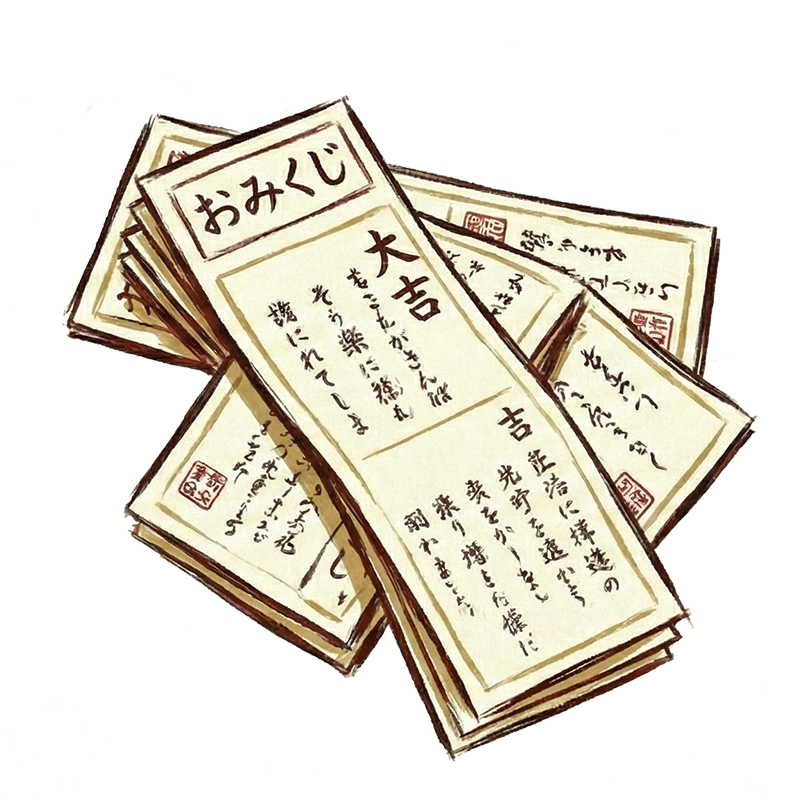
The joy of omikuji goes far beyond simply learning your fortune. Shrines and temples across Japan offer an incredible variety of omikuji: ceramic animal-shaped omikuji, water omikuji where letters magically appear when floated on water, weather-themed omikuji that tell your fortune through forecasts, and many more. From adorable designs you will want to photograph to rare omikuji you can only find at specific shrines, this article is a curated guide to the most distinctive omikuji across Japan. (It should also come in handy when choosing your next travel destination.)
御要旨
- Animal-themed omikuji are becoming a staple at shrines nationwide
- A comparison table of shrines with animal omikuji
- “Water omikuji” where letters appear when floated on water are the signature interactive omikuji
- Unique omikuji like the weather-based “Teruteru Mikuji” are also worth discovering
- Regional design omikuji showcase the unique character of each locality
- Tips for enjoying cute and unique omikuji to the fullest
- Practical examples for incorporating omikuji tours into your travel plans
- In closing
Animal-themed omikuji are becoming a staple at shrines nationwide
In recent years, ceramic omikuji shaped like animals have been spreading rapidly at shrines across Japan. Since you can take home the small animal figurine as a good luck charm even after reading the fortune slip, the greatest appeal is that your shrine visit becomes a lasting, tangible memory.
The reasons behind their popularity are clear: they are highly photogenic for social media, they are collectible, and above all, the animals chosen are connected to the local area or the enshrined deity. They are not just “cute merchandise” but carry genuine cultural significance, which is why they are so beloved.
Kasuga Taisha’s “Deer Omikuji” is the very symbol of Nara
At Kasuga Taisha in Nara City, Nara Prefecture, visitors adore the “Shika Mikuji” (Deer Omikuji), featuring a deer carved in Nara’s traditional “ittobori” (single-knife carving) craft holding an omikuji slip in its mouth. The offering price ranges from 500 to 600 yen, with both ittobori and ceramic versions available.
The principal deity of Kasuga Taisha, Takemikazuchi-no-Mikoto, is said to have arrived in Kasuga riding a white deer from Kashima Jingu in Hitachi Province (present-day Ibaraki Prefecture) (Source: Kasuga Taisha). The deer omikuji is not merely a cute figurine but a sacred offering rooted in this mythology. Each one has a subtly different facial expression, adding the fun of choosing “your own special deer.” (When you line them up, the differences in expression become wonderfully apparent and endearing.)
Okazaki Shrine’s “Rabbit Omikuji” is one of Kyoto’s top photo spots
Okazaki Shrine in Kyoto City is affectionately known as the “Rabbit Shrine” because the rabbit serves as the divine messenger. The “Usagi Mikuji Omamori” (Rabbit Omikuji Charm) costs 500 yen and comes in white and pink ceramic rabbits containing omikuji slips inside.
The sight of rows upon rows of rabbit omikuji offered by visitors is one of Kyoto’s most famous photo spots. The shrine is known for blessings of conception, safe childbirth, and matchmaking, and visitors seeking the prolific fertility associated with rabbits come in an endless stream. Whether you take yours home to display on your desk or offer it to become part of the scenery, either choice is the right one.
Obihiro Shrine’s “Long-tailed Tit Omikuji” features the snow fairy
At Obihiro Shrine in Obihiro City, Hokkaido, the “Shima Enaga Mikuji” (Long-tailed Tit Omikuji) is modeled after the adorable bird nicknamed the “snow fairy.” The offering price is 500 yen.
The long-tailed tit is a small wild bird found in Hokkaido, known for its fluffy white body. Since these birds can actually be spotted on the shrine grounds from autumn through spring, it was a natural choice for an omikuji motif. The idea came from Chief Priest Ohno of Obihiro Shrine, a bird enthusiast, and it took two years from concept to completion (Source: Tabirai). It also makes a wonderful Hokkaido souvenir.
Kawagoe Hikawa Shrine’s “Sea Bream Omikuji” is an interactive fishing experience
At Kawagoe Hikawa Shrine in Kawagoe City, Saitama Prefecture, visitors use a small fishing rod to “catch” a sea bream-shaped omikuji called the “Tai Mikuji.” The offering price is 300 yen, and there are two types: the red “Ichinen Antai (Peaceful Year) Mikuji” and the pink “Ai Tai (Love Sea Bream) Mikuji.”
Seasonal limited-edition colors such as white, blue, yellow, and green sometimes appear, attracting collectors as well (Source: Kawagoe Hikawa Shrine Official Note). The rule with “Ai Tai Mikuji” is that you take the entire sea bream home, making it popular as a matchmaking charm too. The excitement of fishing for your omikuji with a rod puts a smile on everyone’s face, from children to adults.
Hiroshima Gokoku Shrine’s “Carp Omikuji” is unique to the home of the Hiroshima Carp
Hiroshima Gokoku Shrine in Hiroshima City sits within the grounds of Hiroshima Castle (also known as “Carp Castle”). The “Koi Mikuji” (Carp Omikuji) offered here costs 300 yen, featuring adorable red and white carp holding omikuji slips, and is very popular among visitors.
At this shrine, known for victory prayers by the Hiroshima Toyo Carp baseball team, the carp holds special significance. The main hall displays statues of paired carp and ascending carp, and drawing a carp omikuji is itself considered a lucky charm for success in competitions. Whether you are a Carp fan or simply visiting Hiroshima, this is definitely a spot worth stopping by.
A comparison table of shrines with animal omikuji
Here is a summary table of representative animal omikuji from across Japan. Checking in advance which omikuji you might encounter at your travel destination makes shrine visits even more enjoyable.
| Shrine Name | Location | Animal Motif | Offering Price | Features |
|---|---|---|---|---|
| Kasuga Taisha | Nara City, Nara | Deer | 500-600 yen | Two types: ittobori and ceramic. Each has a unique expression |
| Okazaki Shrine | Kyoto City, Kyoto | Rabbit | 500 yen | White and pink. Rows of offerings create a photo spot |
| Obihiro Shrine | Obihiro City, Hokkaido | Long-tailed Tit | 500 yen | “Snow fairy” motif. Took the chief priest 2 years to develop |
| Kawagoe Hikawa Shrine | Kawagoe City, Saitama | Sea Bream | 300 yen | Interactive fishing style. Seasonal limited colors available |
| Hiroshima Gokoku Shrine | Hiroshima City, Hiroshima | Carp | 300 yen | Red and white carp from Carp Castle. A lucky charm for competitions |
| Dazaifu Tenmangu | Dazaifu City, Fukuoka | Uso Bird (Bullfinch) | 300 yen | The bird that protected Sugawara no Michizane. Painted on a wooden tube |
| Fushimi Inari Taisha | Kyoto City, Kyoto | Fox | From 200 yen | 32 types of omikuji. Includes the rare “Dai-Dai-Kichi” |
Since animal omikuji can be taken home and displayed, they make excellent travel souvenirs. More and more people are visiting multiple shrines to build a collection, and “omikuji collecting” is becoming established as a new way to enjoy shrine visits.
“Water omikuji” where letters appear when floated on water are the signature interactive omikuji
With regular omikuji, you open the paper and immediately see your result. But “Mizu Mikuji” (Water Omikuji) offer a different experience. You receive what appears to be a blank white sheet of paper, and when you float it on the shrine’s sacred spring water, letters gradually emerge. The suspense of waiting those few seconds for the result to appear is something you simply cannot experience with ordinary omikuji.
Kifune Shrine’s “Mizu-ura Mikuji” is connected to the water deity
Kifune Shrine in Kyoto City enshrines the water deity Takaokami-no-Kami. The “Mizu-ura Mikuji” (Water Divination Omikuji) costs 200 yen, and when you float the paper on the sacred spring called “Mizuura Yuniwa” within the shrine grounds, letters appear in about one minute.
The fortune covers six categories: “Wishes,” “Health,” “Finances,” “Studies/Work,” “Romance,” and “Travel.” There is also a modern touch: scanning a QR code lets you read the content in multiple languages. At a shrine dedicated to the water deity, having your destiny revealed by water carries a profound meaning. (The shrine is also famous for matchmaking blessings, so couples are particularly common visitors.)
Shimogamo Shrine’s “Water Omikuji” can be drawn at a World Heritage Site
At Shimogamo Shrine (formally Kamomioya Shrine) in Kyoto City, the “Mizu Mikuji” floated on the Mitarashi River is also popular. The offering price is 300 yen, and it is available from 9:00 to 16:00.
Shimogamo Shrine is a World Heritage-listed shrine of great historical significance, and experiencing a water omikuji in the Mitarashi River flowing through its grounds is truly exceptional. The Mitarashi River is also said to be the origin of the name “mitarashi dango” (sweet rice dumplings), and the act of floating an omikuji on these historic sacred waters is itself a special experience.
Unique omikuji like the weather-based “Teruteru Mikuji” are also worth discovering
Beyond animal omikuji and water omikuji, there are creatively unique omikuji throughout Japan. Those that convey fortunes using original expressions instead of the traditional “Kichi” or “Kyo” are sure to bring a smile the moment you draw them.
Kisho Shrine’s “Teruteru Mikuji” expresses fortune through weather
Within the grounds of Koenji Hikawa Shrine in Suginami Ward, Tokyo, stands Kisho Shrine (Weather Shrine), the only shrine in Japan dedicated to the weather deity. The “Teruteru Mikuji” offered here costs 500 yen and comes as teru teru bozu (sunshine dolls) in eight colors.
The most distinctive feature is that fortunes are written not as “Kichi” or “Kyo” but as weather conditions like “Clear Skies,” “Sunny,” “Cloudy,” and “Foggy” (Source: Koenji Hikawa Shrine Official Site). Each of the eight colors has a meaning such as “Red for victory” “Pink for good relationships” and “Blue for good fortune,” making even the color selection exciting. When your fortune is expressed as “Today’s fortune: Clear Skies” like a weather forecast, it somehow makes your day feel brighter.
Dazaifu Tenmangu’s “Uso Bird Omikuji” features the bird that wards off bad luck
At Dazaifu Tenmangu in Dazaifu City, Fukuoka Prefecture, the “Uso-dori Mikuji” (Bullfinch Bird Omikuji) is a popular item. The offering price is 300 yen, with an omikuji slip inside a wooden tube decorated with a bullfinch illustration.
The bullfinch is said to be the bird that protects Tenjin-sama (Sugawara no Michizane), believed since ancient times to bring good fortune. According to legend at Dazaifu Tenmangu, when Michizane was attacked by bees, a flock of bullfinches flew in and saved him. Every year on January 7th, the “Usokae” ceremony is held, where the previous year’s lies are purified through a play on words between “uso” (lie) and “uso” (bullfinch) (Source: Dazaifu Tenmangu). Knowing the history of the god of learning and the bullfinch makes the words on your omikuji resonate even more deeply.
Fushimi Inari Taisha’s omikuji has 32 types including “Dai-Dai-Kichi”
The omikuji at Fushimi Inari Taisha in Kyoto City features an exceptionally rare system of 32 different fortune rankings. In addition to the standard “Dai-Kichi,” “Kichi,” and “Kyo,” there are unique ranks like “Dai-Dai-Kichi” (Super Great Blessing), “Kyo-nochi-Dai-Kichi” (Bad Luck Turning to Great Blessing), “Kikkyo-Aihanbun” (Half Good Half Bad), and “Kikkyo-Ainakaba” (Good and Bad in Balance), unseen at other shrines.
The probability of getting Dai-Dai-Kichi is said to be about 6.25% (2 out of 32 types). Even more noteworthy is that Fushimi Inari Taisha’s omikuji contains no “Kyo” (bad luck) or “Dai-Kyo” (great bad luck). The design ensures that every result includes a positive message, reflecting thoughtful consideration for visitors. (With 32 types, you can enjoy a fresh sense of anticipation each time you visit, wondering which rank will appear next.)
Regional design omikuji showcase the unique character of each locality
Shrines across Japan feature “regional omikuji” that reflect local culture, specialties, and history. Encountering a regional omikuji during your travels can become a gateway to deeper understanding of local culture.
Niigata Prefecture is a treasure trove of unique omikuji
Niigata Prefecture, which has the most shrines in Japan, is also a treasure trove of unique omikuji. The Niigata Tourism Association has even created a special feature on the “Top 10 Niigata Omikuji,” such is the abundance of distinctive omikuji scattered throughout the prefecture (Source: Niigata Tourism Association).
For example, Gosen Hachiman Shrine offers a water omikuji where you float the paper in a designated area. Touring Niigata Prefecture’s shrines to collect various omikuji is gaining attention as a new way to enjoy regional tourism.
Yamaguchi Prefecture offers a rare omikuji and spiritual spot pilgrimage
Yamaguchi Prefecture officially promotes a “Rare Omikuji & Spiritual Spot Pilgrimage” as a model travel course, reflecting how well-stocked the region is with unusual omikuji (Source: Oidemase Yamaguchi).
In Shunan City, Yamaguchi Prefecture, there is Joshidosha (Women’s Moral Society), which manufactures approximately 70% of all omikuji distributed to shrines nationwide. Because this is the land where omikuji are actually “made,” it is only natural that a culture surrounding omikuji has taken root here. If you are interested in the history of omikuji, visiting Yamaguchi Prefecture and learning about this background will change the way you look at omikuji.
Osaka’s “Haniwa Omikuji” and Okayama’s “Iroha Ura” are also distinctive
At Domyoji Tenmangu in Fujiidera City, Osaka Prefecture, a “Haniwa Omikuji” modeled after ancient clay figurines (haniwa) from the Kofun period is offered. Unique to this shrine that enshrines the ancestral deity of the Haji clan (potters), the design evokes the romance of ancient Japan.
At Achi Shrine in Kurashiki City, Okayama Prefecture, a limited edition omikuji called “Iroha Ura” is distributed. Packed with features inspired by the traditional iroha poem, it is reputed to make shrine visits many times more enjoyable. Regional omikuji serve as windows into local history and culture, offering experiences deeper than what any guidebook can provide.
Tips for enjoying cute and unique omikuji to the fullest
When you encounter distinctive omikuji, you naturally want to make the most of the experience. Here are some practical tips for enriching your omikuji pilgrimage.
Check shrine official websites and social media in advance
Not every shrine offers unique omikuji. Checking official websites and social media accounts for information about offerings in advance will help you avoid the disappointment of arriving to find they are unavailable.
- Check shrine official websites and Instagram for “omikuji” or “offerings” information
- If seasonal limited omikuji are available, check the distribution period
- Popular omikuji can sell out, so visiting early is recommended
- Searching “[shrine name] omikuji” on review sites and social media will yield photo-accompanied reviews
Omikuji are not just for drawing once but for re-reading
It is easy to get captivated by cute designs, but the essence of omikuji lies in the written message. Rather than just displaying the animal figurine, occasionally re-reading the fortune message inside turns it into a daily guiding principle.
Omikuji are like weather forecasts: what matters is how you act after learning the result. Do not let your guard down even with “Dai-Kichi,” and stay positive even with “Kyo.” That attitude is the true way to enjoy omikuji. (Having a cute figurine at hand naturally creates occasions to recall the omikuji’s message, making animal omikuji practical as well.)
For photogenic shots, morning visits are best
If you want to take photos of animal omikuji and photo spots, morning visits are recommended. The natural light is softer and the grounds are relatively uncrowded, allowing you to take photos at a relaxed pace. The rows of rabbit omikuji at Okazaki Shrine and the moment of fishing for sea bream omikuji at Kawagoe Hikawa Shrine, in particular, look dramatically more beautiful when photographed in the gentle morning light.
Shrines are places of worship. Please be considerate of other visitors and avoid getting too absorbed in photography. Some shrines have designated no-photography areas, so please check in advance.
Practical examples for incorporating omikuji tours into your travel plans
If you are planning a trip centered on cute and unique omikuji, it is most efficient to group visits by area. Below is a sample model plan for omikuji touring.
Kyoto omikuji tour plan
| Shrine | Omikuji Type | Offering Price | Estimated Time |
|---|---|---|---|
| Okazaki Shrine | Rabbit Omikuji (white and pink) | 500 yen | 30 min – 1 hour |
| Shimogamo Shrine | Water Omikuji | 300 yen | 30 min – 1 hour |
| Kifune Shrine | Water Divination Omikuji | 200 yen | 1 – 1.5 hours |
| Fushimi Inari Taisha | Omikuji (32 types) | From 200 yen | 1 – 2 hours |
Kyoto has a concentration of cute and unique omikuji within the city, making it possible to visit multiple locations in a single day. Since Okazaki Shrine and Shimogamo Shrine are relatively close together, an efficient plan is to visit both in the morning and extend your trip to the Kifune area in the afternoon.
Kanto area omikuji tour plan
In the Kanto area, combining Kawagoe Hikawa Shrine’s sea bream omikuji with Koenji Hikawa Shrine (Kisho Shrine)’s teruteru omikuji is recommended. Kawagoe is easily accessible from central Tokyo, and you can enjoy exploring the “Little Edo” streetscape. Kisho Shrine is just a 2-minute walk from JR Koenji Station, offering an excellent location that pairs well with exploring the subcultural neighborhood of Koenji.
When you line up the omikuji collected from your travels, you can revisit your travel memories anytime. Omikuji touring is a new travel style that lets you enjoy shrine visits and sightseeing simultaneously.
In closing
Across Japan’s shrines, you will find a rich variety of unique omikuji: ceramic animal-motif omikuji, water omikuji with letters that appear when floated, teruteru omikuji that tell fortunes through weather, and many more. Even an omikuji drawn for its cute design becomes a daily guiding principle when you re-read its message. The visual delight combined with the original meaning of omikuji is the greatest appeal of these distinctive fortune slips. On your next trip, consider adding “omikuji touring” to your travel itinerary.
Omikuji Sando offers a personalized fortune derived from your date of birth, available to draw for free every day across 12 fortune levels. Comparing your online fortune with the omikuji you draw at shrines during your travels is another enjoyable way to experience Japanese fortune culture. Why not check your fortune today?
