
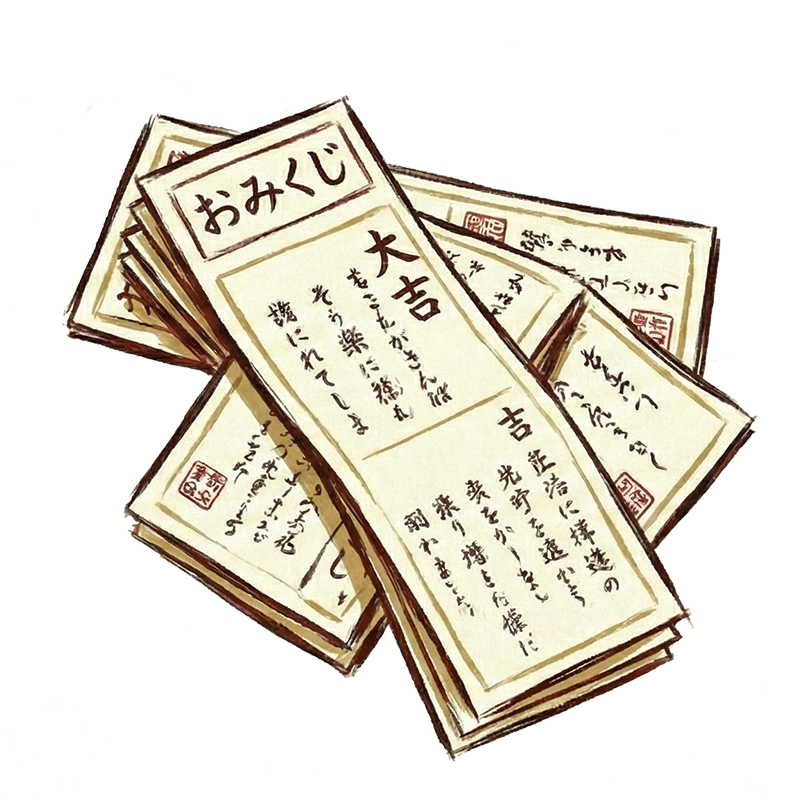
Of the approximately 80,000 shrines in Japan, about 60% offer omikuji. Among them are shrines so renowned for their omikuji that people say “it’s worth visiting just to draw this fortune.” Senso-ji, where 30% of fortunes are kyo (misfortune); Meiji Jingu, which has no fortune rankings at all; Kifune Shrine, where text appears when you float the paper on water; Kawagoe Hikawa Shrine, where you fish for sea bream with a rod. The format and meaning of omikuji differ completely from shrine to shrine. This article presents a ranking of Japan’s most famous omikuji shrines, covering each one’s omikuji features, varieties, offering prices, and the stories behind their fame.
御要旨
- Ranking of Shrines Famous for Omikuji: All 15 at a Glance
- Senso-ji’s Omikuji: 30% Are Kyo, Preserving the Original “Kannon Hyakusen”
- Meiji Jingu’s “Omigokoro”: Waka Poetry Omikuji with No Fortune Rankings
- Kifune Shrine’s “Mizuura Mikuji”: Text Appears When Floated on Water
- Fushimi Inari Taisha’s Omikuji Has 32 Rankings Including “Dai-daikichi”
- Kawagoe Hikawa Shrine’s “Tai Mikuji”: Catch Sea Bream with a Fishing Rod
- Kasuga Taisha’s “Shika Mikuji”: Deer Carved in Nara’s Traditional Ittobori Style
- Izumo Taisha’s Omikuji Has No Fortune Rankings, Only “Words from the Deity”
- Tsurugaoka Hachimangu Transforms Kyo into “Strong Fortune”
- Regional Guide to Shrines Famous for Omikuji
- Three Common Traits of Shrines That Become Famous for Their Omikuji
- Three Things to Keep in Mind When Visiting Shrines Famous for Omikuji
- In Closing
Ranking of Shrines Famous for Omikuji: All 15 at a Glance
First, here is an overview table of all 15 shrines featured in this ranking. The ranking is based on a comprehensive assessment of “omikuji uniqueness,” “name recognition,” and “visitor buzz.”
| Rank | Shrine/Temple | Location | Omikuji Feature | Offering |
|---|---|---|---|---|
| 1 | Senso-ji | Taito, Tokyo | About 30% are kyo. Preserves the original Kannon Hyakusen format | 100 yen |
| 2 | Meiji Jingu | Shibuya, Tokyo | No fortune rankings. 30 waka poems by Emperor Meiji and Empress Shoken called “Omigokoro” | 100 yen |
| 3 | Kifune Shrine | Kyoto | “Mizuura Mikuji” — text appears when floated on water | 200 yen |
| 4 | Fushimi Inari Taisha | Kyoto | 32 fortune rankings including “Dai-daikichi” (super great blessing) | 200 yen |
| 5 | Kawagoe Hikawa Shrine | Kawagoe, Saitama | “Tai Mikuji” — fish for sea bream with a rod | 300 yen |
| 6 | Kasuga Taisha | Nara | “Shika Mikuji” — ittobori carved deer holding an omikuji | 600 yen |
| 7 | Izumo Taisha | Izumo, Shimane | No fortune rankings. Only numbered messages from the deity | 100 yen |
| 8 | Tsurugaoka Hachimangu | Kamakura, Kanagawa | “Kyoun Tsukami Ya” turns kyo into strong fortune. Dove mikuji also popular | 200 yen |
| 9 | Tokyo Daijingu | Chiyoda, Tokyo | Rich romance-focused omikuji including love mikuji and blood type mikuji | 200 yen |
| 10 | Dazaifu Tenmangu | Dazaifu, Fukuoka | Uso (bullfinch) mikuji. Waka omikuji with no kyo | 100-300 yen |
| 11 | Sumiyoshi Taisha | Osaka | “Sumiyoshi Usagi Mikuji” — omikuji inside a rabbit figurine | 300 yen |
| 12 | Shimogamo Shrine | Kyoto | “Mizu Mikuji” — dipped in the Mitarashi River | 300 yen |
| 13 | Kitano Tenmangu | Kyoto | Five-color “Mizuurai Mikuji” and zodiac omikuji | 200 yen |
| 14 | Imado Shrine | Taito, Tokyo | Maneki-neko mikuji. Birthplace of the beckoning cat | 200 yen |
| 15 | Okazaki Shrine | Kyoto | Pink and white “Usagi Mikuji.” Shrine grounds filled with rabbits | 500 yen |
From here, we’ll introduce each shrine’s omikuji in detail. (The “why” behind each shrine’s famous omikuji — something a simple list can’t convey — is what makes omikuji culture truly fascinating.)
Senso-ji’s Omikuji: 30% Are Kyo, Preserving the Original “Kannon Hyakusen”
When it comes to famous omikuji, Senso-ji in Tokyo’s Asakusa is invariably the first name mentioned. The rumor that “Senso-ji has a lot of kyo” is true. According to Senso-ji’s official statement, the distribution is: Daikichi 17%, Kichi 35%, Hankichi 5%, Shokichi 4%, Sueshokichi 3%, Suekichi 6%, Kyo 30% (Source: Senso-ji official website).
The High Proportion of Kyo Exists Because They’ve Preserved the Ancient Format
Senso-ji’s omikuji is called “Kannon Hyakusen” (Kannon’s Hundred Lots), based on the 100 lots systematized by Ganzan Daishi Ryogen during the Heian period. Many temples and shrines once used this 70/30 ratio (70% good fortune, 30% misfortune). However, over time, many reduced or eliminated kyo, believing that “if kyo comes up, people won’t draw omikuji.”
Senso-ji has bucked this trend, preserving the ancient distribution exactly as it was. The temple maintains the position that “even those who draw kyo should not fear, but live with patience and sincerity, and fortune will turn favorable,” and has publicly stated it has no intention of reducing kyo. (The abundance of kyo is precisely what makes it newsworthy, and the experience of “drawing kyo at Senso-ji” going viral on social media has actually made Senso-ji’s omikuji the most famous in Japan.)
A Traditional Method: Shake the Cylinder and Draw a Stick for 100 Yen
Senso-ji’s omikuji uses not a vending machine but the traditional method of shaking a metal cylinder, releasing one stick through the opening, and retrieving the omikuji from the drawer matching the stick’s number. The offering is 100 yen. This is the formal method of the “Kannon Hyakusen” and fundamentally different from omikuji where you directly pull out a paper. Being able to experience this tradition at Senso-ji, which receives approximately 30 million visitors annually, is invaluable.
Meiji Jingu’s “Omigokoro”: Waka Poetry Omikuji with No Fortune Rankings
Meiji Jingu’s omikuji, called “Omigokoro” (Great Divine Heart), is entirely different from standard omikuji. There are no fortune rankings whatsoever — no daikichi, no kyo. Instead, what’s written are waka poems by the enshrined deities, Emperor Meiji and Empress Shoken (Source: Meiji Jingu official website).
15 Poems Each from Emperor Meiji and Empress Shoken, 30 in Total
Emperor Meiji composed approximately 93,000 waka poems in his lifetime, and Empress Shoken composed about 27,800. From this vast collection, 15 instructive poems serving as moral guidelines were selected from each, totaling 30. White papers feature Emperor Meiji’s poems (gyosei), while yellow papers feature Empress Shoken’s poems (miuta), each accompanied by modern Japanese explanations and English translations.
Some may wonder, “If there are no fortune rankings, is there any point in drawing?” However, Meiji Jingu’s Omigokoro is not about good or bad fortune; it’s about receiving “the mindset you need right now.” Not learning whether it’s a “good day or bad day” like a weather forecast, but using it as a prompt to reflect on your own actions and heart. That is the proper way to engage with Omigokoro. (At Meiji Jingu, which draws about 3 million visitors during the first three days of the New Year, the sight of visitors carefully reading the waka poetry is unique to this shrine.)
Kifune Shrine’s “Mizuura Mikuji”: Text Appears When Floated on Water
Kifune Shrine in Kyoto enshrines the deity of water, and its omikuji is deeply connected to water as well. The “Mizuura Mikuji” (water divination omikuji) costs 200 yen, and when you first pick it up, the paper is nearly blank. Float this blank paper on the sacred water before the main hall, and within seconds, characters gradually emerge (Source: Kifune Shrine official website).
The Power of the Experience: Characters Revealed by the Water Deity
The greatest reason for the mizuura mikuji’s popularity is the “experience.” While standard omikuji reveal results the moment you draw them, mizuura mikuji adds the extra step of “floating on water.” During those few seconds as characters gradually appear on the blank paper, visitors feel as though they are receiving an oracle from the water deity.
Kifune Shrine enshrines Takaokami-no-Kami, the deity who governs water as the source of all life, and rain-making and rain-stopping rituals have been performed there since ancient times. The concept that characters appear through the power of this water deity is convincing, and this connection between the shrine’s history and the omikuji experience sets it apart from other experiential omikuji. (As the paper dries, the text gradually fades. A QR code allows multilingual content verification, making it popular with international visitors as well.)
Fushimi Inari Taisha’s Omikuji Has 32 Rankings Including “Dai-daikichi”
Fushimi Inari Taisha, the head shrine of approximately 30,000 Inari shrines nationwide, boasts an extraordinary 32 different fortune rankings, among the most in Japan. The rarest is “Dai-daikichi” (super great blessing), positioned even above daikichi (Source: Fushimi Inari Taisha official website).
Unusual Rankings Like “Kyo-nochi-daikichi” and “Kikkyo-imada-wakarazu-sue-daikichi”
Fushimi Inari Taisha’s omikuji has no pure “kyo” (misfortune). Instead, it uses distinctive expressions like “kyo-nochi-daikichi” (misfortune followed by great blessing), “kyo-nochi-kichi” (misfortune followed by blessing), and “kikkyo-imada-wakarazu-sue-daikichi” (fortune and misfortune yet undecided, eventually great blessing). In other words, even if difficulties arise temporarily, the message is that things will ultimately improve.
Fushimi Inari Taisha has been worshipped as a “shrine that invites good fortune” since the Heian period, and its omikuji reflect this spirit. The probability of drawing dai-daikichi is approximately 6%, with lots 2 and 32 out of the 32 assigned to this ranking. The joy of drawing “dai-daikichi” after passing through the Senbon Torii is an experience available at no other shrine. (With 32 varieties, those accustomed to the standard 7-tier system may be puzzled at first. But this fine-grained approach is precisely the charm of Fushimi Inari Taisha’s omikuji.)
Kawagoe Hikawa Shrine’s “Tai Mikuji”: Catch Sea Bream with a Fishing Rod
Kawagoe Hikawa Shrine in Kawagoe City, Saitama Prefecture, is known for romantic matchmaking, and its signature “tai mikuji” (sea bream omikuji) is famous nationwide. Sea bream packed tightly in a tub decorated with seigaiha (blue ocean wave) patterns are caught one at a time with a small fishing rod. The offering is 300 yen, and you take home the entire sea bream.
Two Types: “Ai Tai Mikuji” and “Ichinen Antai Mikuji”
There are two types of tai mikuji: the “Ai Tai Mikuji” (pink) for romantic fortune and the “Ichinen Antai Mikuji” (red) for overall yearly fortune. The clever wordplay of “ai tai” (wanting to meet/love) and “antai” (peace and safety) is memorable. Seasonal limited-edition colors such as white, blue, yellow, and green occasionally appear, and collectors are not uncommon.
Behind Kawagoe Hikawa Shrine’s fame through tai mikuji lies excellent social media compatibility. The colorful sea bream packed in tubs, the fishing rod action, visitors photographing palm-sized sea bream — every scene is photogenic and naturally shared on social media. Tai mikuji, combining experiential fun with visual charm, symbolizes modern omikuji culture.
Kasuga Taisha’s “Shika Mikuji”: Deer Carved in Nara’s Traditional Ittobori Style
Kasuga Taisha in Nara is known for its “shika mikuji” (deer omikuji), where a deer holds an omikuji in its mouth. The offering is 600 yen, with two types available: ittobori (single-cut carving) and white deer (ceramic) (Source: Kasuga Taisha official website).
The Legend of Takemikazuchi-no-Mikoto Arriving on a White Deer
Kasuga Taisha’s deity Takemikazuchi-no-Mikoto is said to have descended upon Mt. Mikasa in Nara riding a white deer from Kashima Jingu in Hitachi Province (present-day Ibaraki Prefecture). From this legend, deer became “divine messengers,” and the approximately 1,200 deer in Nara Park are protected as descendants of these sacred deer and designated as national natural monuments.
The ittobori deer mikuji is handcrafted using Nara’s traditional ittobori technique, with each piece bearing a slightly different expression. The warmth of wood and rustic charm are its appeal, and after reading the omikuji, it can be displayed as an ornament. The white deer mikuji, a ceramic piece introduced to commemorate the 60th Shikinen Zotai (2015-2016), is popular for its smooth white texture. (“Going to Nara just for the deer mikuji” is a real thing — the omikuji itself has become a travel destination.)
Izumo Taisha’s Omikuji Has No Fortune Rankings, Only “Words from the Deity”
Izumo Taisha, known as the ultimate shrine for romantic connections, has omikuji with no fortune rankings, like Meiji Jingu. Each omikuji displays a prominent number (1 through 30), with “Oshie” (teaching) providing a fortune overview on the right side and 9 specific fortunes (romance, studies, business, etc.) on the left.
An Omikuji Designed to “Inspire Awareness” Rather Than “Tell Fortunes”
Because Izumo Taisha’s omikuji lacks rankings like daikichi, chukichi, or kyo, it doesn’t generate the simple emotional response of “good result” or “bad result.” Instead, visitors read the deity’s words written for each number and reflect on how they relate to their current situation. This encourages treating omikuji as “advice” rather than “fortune telling.”
While there is no official explanation for why Izumo Taisha omits fortune rankings, Okuninushi-no-Okami (the Great Deity of the Land) is the “god of musubi” (connections), linking people to each other and to happiness. Rather than a binary of good and bad, the belief that every connection has meaning aligns deeply with the fortune-ranking-free approach to omikuji. (Regardless of what number you draw, there is always forward-looking guidance — that’s the Izumo Taisha way.)
Tsurugaoka Hachimangu Transforms Kyo into “Strong Fortune”
Tsurugaoka Hachimangu in Kamakura is known for having a high proportion of kyo. Daikichi appears in only about 6%, with relatively high rates of kyo and daikyo. What makes Tsurugaoka Hachimangu distinctive is that it provides a “Kyoun Mikuji Osame Bako” (misfortune omikuji collection box) and “Kyoun Tsukami Ya” (fortune-grasping arrow) for visitors who draw kyo.
Place Kyo in the Collection Box and Grip the Golden Arrow to Transform It into “Strong Fortune”
If you draw kyo, you fold the omikuji and place it in the dedicated “Kyoun Mikuji Osame Bako.” Then you firmly grip the golden “Tsukami Ya” (grasping arrow) on top with both hands. This is said to transform kyo-un (misfortune, written with the character for “kyo”) into kyo-un (strong fortune, written with the character for “strong” but pronounced the same). It’s wordplay between “kyo” (misfortune) and “kyo” (strong), but the actual experience gives you a mysterious sense of empowerment.
Tsurugaoka Hachimangu also offers popular hato mikuji (dove omikuji) for 200 yen, with 7-color envelopes each containing a matching dove strap charm. The dove represents the messenger of Hachiman, and you don’t know which color you’ll get until you open it. (The existence of a system to “turn kyo into strong fortune” means visitors can draw omikuji without fear. This thoughtfulness epitomizes Tsurugaoka Hachimangu’s generosity.)
Regional Guide to Shrines Famous for Omikuji
Here is a regional breakdown to help with trip planning.
Kanto Area Omikuji Highlights
| Shrine/Temple | Location | Omikuji Feature |
|---|---|---|
| Senso-ji | Taito, Tokyo | 30% kyo Kannon Hyakusen. Japan’s most famous omikuji |
| Meiji Jingu | Shibuya, Tokyo | Ranking-free waka omikuji “Omigokoro” |
| Tokyo Daijingu | Chiyoda, Tokyo | Rich romance-focused selection including love mikuji and seasonal mikuji |
| Imado Shrine | Taito, Tokyo | Maneki-neko mikuji. Birthplace of the beckoning cat |
| Tsurugaoka Hachimangu | Kamakura, Kanagawa | Kyo-to-strong-fortune grasping arrow. Dove mikuji |
| Kawagoe Hikawa Shrine | Kawagoe, Saitama | Fishing rod tai mikuji |
The Kanto area offers good access from central Tokyo, making it possible to visit multiple shrines in a single day. Some visitors even do an “omikuji pilgrimage,” drawing kyo at Senso-ji and then centering themselves with Meiji Jingu’s Omigokoro.
Kansai Area Omikuji Highlights
| Shrine/Temple | Location | Omikuji Feature |
|---|---|---|
| Fushimi Inari Taisha | Kyoto | 32 fortune rankings with dai-daikichi |
| Kifune Shrine | Kyoto | Water divination mizuura mikuji |
| Shimogamo Shrine | Kyoto | Mizu mikuji dipped in the Mitarashi River |
| Kitano Tenmangu | Kyoto | Five-color water divination mikuji |
| Okazaki Shrine | Kyoto | Usagi mikuji. Matchmaking and fertility blessings |
| Kasuga Taisha | Nara | Ittobori deer mikuji |
| Sumiyoshi Taisha | Osaka | Omikuji inside a clay rabbit figurine |
The Kansai area features five Kyoto shrines alone. Visiting shrines between Kyoto sightseeing stops lets you experience water divination, animal mikuji, and 32-variety omikuji — an impressive range. Since Fushimi Inari Taisha and Kifune Shrine are in different parts of Kyoto, a pace of about two shrines per day is comfortable.
Kyushu and San’in Area Omikuji Highlights
| Shrine/Temple | Location | Omikuji Feature |
|---|---|---|
| Dazaifu Tenmangu | Dazaifu, Fukuoka | Uso (bullfinch) mikuji and water mikuji. No kyo |
| Izumo Taisha | Izumo, Shimane | No fortune rankings. Numbers and divine words |
Both Dazaifu Tenmangu and Izumo Taisha are among Japan’s most representative ancient shrines, and their omikuji reflect unique philosophies. Dazaifu Tenmangu’s uso mikuji (300 yen) doubles as a wooden strap, and knowing the history of the annual Usokae ceremony on January 7th adds an extra layer of appreciation.
Three Common Traits of Shrines That Become Famous for Their Omikuji
Looking across all 15 shrines, a pattern emerges among those whose omikuji have become signature attractions.
Unique Omikuji Tied to the Shrine’s History and Deity
Most shrines famous for their omikuji have formats and content deeply connected to the shrine’s history. Kifune Shrine’s mizuura mikuji derives from the water deity, Kasuga Taisha’s deer mikuji from the legend of Takemikazuchi-no-Mikoto on a white deer. Fushimi Inari Taisha’s “no kyo” reflects its identity as a shrine of fortune, and Meiji Jingu’s Omigokoro are Emperor Meiji’s actual poems.
These omikuji overturn the impression that “every shrine produces the same paper.” In reality, approximately 70% of omikuji nationwide are manufactured by Joshidosha in Shunan City, Yamaguchi Prefecture (Source: Made in Local), but the more famous a shrine is, the more likely it develops its own original omikuji rather than using Joshidosha’s standard product. When an omikuji becomes “something you can only draw at that shrine,” visitors’ sense of exclusivity soars.
Omikuji That You “Experience” Rather Than Just “Draw” Leave Lasting Memories
Kawagoe Hikawa Shrine’s tai mikuji is “fished,” Kifune Shrine’s mizuura mikuji is “floated on water,” Tsurugaoka Hachimangu’s kyo is “transformed into strong fortune.” Experiential omikuji with an additional action after drawing leave deep impressions on visitors. Omikuji is originally a simple act of pulling paper from a box. But when actions like “fishing,” “floating,” or “gripping” are added, “the experience itself” becomes the memory, transcending the fortune result.
In travel stories, being able to say “I drew kyo at Senso-ji,” “I fished for sea bream at Kawagoe,” or “Text appeared from water at Kifune” means the omikuji has become a narrative. (When the act of drawing is fun, even a kyo result feels lighter. Experiential omikuji hold value beyond fortune rankings.)
The Power of “Photogenic” Omikuji Spreading via Social Media
Many shrines that have recently become famous for their omikuji feature visuals that pair perfectly with social media. The colorful tai mikuji of Kawagoe Hikawa Shrine, rows of rabbit mikuji at Okazaki Shrine’s grounds, the ittobori deer of Kasuga Taisha — all are omikuji that “make you want to take a photo,” and visitors’ voluntary social media posts have spread their fame.
However, Instagram appeal alone doesn’t sustain popularity. Kawagoe Hikawa Shrine’s tai mikuji has maintained its popularity for over a decade because of the shrine’s solid history as a matchmaking destination and the warm wordplay of “ai tai” and “antai.” When visual cuteness is backed by cultural authenticity, an omikuji truly becomes a “signature attraction.”
Three Things to Keep in Mind When Visiting Shrines Famous for Omikuji
Here are some tips to enhance your experience when visiting shrines specifically for their omikuji.
- Complete your shrine visit before drawing omikuji. Omikuji are words from the deity, so the proper etiquette is to first purify your hands and pray at the main hall
- Read not just the fortune result but the waka poetry and messages carefully. Meiji Jingu’s Omigokoro and Izumo Taisha’s omikuji, in particular, are meant to be savored for their content rather than ranked
- Animal mikuji and experiential omikuji are sacred offerings unique to each shrine. Taking them home and displaying them lets the memory of your visit blend into daily life
Viewing omikuji as nothing more than “luck testing” misses the point. Senso-ji’s Kannon Hyakusen is a living link to Heian-era history, and Meiji Jingu’s Omigokoro are the very waka poems Emperor Meiji composed for the nation. Drawing omikuji with knowledge of its background completely changes the meaning you receive from the same 100-yen slip. (Rather than stopping at “I drew kyo” or “I got daikichi,” try spending a week being mindful of one line written on the omikuji. The true value of omikuji lies there.)
In Closing
Shrines famous for their omikuji each offer “omikuji you can only draw there,” deeply connected to their history and deities. Senso-ji’s kyo-heavy Kannon Hyakusen, Meiji Jingu’s ranking-free Omigokoro, Kifune Shrine’s mizuura mikuji, Fushimi Inari Taisha’s 32-variety omikuji, Kawagoe Hikawa Shrine’s tai mikuji, and Kasuga Taisha’s deer mikuji. Every omikuji delivers an experience and learning that goes far beyond the words written on paper. On your next trip, try drawing a signature omikuji and immerse yourself in that shrine’s unique culture.
Even on days you can’t visit a shrine, the omikuji habit can continue. At Omikuji Sando, you can draw your own personalized fortune based on your birthday, with a full 12-tier ranking system, free every day. Why not carry the joy you felt at famous omikuji shrines into a daily omikuji habit?
