
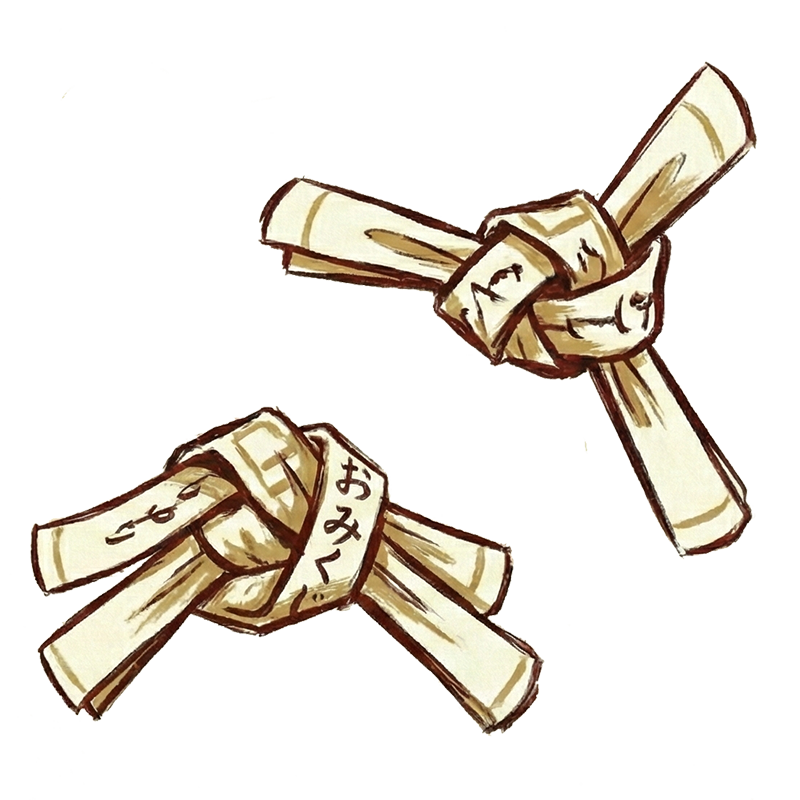
As the number of international visitors to Japan continues to break records, situations where foreigners ask “What is omikuji?” at shrines and temples are on the rise. In 2025, the number of foreign visitors to Japan reached approximately 42.68 million, a 15.8% increase over the previous year and a new all-time high (Source: Japan National Tourism Organization (JNTO)). With this many foreigners visiting Japan, encounters with omikuji are naturally increasing. However, when it comes to actually explaining it in English, many people find themselves stumbling: “Fortune telling… well, not exactly.” This article comprehensively covers useful English phrases for explaining omikuji clearly, English translations for each fortune ranking, and practical expressions for enjoying omikuji together with international visitors.
御要旨
- “Fortune Slip” or “Fortune Paper” Are the Most Natural English Translations for Omikuji
- Complete English Translation Table for All Omikuji Fortune Rankings
- English Phrases for Guiding Foreigners Through Drawing Omikuji
- English Translation Guide for Each Section of an Omikuji
- Situational English Phrases for Guiding Foreigners at Shrines
- Explaining the History and Cultural Background of Omikuji in English
- More Shrines Are Offering English-Language Omikuji for International Visitors
- Points to Keep in Mind When Explaining Omikuji Etiquette to Foreigners
- Being Able to Explain Omikuji in English Deepens International Exchange
- In Closing
“Fortune Slip” or “Fortune Paper” Are the Most Natural English Translations for Omikuji
What should you call omikuji in English? The most commonly used expression is “fortune slip.” The Japan National Tourism Organization (JNTO) English website also uses the expression “Omikuji Fortune Slip” (Source: JNTO Japan Magazine). While there are several other translations such as “fortune paper,” “fortune lot,” and “sacred lot,” fortune slip is the simplest and most easily understood as a first introduction.
Key Points for Explaining the Difference from “Fortune Telling”
Foreigners may ask, “Is this fortune telling?” Fortune telling and omikuji are similar yet different. Fortune telling involves a fortune teller reading an individual’s destiny, while omikuji is a system for randomly receiving a message from the gods or Buddha.
To explain the difference in English, you could say:
“Omikuji is not exactly fortune telling. It’s more like receiving a message from a god or Buddha through a random draw.”
Since English-speaking cultures have “fortune cookies,” saying “It’s like a fortune cookie, but at a shrine” often produces instant understanding. (While the cultural depth is actually quite different, as a first explanation, this analogy works surprisingly well.)
Explaining the Etymology of Omikuji in English
Some foreigners are interested in the word “Omikuji” itself. For a concise explanation of the etymology, the following phrase is useful:
“The word ‘Omikuji’ comes from ‘kuji,’ meaning ‘lot’ or ‘lottery.’ The ‘O’ and ‘mi’ are honorific prefixes, showing respect to the divine message inside.”
When you explain this far, foreigners’ reactions change dramatically. The perception shifts from “just a piece of paper” to “something sacred.”
Complete English Translation Table for All Omikuji Fortune Rankings
The first thing a foreigner wants to know after drawing an omikuji is “Is this a good result or a bad result?” Knowing the English translations for each ranking lets you answer immediately.
| Japanese | English Translation | Nuance Explanation |
|---|---|---|
| Daikichi | Great blessing / Excellent luck | The best fortune. Everything is in your favor. |
| Kichi | Blessing / Good luck | A good fortune. Things will go well. |
| Chukichi | Middle blessing / Moderate luck | A fairly good fortune. Steady progress ahead. |
| Shokichi | Small blessing / Small luck | A slightly good fortune. Small joys are coming. |
| Hankichi | Half blessing / Half luck | Between good and moderate. Stay hopeful. |
| Suekichi | Future blessing / Uncertain luck | Luck will improve over time. Be patient. |
| Sueshokichi | Future small blessing | A very gradual improvement in luck. |
| Kyo | Bad luck / Misfortune | Be cautious. It’s a warning, not a curse. |
| Shokyo | Small misfortune | A mild caution. Nothing serious if you stay careful. |
| Hankyo | Half misfortune | Between caution and bad luck. Be mindful. |
| Suekyo | Ending misfortune | The lightest form of bad luck. Things will improve soon. |
| Daikyo | Great misfortune / Terrible luck | The strongest warning. Take extra care in everything. |
Simply showing this table can greatly deepen a foreigner’s understanding. Using “blessing” as the translation conveys the nuance of “divine blessing” rather than mere “luck,” making the explanation closer to the true nature of omikuji. (English-language tourism sites often use “Great luck,” but “Great blessing” more accurately reflects the religious background of omikuji.)
English Phrases for Guiding Foreigners Through Drawing Omikuji
Being able to guide foreigners through the omikuji drawing process in English is very much appreciated at shrines. Here are English phrases organized by each step of the process.
Basic Step-by-Step English Guide for Drawing Omikuji
| Step | Description | English Phrase |
|---|---|---|
| Pay the offering | Place the hatsuho-ryo (about 100-200 yen) in the box | “Put 100 or 200 yen into the box. This is a small offering.” |
| Draw a lot | Draw one stick from the box (or select one paper) | “Shake the box gently and pull out one stick.” / “Pick one paper from the box.” |
| Check the number | Open the drawer matching the number on the stick | “Check the number on the stick and open the matching drawer.” |
| Read the result | Read the fortune written on the paper | “Read the fortune on your paper. The large text at the top shows your overall luck.” |
| Tie or take home | Tie it to a tree or designated spot, or take it home | “You can tie it to the rack over there, or keep it as a souvenir.” |
Helpful Words to Share Before Drawing
Sharing the following explanations before a foreigner draws their first omikuji helps put them at ease.
- “Don’t worry if you get a bad result. It’s just advice, not a prediction.”
- “You can tie a bad fortune to the rack to leave the bad luck behind.”
- “If you get a good fortune, you can keep it in your wallet for good luck.”
- “The fortune is written in Japanese, but I can help you read it.”
The last phrase is especially important. Since omikuji are written in Japanese, a foreigner cannot understand the content alone. Offering to help read and interpret is the finest form of hospitality.
English Translation Guide for Each Section of an Omikuji
Omikuji contain distinctive categories such as “Negaigoto” (wishes), “Machibito” (person awaited), “Usemono” (lost items), “Akinai” (business), and “Gakumon” (studies). Being able to explain these in English will impress foreigners with the depth of omikuji.
| Japanese Category | English Translation | Explanation |
|---|---|---|
| Negaigoto (Wishes) | Wishes / Desires | Whether your wishes will come true. |
| Machibito (Person awaited) | Person you are waiting for | Someone important who will appear in your life. Not just a romantic partner. |
| Usemono (Lost items) | Lost items | Whether you will find something you have lost. |
| Tabidachi (Travel) | Travel | Luck related to trips and journeys. |
| Akinai (Business) | Business / Trade | Fortune in business and financial dealings. |
| Gakumon (Studies) | Studies / Education | Luck in learning, exams, and academic pursuits. |
| Endan (Marriage prospects) | Marriage prospects | Fortune regarding marriage and romantic relationships. |
| Tenkyo (Moving) | Moving / Relocation | Whether it is a good time to move to a new place. |
| Yamai (Illness) | Health / Illness | Advice about your physical well-being. |
| Arasoigoto (Disputes) | Disputes / Conflicts | Guidance on arguments and legal matters. |
“Machibito” is a particularly tricky category to explain. The literal translation is “person you are waiting for,” but it doesn’t refer only to a romantic partner — it broadly encompasses “a life-changing encounter,” “a needed collaborator,” and more. Adding in English: “It doesn’t just mean a romantic partner. It refers to anyone important who may enter your life — a mentor, a business partner, or even a new friend” will produce deep nods from foreigners. (Many Japanese people also misunderstand this category, so explaining it in English can deepen your own understanding.)
Situational English Phrases for Guiding Foreigners at Shrines
Here are English phrases organized by scenario for guiding foreigners at actual shrines.
When You Spot Omikuji on the Shrine Grounds
- “Would you like to try Omikuji? It’s a Japanese fortune slip.”
- “This is one of the most popular activities at Japanese shrines.”
- “It costs about 100 to 200 yen. You can pay with coins.”
When Reading the Omikuji Results
- “The big characters at the top show your overall fortune.”
- “Below that, there are specific predictions for different areas of your life.”
- “This section is about love. And this one is about business.”
When Asked Whether to Tie or Take Home the Omikuji
- “If you got a good fortune, keep it with you for good luck.”
- “If you got a bad fortune, you can tie it here. It means leaving the bad luck at the shrine.”
- “Actually, you can take it home either way. There is no strict rule.”
The “tie or take home” question is one of the most frequently asked by foreigners. The practice of tying to a tree is said to derive from wordplay on “matsu” (pine tree) and “matsu” (to wait). In English: “The word for pine tree, ‘matsu,’ sounds the same as the verb ‘to wait.’ So tying the paper to a pine tree means the bad luck will ‘wait’ there instead of following you.” Foreigners show strong interest in this kind of wordplay culture.
Explaining the History and Cultural Background of Omikuji in English
Being able to briefly explain the historical background of omikuji in English makes the foreigner’s experience significantly richer. Conveying not just the surface-level “how to” but “why Japanese people treasure omikuji” is true hospitality.
English Phrases for Explaining the Origins of Omikuji
The origin of omikuji dates back to the Heian period, and the “Ganzan Daishi Hyakusen” (Ganzan Daishi’s Hundred Lots) devised by Tendai monk Ganzan Daishi Ryogen (912-985) is considered the prototype. In English, you can explain it this way:
“Omikuji has a history of over 1,000 years. It was originally created by a Buddhist monk named Ganzan Daishi in the 10th century. He developed a system of 100 poems to help people receive guidance from Buddha.”
Currently, approximately 70% of omikuji supplied to shrines nationwide are manufactured by Joshidosha in Shunan City, Yamaguchi Prefecture. To share this fact in English: “About 70% of all omikuji papers in Japan are made by a single company called Joshidosha in Yamaguchi Prefecture.” Foreigners are amazed that “all of Japan’s omikuji come from one place.”
The Difference Between Omikuji and Fortune Cookies
For English speakers, the closest cultural experience to omikuji is the “fortune cookie.” However, there are fundamental differences between the two.
| Comparison | Omikuji | Fortune Cookie |
|---|---|---|
| Origin | Heian-period Japan (approx. 1,000 years ago) | Late 19th to early 20th century America (said to have been spread by Japanese immigrants) |
| Location | Shrines and temples | Chinese restaurants |
| Content | Fortune ranking + detailed advice for each life category | A single proverb and lucky numbers |
| Cultural meaning | Treated with reverence as a message from the gods or Buddha | Post-meal entertainment |
| Frequency | At each shrine visit, a few times per year | Every time you eat Chinese food |
Explaining this difference leads foreigners to view omikuji not as “just a piece of paper” but as “a cultural experience.” The phrase “Omikuji is much more meaningful than a fortune cookie. It’s a sacred tradition with over 1,000 years of history” draws out respect for omikuji.
More Shrines Are Offering English-Language Omikuji for International Visitors
With the increase in international visitors, more shrines are preparing translated omikuji that can be read in English. The number of foreign visitors reached approximately 36.87 million in 2024 and approximately 42.68 million in 2025, setting new records for two consecutive years (Source: JNTO), prompting shrines to rapidly expand their inbound services.
Notable Shrines Offering English Omikuji
| Shrine | Location | English Omikuji Features |
|---|---|---|
| Meiji Jingu | Shibuya, Tokyo | Offers English “Omikuji” (called “Omigokoro”). No fortune rankings; only English translations of waka poems |
| Senso-ji | Taito, Tokyo | Bilingual (Japanese/English) omikuji available. One of the most popular omikuji among foreign tourists |
| Fushimi Inari Taisha | Kyoto | English omikuji available. Extremely popular with foreigners alongside the Senbon Torii |
| Kasuga Taisha | Nara | English-compatible deer omikuji. The cute deer design is also a draw |
| Dazaifu Tenmangu | Dazaifu, Fukuoka | English omikuji always available. Popular with international students as the shrine of the god of learning |
Even at shrines without English omikuji, smartphone translation apps now allow visitors to check the content on the spot. However, the archaic language and unique expressions in omikuji are often not accurately translated by apps, so nothing beats a human explanation. (“I tried Google Translate and it made no sense” is a very common complaint from foreigners. That’s exactly why your English explanation has value.)
Points to Keep in Mind When Explaining Omikuji Etiquette to Foreigners
When explaining omikuji, be careful not to be too strict about “proper etiquette.” For foreign tourists, omikuji is “a fun activity for experiencing Japanese culture.” Being too rigid about rules can make the experience feel restrictive.
Be Mindful of Religious Sensitivities
Omikuji is rooted in Shinto and Buddhism. Some foreigners may follow a different religion. The approach of “This may not be your god, but would you like to experience it as part of Japanese culture?” is important.
In English: “You don’t have to believe in Shinto or Buddhism to try Omikuji. Think of it as a cultural experience, like visiting a museum” allows foreigners to enjoy omikuji without any religious resistance.
Share Photo Etiquette Too
Foreign tourists often want to photograph the moment of drawing and the omikuji paper itself. While photographing the omikuji itself is no problem, some shrines prohibit photography inside the main hall.
- “You can take photos of your omikuji paper, no problem.”
- “But please check if photography is allowed inside the main hall.”
- “It’s considered respectful to bow slightly before taking photos at the shrine.”
Prepare a Follow-Up for When Someone Draws “Daikyo”
When a foreigner draws daikyo, simply telling them “It’s the worst luck” can be discouraging. Prepare a follow-up that reflects the true spirit of omikuji culture.
“Actually, getting Dai-kyo (great misfortune) means you’re at the bottom, so things can only go up from here. In Japanese culture, we say ‘the darkest hour is just before the dawn.’ You can tie the paper here to leave the bad luck behind.”
Kyo is not “the worst outcome” but a message that “things will improve from here.” Conveying this mindset in English deeply impresses foreigners with the depth of Japanese culture. Omikuji are like health checkups: receiving a “caution” doesn’t mean despair; it means “if you act carefully, things will turn for the better.”
Being Able to Explain Omikuji in English Deepens International Exchange
Explaining omikuji in English is not merely a language skill issue. It tests your ability to understand the essence of Japanese culture and convey it in your own words.
Three Reasons Foreigners Are Moved by Omikuji
- Being able to personally experience a traditional culture that has continued for over 1,000 years
- The mystique of finding a “message” addressed to you on a randomly drawn slip of paper
- The “participatory” nature where the choice to tie or take home is left up to you
For foreigners, omikuji is one of those “experiences you can only have in Japan.” The number of foreign tourists drawing omikuji at Senso-ji and Fushimi Inari Taisha grows each year, with the hashtag “#omikuji” sharing experiences worldwide on social media.
Everyday Conversation Examples Using “Omikuji English”
Finally, here is a collection of ready-to-use English sentences related to omikuji for everyday conversation.
| Situation | English Example |
|---|---|
| Introducing omikuji | “Have you heard of Omikuji? It’s a traditional fortune slip you draw at a Japanese shrine.” |
| Asking about results | “What did you get? Was it good luck or bad luck?” |
| Sharing your own result | “I got Chu-kichi, which means moderate luck. Not the best, but not bad either.” |
| Explaining cultural meaning | “Japanese people don’t just see Omikuji as fortune telling. It’s more like advice for how to live each day.” |
| Inviting someone to draw together | “Let’s draw Omikuji together. It’s one of the best things you can do at a shrine.” |
| Following up on bad results | “Don’t worry about bad luck. In Japan, we believe it’s a chance to grow and improve.” |
You don’t need to memorize these phrases. If you understand the cultural significance of omikuji, you’ll naturally be able to explain it in your own words. What matters is conveying the feeling that “omikuji is an important cultural tradition for Japanese people” using English as your tool.
In Closing
Explaining omikuji in English means becoming an “interpreter” of Japanese culture. Starting with the single phrase “fortune slip” and going through how to draw, what the rankings mean, how to read each category, and whether to tie or take home — explaining each step carefully transforms a foreigner’s omikuji experience from “I drew a piece of paper” to “I touched Japanese culture.” With over 40 million international visitors to Japan, the ability to explain omikuji in English is the ultimate hospitality skill.
At Omikuji Sando, you can draw your own personalized fortune based on your birthday, with a full 12-tier ranking system, free every day. In Japanese or English, why not start by drawing today’s omikuji and checking your fortune?
