
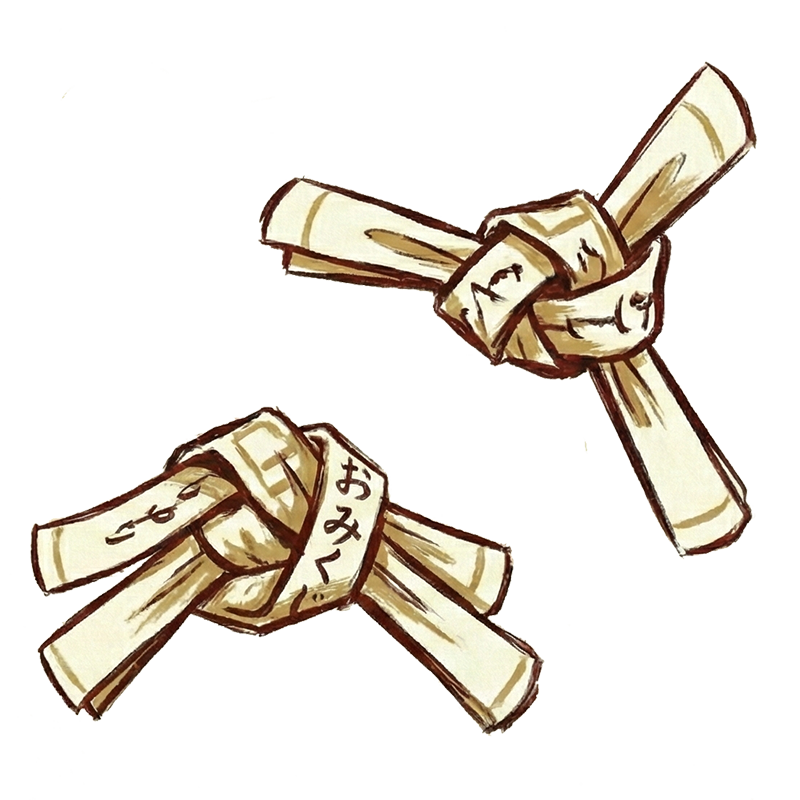
Have you ever wondered, while drawing an omikuji, when and by whom this tradition began? The single slip of paper you casually draw at a shrine or temple actually carries over 1,000 years of history. The hundred verses that Ganzan Daishi Ryogen, a Heian-period high priest, received through prayer to Kannon Bodhisattva; divination techniques transmitted from China; and the manufacturing and distribution systems that spread omikuji nationwide in the Meiji era. This article traces the grand story of omikuji from its origins to the present day.
御要旨
- Omikuji Were Originally Tools for “Hearing the Will of the Gods and Buddha”
- The Prototype of Omikuji Came from China as “Tenjiku Reisen”
- Why Ganzan Daishi Ryogen Is Considered the Founder of Omikuji
- “Ganzan Daishi Hyakusen” Spread Nationwide in the Edo Period
- There Was an Era When Even the Shogun Was Chosen by Lottery
- The Meiji-Era Separation of Shinto and Buddhism Dramatically Changed Omikuji
- Joshidosha Created the System for Delivering Omikuji to Shrines Nationwide
- The 1,000-Year-Old Drawing Method Still Lives at Mt. Hiei’s Ganzan Daishi-do
- From Edo to Reiwa: Omikuji Continue to Evolve with the Times
- Knowing the True Meaning of Drawing Omikuji Makes Every Slip Special
- In Closing
Omikuji Were Originally Tools for “Hearing the Will of the Gods and Buddha”
Modern omikuji are often drawn with a sense of “testing your luck” or “fortune telling,” but their original purpose was entirely different. The “kuji” in omikuji was, from ancient times, a sacred means of inquiring about the will of the gods and Buddha.
In ancient Japan, it was not uncommon for major national decisions to be made by drawing lots. Records show that lots were used as an act of “asking for divine will” even for decisions related to the Emperor’s enthronement and the relocation of the capital. The purpose was not to tell individual fortunes, but to determine the fate of the community. (In other words, the ancestor of omikuji was a “national decision-making tool.”)
This essential nature of “hearing the will of the gods and Buddha” is actually carried forward in today’s omikuji. What is written on an omikuji is not “your destiny” but “advice from the gods and Buddha that you need right now.” Just as you check the weather forecast and decide whether to bring an umbrella, you read your omikuji and adjust your actions for the day. That is the original way to use omikuji.
The Prototype of Omikuji Came from China as “Tenjiku Reisen”
Tracing the roots of omikuji leads us to China during the Southern Song dynasty (1127-1279). At that time, a type of lot called “Tenjiku Reisen” (Divination Lots of India), which illustrated oracles from Kannon Bodhisattva, was widely used in China.
The Structure and System of Tenjiku Reisen
The Tenjiku Reisen originally consisted of 100 lots and 100 illustrations. Each lot contained fortune judgments for marriage, lost items, financial matters, etc. in the upper section; the lot’s title, number, and illustration in the middle section; and a five-character four-line Chinese poem with its interpretation in the lower section. Eighty-six surviving lots from the Southern Song edition have been confirmed (Source: J-STAGE).
These Tenjiku Reisen are believed to have reached Japan from the late Nanbokucho to early Muromachi period (around the 14th century). The divination techniques used in Chinese Buddhist temples crossed the sea and were incorporated into Japanese religious culture. (The fact that current omikuji contain five-character four-line Chinese poems or waka poetry is a remnant of the Tenjiku Reisen.)
The Process of Evolution into Japan’s Unique Omikuji
The Tenjiku Reisen did not become Japanese omikuji directly. After arriving in Japan, Ganzan Daishi Ryogen, a Tendai Buddhist monk, added his own verses through prayer to Kannon Bodhisattva and restructured them to suit Japanese culture. The fact that omikuji took root as a uniquely Japanese tradition rather than merely an imported culture is because Chinese divination was elevated into “Japanese faith.”
Why Ganzan Daishi Ryogen Is Considered the Founder of Omikuji
There is one figure who absolutely cannot be omitted when discussing the history of omikuji. That is Ganzan Daishi Ryogen (912-985), a Heian-period Tendai Buddhist monk. Ryogen served as the 18th Tendai Zasu (the head of the Tendai sect) at Mt. Hiei’s Enryaku-ji Temple and is called the “restorer of Mt. Hiei” for his role in reviving the deteriorating temple (Source: Mt. Hiei Enryaku-ji Irori-bata).
The “Hundred Verses” Ryogen Received from Kannon Bodhisattva
Ryogen deeply devoted himself to Kannon Bodhisattva and is said to have received one hundred gemon (Buddhist teachings in verse form) through prayer. These verses were written in five-character four-line Chinese poem format and were intended to save people from their doubts and troubles (Source: Tendai sect Myoho-ji Temple).
It is said that Ryogen used these hundred verses to counsel people, having them draw one and offering advice based on its content. This is the prototype of modern omikuji. In other words, omikuji began not as “fortune telling” but as “the act of receiving Buddhist teachings.”
Ryogen’s Many Titles Reveal the Depth of Devotion He Inspired
Ryogen had multiple alternative names. “Ganzan Daishi” derives from his passing on the third day of the new year, but he was also known as “Tsuno Daishi” (Horned Great Master), “Mame Daishi” (Bean Great Master), and “Goma Daishi” (Demon-Subduing Great Master).
| Title | Origin |
|---|---|
| Ganzan Daishi | Named for his passing on the third day of the first month (gangetsu san-nichi) |
| Tsuno Daishi | From the legend that he transformed into a demon to drive away plague |
| Mame Daishi | From the legend that he split into countless small forms |
| Goma Daishi | From his spiritual power to subdue demons |
It is rare for a single monk to bear so many alternative names, illustrating just how much popular devotion Ryogen commanded. There is no doubt that the strong faith in Ryogen was a key factor behind omikuji’s acceptance by the common people. (Beyond being the “founder of omikuji,” Ryogen was also widely revered as a protective talisman against plague — a true superstar of the Heian period.)
“Ganzan Daishi Hyakusen” Spread Nationwide in the Edo Period
Several centuries after Ryogen’s lifetime in the Heian period, omikuji experienced their great expansion during the Edo period. The catalyst was the establishment of the “Ganzan Daishi Hyakusen” (Ganzan Daishi’s Hundred Lots).
Jigen Daishi Tenkai “Rediscovered” the Verses Through a Dream Oracle
In the early Edo period, Jigen Daishi Tenkai, a high priest who served three generations of Tokugawa shoguns (Ieyasu, Hidetada, and Iemitsu), is said to have received a dream oracle from Ganzan Daishi Ryogen. Following the oracle, Tenkai discovered Ryogen’s hundred verses in Togakushi, Shinano Province. He systematized these verses by adding numbers and fortune rankings, creating the “Ganzan Daishi Hyakusen” (Source: Tendai sect Myoho-ji Temple).
The Ganzan Daishi Hyakusen were numbered from 1 to 100, each with a fortune ranking from Daikichi (great blessing) to Kyo (misfortune) and a five-character four-line verse. Visitors would shake a numbered stick out of a bamboo cylinder and receive the corresponding verse. This system is essentially the same omikuji drawing method still seen at many temples and shrines today.
The Spread from Tendai Buddhism to Other Sects and Shrines
The Ganzan Daishi Hyakusen were originally used at Tendai temples, but they were gradually adopted by other Buddhist sects as well. By the mid-Edo period, not only temples but also shrines began creating their own omikuji, and omikuji became firmly established as “one of the pleasures of shrine and temple visits” for the common people.
The Edo period was an era when pilgrimages to temples and shrines were a form of entertainment for commoners. During this time, when pilgrimages to Ise and Zenko-ji were popular, omikuji served as perfect content for “souvenir stories” from the visit. (In modern terms, they played a role similar to theme park attractions.)
There Was an Era When Even the Shogun Was Chosen by Lottery
An important fact for understanding omikuji history is that lots were actually used in political decision-making. The most famous example involves Ashikaga Yoshinori, the sixth shogun of the Muromachi shogunate.
In 1428, when a successor needed to be chosen following the death of the fifth shogun Ashikaga Yoshikazu, a lottery was held at Iwashimizu Hachimangu Shrine. Lots bearing the names of four candidates were prepared, and when drawn before the gods, Yoshinori (then a monk named Gien) was selected. Yoshinori came to be known as the “lottery shogun,” and his selection method sparked considerable debate even then.
This episode demonstrates how deeply lots were valued as “the will of the gods beyond human judgment.” Even the nation’s supreme authority, the shogun, could be chosen by lot. This shows just how deeply Japanese people had internalized the idea that lots equal divine will. The historical background behind omikuji being treated as sacred messages from the gods rather than “mere luck testing” lies in this cultural foundation.
The Meiji-Era Separation of Shinto and Buddhism Dramatically Changed Omikuji
The greatest turning point in omikuji history was the Meiji era. In 1868 (Meiji 1), the new Meiji government issued the “Shinbutsu Bunri Rei” (Decree for the Separation of Shinto and Buddhism), which forcibly separated Shinto and Buddhism, which had previously coexisted as one. This policy sent shockwaves through the world of omikuji.
Buddhist-Origin Omikuji Could No Longer Be Used at Shrines
The Ganzan Daishi Hyakusen were created by a Tendai Buddhist monk and were unmistakably Buddhist in origin. Under the Shinbutsu Bunri Rei, continuing to use Buddhist-origin omikuji at shrines became problematic.
Until then, shrines and temples had coexisted under the concept of “shinbutsu shugo” (syncretism of Shinto and Buddhism), and omikuji were used without distinction between Buddhist and Shinto types. However, with the Shinbutsu Bunri Rei, shrines needed omikuji appropriate for Shinto.
“Shrine-Specific Omikuji” Using Waka Poetry Were Born
The solution came from Miyamoto Shigetane, a Shinto priest in Yamaguchi Prefecture. Miyamoto devised new shrine-specific omikuji that featured waka poetry instead of Buddhist Chinese poems. Instead of Buddhist teachings, the divine will would be conveyed through Japan’s traditional waka poetry. This shift allowed shrines to confidently offer omikuji.
Meanwhile, temple omikuji continued to use the Chinese poem style. The fact that temple omikuji still feature Chinese poems while shrine omikuji feature waka poetry is rooted in this Meiji-era separation. (The answer to “Why do shrine omikuji have waka poetry on them?” actually lies in Meiji-era policy.)
Joshidosha Created the System for Delivering Omikuji to Shrines Nationwide
Currently, approximately 60-70% of omikuji available at shrines nationwide are manufactured by Joshidosha, located in Shunan City, Yamaguchi Prefecture. The story behind this company is one of the most fascinating episodes in omikuji history.
Omikuji Manufacturing Was a Funding Source to Support Women’s Independence
Joshidosha traces its origins to Miyamoto Shigetane, who served as the head priest of Nisho Yamada Shrine during the Meiji era. Miyamoto aimed for women’s social independence and established the national organization “Dai Nippon Keishin Fujinkai” (Greater Japan Women’s Association of Reverence). In 1906 (Meiji 39), he launched the association’s journal “Joshido” and began manufacturing omikuji to fund its publication (Source: Shunan City, Yamaguchi).
Making omikuji to support women’s independence — this was an extremely progressive idea for its time. The “Dai Nippon Keishin Fujinkai” established by Miyamoto is said to have begun its activities even before Hiratsuka Raicho’s “Seitosha” (Bluestocking Society), making it one of Japan’s earliest women’s independence support organizations.
The Invention of Automatic Omikuji Dispensers Accelerated Their Spread
Another major contribution by Joshidosha was the creation of automatic omikuji dispensing machines. Until then, omikuji were generally distributed by hand by priests or monks, but with automatic dispensers, visitors could insert coins and receive omikuji on their own.
This invention allowed even small shrines to offer omikuji without additional staff, dramatically accelerating the spread of omikuji to shrines across the nation. The technological innovation of Joshidosha is behind the deep-rooted omikuji culture we see today. (Just as convenience store self-checkout registers solved staffing shortages, the automatic omikuji dispenser solved the same problem for shrines.)
The 1,000-Year-Old Drawing Method Still Lives at Mt. Hiei’s Ganzan Daishi-do
While modern omikuji are typically drawn from a box by the visitor, at Ganzan Daishi-do, located in the Yokawa area of Mt. Hiei’s Enryaku-ji Temple — the birthplace of omikuji — a format over 1,000 years old continues to be preserved (Source: Mt. Hiei Enryaku-ji Irori-bata).
A Monk Draws on Your Behalf After Listening to Your Concerns
The omikuji at Ganzan Daishi-do is completely different from the common “draw it yourself” style. First, the visitor writes their concerns or questions on paper and submits them. Then the Toshuji (the attending monk) draws the omikuji on their behalf. Based on the verse that comes up, the monk derives an answer to the visitor’s concern.
This approach is akin to modern “counseling.” The act of drawing omikuji is not the goal itself; it remains faithful to the original purpose of “solving problems through Buddhist teachings.”
Reservation-Based System with Personal Attention for Each Visitor
Omikuji at Ganzan Daishi-do is basically by reservation. Because considerable time is devoted to each consultation, the number of people who can be served per day is limited. While it’s difficult to casually stop by during sightseeing, this is precisely what makes it a treasured place where people come from all over Japan to experience “the origin of omikuji.”
There’s no denying the convenience of modern “draw from a box and check the number” omikuji, but learning about the Ganzan Daishi-do format reveals the “depth” that omikuji originally possessed. (It might seem an exaggeration to say that something was lost in exchange for convenience, but knowing the origins definitely changes how you view omikuji.)
From Edo to Reiwa: Omikuji Continue to Evolve with the Times
Despite having a history of over 1,000 years, omikuji are by no means “relics of the past.” They have continuously changed form to suit each era, always remaining close to people’s lives. Here is a timeline of their evolution.
| Era | Event | Impact on Omikuji |
|---|---|---|
| Heian Period (10th century) | Ganzan Daishi Ryogen creates the hundred verses | The prototype of omikuji is born |
| Nanbokucho to Muromachi Period (14th century) | Tenjiku Reisen arrives from China | Chinese divination techniques merge with Japanese tradition |
| Muromachi Period (1428) | Ashikaga Yoshinori selected as shogun by lottery | The concept of lots as divine will is demonstrated at the national level |
| Early Edo Period (17th century) | Jigen Daishi Tenkai systematizes the Ganzan Daishi Hyakusen | Omikuji spread to temples nationwide |
| Meiji Era (1868) | Shinbutsu Bunri Rei is issued | Waka-based omikuji developed for shrines |
| Meiji Era (1906) | Joshidosha begins manufacturing omikuji | Mass supply system to shrines nationwide is established |
| Showa to Heisei | Automatic dispensers spread, designs diversify | Animal mikuji, romance mikuji, and other varieties surge |
| Reiwa | Online omikuji emerge | A new era of drawing omikuji daily on smartphones |
A divination system created by a monk 1,000 years ago has gone through vending machines and can now be experienced on smartphone screens. The history of omikuji is proof of how much Japanese people have cherished their “dialogue with the gods and Buddha.”
Modern Omikuji Are Evolving into “Regional Mikuji” and “Digital Omikuji”
Two notable changes in recent omikuji culture deserve attention. The first is the increase in “regional mikuji” uniquely developed by individual shrines. Tai mikuji you catch with a fishing rod (Kawagoe Hikawa Shrine), deer-shaped deer mikuji (Kasuga Taisha), and water mikuji where text appears when dipped in water (Shimogamo Shrine) are among the experiential omikuji that visitors can take home as souvenirs.
The second is the rise of “digital omikuji” that can be drawn via the internet or apps. Even without visiting a shrine, you can draw omikuji daily and check your fortune. While the form has changed, the Japanese desire to “incorporate messages from the gods and Buddha into daily life” has remained unchanged for 1,000 years.
Knowing the True Meaning of Drawing Omikuji Makes Every Slip Special
When you draw a single omikuji with knowledge of its history, the experience becomes entirely different. What appears to be just a piece of paper contains the faith of Ganzan Daishi’s prayers to Kannon Bodhisattva 1,000 years ago, the aspirations of Miyamoto Shigetane who supported women’s independence in the Meiji era, and the daily work of Joshidosha that welcomes visitors at shrines nationwide.
A Way of Reading That Goes Beyond “I Got Daikichi” or “I Got Kyo”
After drawing an omikuji, most people first check the fortune ranking. They rejoice at daikichi and feel down at kyo. However, the true value of omikuji lies not in the fortune ranking section but in the messages for each category written below it.
- Read the waka or Chinese poem. Even if you don’t understand the meaning, simply reading it aloud can evoke something
- Focus on the categories relevant to your current situation, such as “person you’re waiting for,” “lost items,” “business,” and “studies”
- Try to be mindful of the written content as “guidelines for today’s actions”
- Even with daikichi, if a category warns “don’t be careless,” use it to stay alert
- Even with kyo, if it says “things will improve,” use it as strength to endure the present
It’s the same as not just seeing “grade A” on a health checkup and feeling relieved, but actually checking each category and reconsidering your lifestyle. Omikuji realize their true value only when you not only receive the result but also read the content and apply it to your actions.
The Habit of Taking Omikuji Home and Re-reading Them
Drawing an omikuji and tying it at the shrine’s designated spot is commonly believed to be standard practice, but the custom of “tying it to a tree” actually became widespread only from the Edo period onward. In Ganzan Daishi’s era, taking omikuji home and re-reading them multiple times was the natural way.
Keep it in your wallet or phone case and re-read it when you’re uncertain. Paste it in your diary and revisit it a year later. Rather than treating omikuji as a “one-time draw,” you can incorporate the gods’ and Buddha’s advice into your daily life by “reading it repeatedly.” (Taking it home and re-reading it is actually closer to the original way of using omikuji.)
In Closing
Omikuji is a Japanese cultural tradition that originated with the hundred verses Ganzan Daishi Ryogen received from Kannon Bodhisattva during the Heian period and has been passed down through over 1,000 years. It developed uniquely under the influence of the Chinese Tenjiku Reisen, survived the Meiji-era separation of Shinto and Buddhism, and reached shrines across the nation through the manufacturing and distribution innovations of Joshidosha. It is not “mere luck testing” but “the act of receiving today’s advice from the gods and Buddha.” This essence remains unwavering no matter how much the times change.
At Omikuji Sando, you can draw your own personalized fortune based on your birthday, with a full 12-tier ranking system, free every day. Why not incorporate the omikuji tradition, with its 1,000 years of history, into your daily life? Draw today’s omikuji and receive the message the gods and Buddha have for you.
