
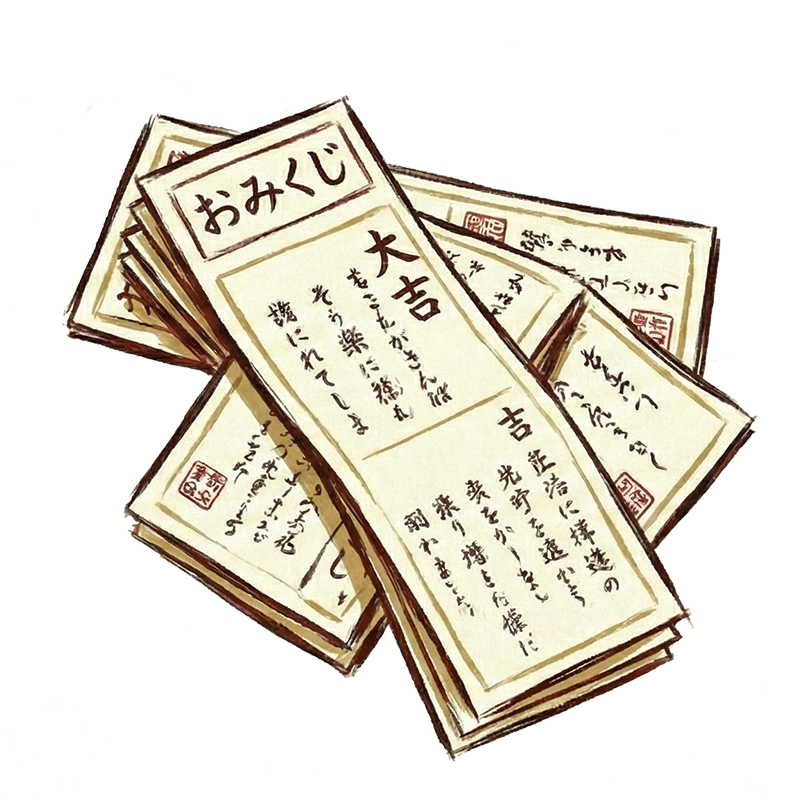
When you think of omikuji at shrines, the standard style is drawing a stick from a box. In recent years, however, an experiential type of omikuji where you “catch” a sea bream (tai)-shaped fortune using a fishing rod has been gaining popularity at shrines across Japan. The sea bream has long been considered a lucky symbol in Japan, associated with the word “medetai” (auspicious), and the act of catching one yourself has captured the hearts of shrine visitors. This article introduces the most notable shrines where you can enjoy tai mikuji, covering their unique features, offering prices, and even “fishing-style omikuji” beyond the classic sea bream.
御要旨
- Tai Mikuji: An Experiential Omikuji Where You Fish for Papier-Mache Sea Bream
- The Sea Bream Is Considered Lucky for Reasons Beyond Just a Pun
- Kawagoe Hikawa Shrine’s Tai Mikuji Features Seasonal Limited-Edition Colors
- Asakusa Shrine’s Tai Mikuji Has Deep Ties to the God Ebisu
- Ryugu Shrine’s Tai Omikuji Comes in Three Colors: Red, Gold, and Black
- Sumiyoshi Taisha’s Fishing Mikuji Offers an Experience Befitting the God of the Sea
- Takemizuwake Shrine’s Tai Mikuji Includes a Lucky Draw for Zodiac Figurines
- Comparing Shrines with Tai Mikuji at a Glance
- “Fishing-Style Omikuji” Beyond Sea Bream Can Be Found Across Japan
- Tips and Etiquette for Enjoying Tai Mikuji
- In Closing
Tai Mikuji: An Experiential Omikuji Where You Fish for Papier-Mache Sea Bream
Tai mikuji is an omikuji housed inside a sea bream-shaped papier-mache or ceramic figure, which visitors catch using a small fishing rod. At many shrines, the sea bream are arranged in a tub decorated with seigaiha (blue ocean wave) patterns, and visitors hook the one that catches their eye.
What sets this apart from regular omikuji is the active experience of “choosing and catching” your fortune. You hook the ring on the sea bream’s dorsal or tail fin with the tip of the fishing rod and gently lift it up. This series of motions creates a fun experience that feels like real fishing. (People of all ages, from children to adults, find tai mikuji captivating.)
At most shrines, you can take the papier-mache sea bream home with you. In addition to serving as an omikuji, it also works as a lucky ornament or charm. The typical offering is 300 to 500 yen, which is slightly higher than regular omikuji (100 to 200 yen), but considering the papier-mache figure doubles as a souvenir, it’s well worth the price.
The Sea Bream Is Considered Lucky for Reasons Beyond Just a Pun
When discussing the popularity of tai mikuji, the cultural significance of the sea bream in Japan cannot be overlooked. Many people assume the sea bream is considered lucky solely because of the wordplay “medetai” (auspicious), but the reasons actually run much deeper.
The Sea Bream Has Been Essential in Shinto Rituals Since Ancient Times
The history of the sea bream as a lucky symbol dates back approximately 1,300 years. The “Engishiki,” a Heian-period legal code, records ceremonies in which sea bream and carp were offered before the gods at shrines (Source: tenki.jp). This means the sea bream was considered a special fish worthy of offering to the gods long before any wordplay was invented.
Its Red Color and Majestic Appearance Suit Celebrations
In Japan, the color red has traditionally been believed to ward off evil. The vivid red color of the red sea bream aligns with this symbolism. Furthermore, because of its large size and dignified appearance, the sea bream has been valued as a fish “of high status,” suitable for celebratory occasions. This is why whole sea bream appears at Okuizome (first eating ceremony), wedding receptions, and New Year’s feasts. (The “medetai” pun was actually a later addition.)
The God Ebisu Also Holds a Sea Bream
Ebisu, one of the Seven Gods of Good Fortune, is famously depicted holding a sea bream in his left hand. Ebisu is worshipped as the god of prosperous business and bountiful catches, with the sea bream as his symbol. Some shrines that offer tai mikuji have connections to Ebisu. Asakusa Shrine’s offering of tai mikuji is directly related to the fact that Ebisu is enshrined within its grounds.
Kawagoe Hikawa Shrine’s Tai Mikuji Features Seasonal Limited-Edition Colors
When it comes to tai mikuji, Kawagoe Hikawa Shrine in Kawagoe City, Saitama Prefecture, is typically the first name that comes up. Widely known as a shrine for romantic matchmaking, tai mikuji has become a beloved fixture of the shrine grounds.
Two Types: “Ichinen Antai Mikuji” and “Ai Tai Mikuji”
Kawagoe Hikawa Shrine offers two types of tai mikuji. The red sea bream is the “Ichinen Antai (peace and safety for the year) Mikuji,” which tells your overall fortune. The other is the pink “Ai Tai (meeting love) Mikuji,” which reveals your romantic and compatibility fortune. Both cost 300 yen, and visitors catch them from a tub decorated with seigaiha patterns using a fishing rod (Source: Kawagoe Hikawa Shrine official note).
The seigaiha pattern represents “endlessly spreading waves,” embodying wishes for eternal happiness and peaceful living. The fact that even the tub holds such meaning reflects the thoughtful attention to detail characteristic of Kawagoe Hikawa Shrine.
Seasonal Limited-Edition Colors Appear Throughout the Year
In addition to the standard red and pink, Kawagoe Hikawa Shrine’s tai mikuji occasionally features seasonal limited-edition colors. Past offerings have included white, blue, yellow, green, and purple, meaning the colors you encounter vary depending on when you visit. (Many repeat visitors come specifically to collect the limited-edition colors.)
The papier-mache sea bream is meant to be taken home as a lucky charm, and the omikuji paper inside can either be tied to the shrine’s designated spot or taken home. Even if you don’t catch the color you wanted, accepting it as “another form of fate” is part of the tai mikuji experience.
| Item | Details |
|---|---|
| Shrine Name | Kawagoe Hikawa Shrine |
| Location | 2-11-3 Miyashita-cho, Kawagoe, Saitama |
| Types of Tai Mikuji | Ichinen Antai Mikuji (red), Ai Tai Mikuji (pink), seasonal limited colors |
| Offering | 300 yen |
| Main Blessings | Romantic matchmaking, family harmony, overall fortune |
Asakusa Shrine’s Tai Mikuji Has Deep Ties to the God Ebisu
You can also enjoy tai mikuji at Asakusa Shrine in Taito Ward, Tokyo, located right next to Senso-ji Temple. Famous for the Sanja Festival, this shrine’s two main deities were fishermen, and Ebisu is enshrined within the grounds. The presence of tai mikuji here stems from this historical connection to fishing and sea bream.
The offering for Asakusa Shrine’s tai mikuji is 300 yen. The characters “Ichinen Antai” (peace and safety for the year) are written on the sea bream’s back, and when you catch it with the fishing rod, the sea bream appears to be carrying the omikuji on its back. The omikuji paper can be tied at the shrine grounds, while the papier-mache sea bream can be taken home. (The shrine also accepts electronic payments, as you might expect from a shrine in Asakusa.)
In addition to tai mikuji, Asakusa Shrine offers other unique omikuji such as love letter omikuji and fox omikuji. Being able to enjoy multiple types of omikuji while sightseeing in Asakusa is another charm of this shrine (Source: Rurubu &more.).
| Item | Details |
|---|---|
| Shrine Name | Asakusa Shrine (Sanja-sama) |
| Location | 2-3-1 Asakusa, Taito-ku, Tokyo |
| Types of Tai Mikuji | Ichinen Antai Mikuji |
| Offering | 300 yen |
| Main Blessings | Business prosperity, bountiful catches, fulfillment of wishes |
Ryugu Shrine’s Tai Omikuji Comes in Three Colors: Red, Gold, and Black
Ryugu Shrine in Otaru City, Hokkaido, offers a “Tai Omikuji” as their version of the tai mikuji. True to its name meaning “Dragon Palace,” the sea bream was likely chosen as a sea-related lucky symbol.
The distinctive feature of Ryugu Shrine’s tai omikuji is that it comes in three colors: red, gold, and black. The compact papier-mache sea bream measures approximately 65mm on each side, with an omikuji tucked inside. The offering is 300 yen, and visitors catch their preferred color using a fishing rod while wishing for a peaceful year (Source: Ryugu Shrine official website).
The caught sea bream can be taken home as a charm, and many people display it on their shelves or desks. If you’re visiting Otaru, consider experiencing Ryugu Shrine’s tai omikuji along with a stroll along the canal. (There’s a special sense of achievement when you catch the gold one.)
| Item | Details |
|---|---|
| Shrine Name | Ryugu Shrine |
| Location | 3-22-11 Inaho, Otaru, Hokkaido |
| Types of Tai Mikuji | Tai Omikuji (red, gold, black) |
| Offering | 300 yen |
| Main Blessings | Peaceful year, good fortune |
Sumiyoshi Taisha’s Fishing Mikuji Offers an Experience Befitting the God of the Sea
Sumiyoshi Taisha in Sumiyoshi Ward, Osaka, is the head shrine of approximately 2,300 Sumiyoshi shrines nationwide. As a shrine dedicated to the gods of the sea with a long history of worship, it offers omikuji that you catch with a fishing rod.
Sumiyoshi Taisha’s “Ichinen Antai Mikuji” features a fishing rod with a hook at the tip, which you use to snag a golden ring attached to the papier-mache sea bream and lift it up. The offering is 500 yen, slightly higher than tai mikuji at Kawagoe Hikawa Shrine or Asakusa Shrine, but the papier-mache figure is sturdily made and can also be used as a strap. (The casting and catching motion is quite realistic, making it especially enjoyable for fishing enthusiasts.)
As a shrine dedicated to the gods of the sea, Sumiyoshi Taisha also offers lure-shaped charms for anglers (3,000 yen) and charms for bountiful catches. For fishing enthusiasts, it’s a shrine well worth visiting alongside the tai mikuji experience.
| Item | Details |
|---|---|
| Shrine Name | Sumiyoshi Taisha |
| Location | 2-9-89 Sumiyoshi, Sumiyoshi-ku, Osaka |
| Types of Tai Mikuji | Ichinen Antai Mikuji |
| Offering | 500 yen |
| Main Blessings | Safe voyages, bountiful catches, business prosperity |
Takemizuwake Shrine’s Tai Mikuji Includes a Lucky Draw for Zodiac Figurines
Takemizuwake Shrine in Chikuma City, Nagano Prefecture, is an ancient shrine known for blessings of household safety, traffic safety, and business prosperity. Their tai mikuji has a unique twist found nowhere else.
Takemizuwake Shrine’s tai mikuji includes a “lucky draw” element. When you catch a sea bream figurine, there’s an omikuji inside, and if you get a winning ticket, you also receive a zodiac animal figurine. While standard tai mikuji offers the dual enjoyment of “catching + omikuji,” Takemizuwake Shrine adds a third layer: “catching + omikuji + the anticipation of winning a prize” (Source: Web-Komachi).
The tai mikuji is especially popular during the New Year season, with many visitors coming specifically for this experience. In addition to tai mikuji, Takemizuwake Shrine also offers dove mikuji, making it a shrine with a rich variety of omikuji.
| Item | Details |
|---|---|
| Shrine Name | Takemizuwake Shrine |
| Location | 3012 Yawata, Chikuma, Nagano |
| Tai Mikuji Feature | Lucky draw included (zodiac animal figurine as prize) |
| Main Blessings | Household safety, traffic safety, business prosperity |
Comparing Shrines with Tai Mikuji at a Glance
Here is a comparison table of all the tai mikuji introduced so far. Use it as a reference when planning your travels and shrine visits.
| Shrine Name | Location | Offering | Colors/Types | Features |
|---|---|---|---|---|
| Kawagoe Hikawa Shrine | Kawagoe, Saitama | 300 yen | Red, pink, seasonal limited colors | Two types, romantic matchmaking blessings |
| Asakusa Shrine | Taito-ku, Tokyo | 300 yen | Ichinen Antai | Connected to the god Ebisu |
| Ryugu Shrine | Otaru, Hokkaido | 300 yen | Red, gold, black | Compact charm-sized sea bream |
| Sumiyoshi Taisha | Osaka | 500 yen | Sea bream (gold available) | Shrine of the sea gods, comes with strap |
| Takemizuwake Shrine | Chikuma, Nagano | Not disclosed | Sea bream figurine | Lucky draw for zodiac figurine prizes |
Offerings generally range from 300 to 500 yen. Kawagoe Hikawa Shrine offers the widest color variety, with standard red and pink plus seasonal limited colors. For uniqueness, Takemizuwake Shrine’s “lucky draw” feature stands out from the rest.
“Fishing-Style Omikuji” Beyond Sea Bream Can Be Found Across Japan
Inspired by the popularity of tai mikuji, “fishing-style omikuji” featuring motifs other than sea bream have been spreading to shrines across Japan.
Hirota Shrine’s Scallop Tsugaru Dialect Mikuji (Aomori Prefecture)
Hirota Shrine in Aomori City offers a “Scallop Tsugaru Dialect Mikuji,” where visitors fish for scallop-shaped omikuji using a fishing rod. The offering is 500 yen, and the most distinctive feature is that all the fortunes are written in Tsugaru dialect. The omikuji features illustrations supervised by entertainer and poet Inakappei, offering a taste of Tsugaru dialect charm (Source: Hirota Shrine official website).
The same shrine also offers an “Apple Tsugaru Dialect Omikuji,” where you pluck an apple-shaped omikuji from a real apple tree replica. This is a prime example of how local culture is reflected in omikuji.
Why Fishing-Style Omikuji Have Become So Popular
While regular omikuji involve the passive act of “drawing,” fishing-style omikuji provide an active experience of “aiming, catching, and taking home.” The entertainment value of this experience resonates particularly with younger, SNS-savvy shrine visitors. The papier-mache sea bream and scallop figures are also photogenic, leading many visitors to share their experience on social media, creating a positive cycle of word-of-mouth promotion.
Additionally, the papier-mache figures shaped like sea bream and scallops are polished enough to serve as home decor. While some people discard the omikuji paper after reading it, fishing-style omikuji leave you with a physical keepsake, allowing you to feel a daily connection to the shrine. (For shrines, this also means maintaining a longer-lasting relationship with their visitors.)
Tips and Etiquette for Enjoying Tai Mikuji
Here are some practical tips to make the most of your tai mikuji experience.
Complete Your Shrine Visit Before Heading to the Tai Mikuji
Omikuji are originally meant as a way to receive guidance from the gods. No matter how fun tai mikuji may be, skipping the shrine visit to go straight to the omikuji would be putting the cart before the horse. First, pay your respects at the main hall, center your mind, and then head to the tai mikuji.
Trust Your Intuition When Choosing a Color
At shrines like Kawagoe Hikawa Shrine and Ryugu Shrine that offer multiple colors, you might find it hard to choose. Since omikuji are meant to convey “the message you need right now,” it’s best to go with the color that instinctively draws you in without overthinking. If you end up catching a different color than intended, accept it as a message from the gods.
Taking the Papier-Mache Sea Bream Home Is Standard Practice
At most shrines, visitors are encouraged to “take the papier-mache home as a charm.” Displaying it on your home altar, at your entrance, on your desk, or anywhere visible allows it to serve its role as a lucky ornament. The handling of the omikuji paper varies by shrine. At Kawagoe Hikawa Shrine, you may either tie the paper at the shrine or take it home.
How to Return Old Tai Mikuji
Papier-mache sea bream from the previous year can be returned to a shrine’s “old charm collection box,” just like regular charms. You don’t necessarily need to return it to the shrine where you received it; nearby shrines will also accept them. (However, note that temple charms should not be returned to shrines, and shrine charms should not be returned to temples.)
In Closing
Tai mikuji is an experiential sacred offering that combines Japan’s traditional lucky symbol, the sea bream, with the shrine omikuji tradition. The excitement of catching a sea bream with a fishing rod, the beauty of the colorful papier-mache figures, and the auspicious meaning of “medetai” come together to create a popular attraction at shrines nationwide. From Kawagoe Hikawa Shrine’s seasonal limited colors to Ryugu Shrine’s three-color lineup and Takemizuwake Shrine’s lucky draw, each shrine brings its own personality to tai mikuji. If you spot one during your travels or shrine visits, be sure to pick up a fishing rod and give it a try.
Even on days when you can’t visit a shrine, you can still enjoy the omikuji experience. At Omikuji Sando, you can draw your own personalized fortune based on your birthday, with a full 12-tier ranking system, free every day. Why not check your fortune for today?
