
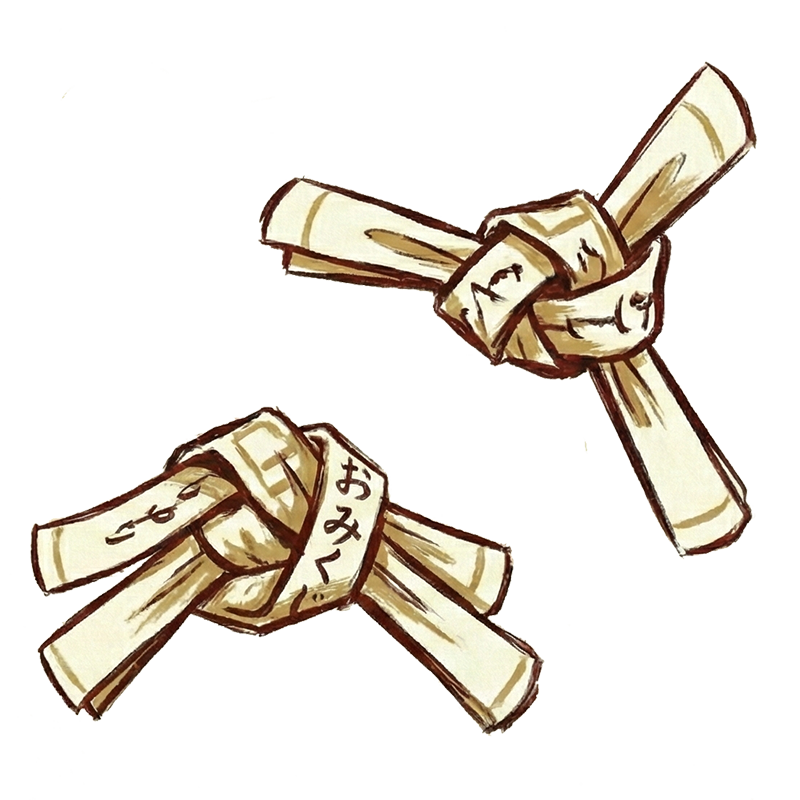
Have you ever wondered how much it costs to draw an omikuji at a shrine or temple? Omikuji prices are not standardized across Japan and vary from one shrine or temple to another. This article covers everything from the typical price range and a comparison of fees at famous shrines, to the cost of unique specialty omikuji, and how your omikuji payment is actually used.
御要旨
- The Standard Price Nationwide Is 100 to 200 Yen
- The Fee Is Called “Hatsuhoryo” at Shrines and “Shinoryo” at Temples
- Types of Omikuji by Price Range
- Famous Shrines’ Omikuji Prices Fall Within the 100 to 300 Yen Range
- Unique Specialty Omikuji Typically Cost 300 to 500 Yen
- The Production Cost Is Just a Few Yen — The Rest Goes to Shrine Operations
- About 60% of All Omikuji in Japan Are Produced by Joshidosha in Yamaguchi Prefecture
- Free Omikuji at Some Shrines and the Rise of Online Omikuji
- A More Expensive Omikuji Does Not Mean Better Luck
- There Is No Need to Judge Omikuji Prices as “Expensive” or “Cheap”
- In Closing
The Standard Price Nationwide Is 100 to 200 Yen
The most common price range at shrines and temples across Japan is 100 to 200 yen. If you visit a large shrine during the New Year season, you will likely see signs at the omikuji stand reading “Shinoryo 100 yen” or “Hatsuhoryo 200 yen.”
This 100 to 200 yen price range has remained virtually unchanged since the Showa era. Most shrines have kept prices steady despite inflation, intentionally setting the amount so that visitors can draw omikuji casually. Since omikuji are exempt from consumption tax, prices do not rise with tax increases, which is one reason they have remained stable.
It is worth noting that omikuji at Buddhist temples tend to be slightly more expensive, with 200 yen being the standard. This is partly because temple omikuji often feature Chinese poetry rather than waka poems and use higher-quality printing. (That said, the difference is only 100 yen, so it is not something most people need to worry about.)
The Fee Is Called “Hatsuhoryo” at Shrines and “Shinoryo” at Temples
Strictly speaking, the omikuji fee is not a “price” or “charge.” At shrines, it is formally called “hatsuhoryo” (initial offering fee), and at temples, it is called “shinoryo” (voluntary offering fee). Though similar in practice, their origins differ.
Hatsuhoryo originally comes from the custom of offering “hatsuho” (the first harvested rice) to the gods during the autumn harvest. In modern times, this has taken the form of money, but the essence remains “an expression of gratitude to the deity.” Shinoryo, on the other hand, is rooted in the Buddhist concept of “offering one’s sincerity (kokorozashi)” and represents respect for the Buddha expressed through monetary contribution.
In other words, shrine omikuji fees are “donations to the gods,” and temple omikuji fees are “offerings of devotion to the Buddha” — neither is a payment for a product. This is why omikuji are not subject to consumption tax and receipts are generally not issued.
In practice, no one at a shrine will correct you for calling it “omikuji-dai” (omikuji fee). However, considering the original meaning of omikuji, approaching the experience as “offering hatsuhoryo to receive divine guidance” is more in keeping with the cultural tradition.
Types of Omikuji by Price Range
Omikuji fees vary depending on the type. The following table summarizes representative omikuji by price range.
| Price Range | Type of Omikuji | Features |
|---|---|---|
| 100 yen | Standard paper omikuji | The most common type, featuring a waka poem and fortune categories on a single slip of paper |
| 200 yen | En-musubi-mikuji, love omikuji, etc. | Themed omikuji focused on romance or financial fortune |
| 300–500 yen | Omikuji with lucky charms | Comes with a small amulet or figurine, such as zodiac or flower omikuji |
| 500–1,000 yen | Special omikuji, goshuin-attached omikuji | Elaborate omikuji unique to specific shrines, sometimes including ceramic or wooden lucky charms |
Paper omikuji at 100 yen are the most common, estimated to account for about 70% of all omikuji. Those priced at 200 yen or more include added lucky charms or design elements — essentially “premium” versions. (If you are looking for a souvenir, the charm-attached omikuji at 300 yen and above are popular choices.)
Famous Shrines’ Omikuji Prices Fall Within the 100 to 300 Yen Range
A survey of omikuji prices at major shrines and temples nationwide shows that standard paper omikuji are concentrated in the 100 to 200 yen range.
| Shrine / Temple | Location | Standard Omikuji Price | Special Omikuji Price |
|---|---|---|---|
| Meiji Jingu | Tokyo | No omikuji (Omikokoro is offered instead) | – |
| Senso-ji | Tokyo | 100 yen | – |
| Fushimi Inari Taisha | Kyoto | 200 yen | – |
| Kitano Tenmangu | Kyoto | 200 yen | 500 yen (ceramic zodiac omikuji) |
| Sumiyoshi Taisha | Osaka | 200 yen | From 300 yen (Ebisu-mikuji, etc.) |
| Izumo Taisha | Shimane | 200 yen | 300 yen (en-musubi-mikuji) |
| Kawasaki Daishi | Kanagawa | 100 yen | – |
| Dazaifu Tenmangu | Fukuoka | 200 yen | 500 yen (uso-mikuji) |
Of particular note is Meiji Jingu. Meiji Jingu does not offer standard omikuji. Instead, it distributes “Omikokoro” (The Great Heart), which are waka poems composed by Emperor Meiji and Empress Shoken. Since there is no fortune ranking, they are strictly different from omikuji, though visitors draw them in a similar manner.
Senso-ji is also famous for having a high proportion of “kyo” (bad fortune) in its omikuji. The kyo rate is said to be about 30%, considerably higher than the national average of 10–15%. Despite this, its price remains 100 yen — among the lowest nationwide. The high kyo rate is not a reflection of the price but rather the temple’s adherence to traditional fortune distributions. (It is said that kyo at Senso-ji carries the meaning of “purging bad luck,” and some miko even recommend drawing again.)
Unique Specialty Omikuji Typically Cost 300 to 500 Yen
Shrines and temples across Japan offer many unique specialty omikuji beyond standard paper ones. These tend to be slightly more expensive but are worth trying as both a fortune-telling experience and a travel souvenir.
| Type of Omikuji | Price Range | Representative Shrines |
|---|---|---|
| Water omikuji (Mizuura-mikuji) | 200–300 yen | Kifune Shrine (Kyoto), Futarasan Shrine (Tochigi) |
| Tai-mikuji (sea bream omikuji) | 300–500 yen | Nunose Shrine (Osaka), Sumiyoshi Taisha (Osaka) |
| Love omikuji / En-musubi-mikuji | 200–300 yen | Tokyo Daijingu (Tokyo), Jishu Shrine (Kyoto) |
| Zodiac omikuji (ceramic) | 300–500 yen | Kitano Tenmangu (Kyoto), Shimogamo Shrine (Kyoto) |
| Flower omikuji | 200–300 yen | Kamigamo Shrine (Kyoto) |
| Daruma omikuji | 300–500 yen | Shorinzan Daruma-ji (Gunma) |
Among the most popular is the water omikuji (mizuura-mikuji). You receive a blank slip and dip it into the shrine’s sacred spring water, causing the fortune text to appear. Kifune Shrine’s version is especially famous. The price is around 200 to 300 yen, only slightly more than a standard omikuji.
Tai-mikuji features a small sea bream figurine with an omikuji inside. Some versions even let you “fish” the bream out with a miniature rod. Priced at 300 to 500 yen, the figurine doubles as a lucky charm you can take home, so the cost includes its value as a souvenir.
(The appeal of specialty omikuji lies in the feeling of “you can only draw this one here.” Many people post them on social media, and shrines actively develop new types as a way to attract visitors.)
The Production Cost Is Just a Few Yen — The Rest Goes to Shrine Operations
The production cost of a standard paper omikuji is estimated at just a few yen per slip. In the book The Cost of Omikuji Is 1 Yen! (by Tetsuo Kaneko, Takarajimasha), the production cost is cited as 1 yen.
So where does the difference between the production cost and the 100 or 200 yen fee go? Omikuji revenue serves as an important source of funding for shrine and temple operations, covering expenses such as:
- Maintenance of shrine buildings and grounds (repairs, cleaning, garden upkeep, etc.)
- Personnel costs for priests and miko (shrine maidens)
- Operating costs for annual festivals and rituals
- Disaster prevention equipment and visitor safety measures
- Cultural property protection and restoration (for shrines with historic buildings)
For small and medium-sized shrines in particular, omikuji revenue is a lifeline. Of the approximately 80,000 shrines in Japan, only about 20,000 have a full-time priest. The rest are served by itinerant priests who manage multiple shrines. The 100-yen hatsuhoryo for omikuji also functions as a “support fund” to help sustain these shrines.
If we assume that about 35% of the approximately 90 million New Year visitors draw omikuji, the estimated total omikuji revenue nationwide reaches over 3.1 billion yen. While this seems like a large figure, divided among approximately 80,000 shrines, it comes to only about 40,000 yen per shrine per year. (Considering that revenue concentrates at larger shrines, smaller shrines receive even less.)
About 60% of All Omikuji in Japan Are Produced by Joshidosha in Yamaguchi Prefecture
No discussion of omikuji pricing is complete without mentioning the manufacturer. Approximately 60% of all omikuji drawn at shrines and temples across Japan are produced by Joshidosha, located in Shunan City, Yamaguchi Prefecture (Source: Shunan City Official Website).
Joshidosha was founded in 1906 (Meiji 39) when Shigetane Miyamoto, the head priest of Nisho-Yamada Shrine, began manufacturing omikuji to fund the “Dai Nippon Keishin Fujinkai,” an organization supporting women’s independence. Today, Joshidosha produces over 18 types of omikuji, including love omikuji, children’s omikuji, and bilingual Japanese-English omikuji, supplying them nationwide.
Joshidosha also invented the automated omikuji dispensing machine (insert a coin, receive an omikuji). This innovation enabled shrines without resident priests or those with limited staffing hours to offer omikuji, significantly contributing to the spread of omikuji culture across Japan. The concentration of manufacturing has helped maintain consistent quality and pricing, which is why the uniform 100 to 200 yen price range is maintained nationwide.
Free Omikuji at Some Shrines and the Rise of Online Omikuji
Although rare, some shrines and temples offer omikuji for free. In some cases, a donation box marked “as you wish” is placed nearby, while others provide omikuji completely free of charge as a service to visitors.
At Nisho-Yamada Shrine, where Joshidosha is based, omikuji can be drawn for just 20 yen. This exceptionally low price reflects direct-from-manufacturer pricing, making it a rare place to experience omikuji at “factory cost.”
In recent years, free online omikuji services have also been growing. These range from shrine official websites offering seasonal New Year omikuji to dedicated web apps available year-round. Most online omikuji are completely free and require no registration.
Some people worry that “a free omikuji won’t bring any blessings,” but the essence of omikuji lies in “receiving a message from the divine.” What matters is not the price but how you apply the message to your daily actions. (Even on days when you cannot visit a shrine, making a habit of checking your daily fortune through online omikuji can be a valuable opportunity to reflect on yourself.)
A More Expensive Omikuji Does Not Mean Better Luck
Many people wonder whether a 500-yen omikuji is more likely to yield “dai-kichi” (great blessing) than a 100-yen one. The answer is clear: there is absolutely no correlation between omikuji price and fortune results.
The distribution of fortune rankings is predetermined during production. Whether you draw a 100-yen paper omikuji or a 500-yen charm-attached omikuji, the probability of getting dai-kichi is the same. Price differences reflect only the presence of accessories or the level of design sophistication.
What actually varies is the fortune distribution by shrine. Some shrines set the dai-kichi rate at about 17%, while others set it at about 30%. In other words, if your goal is to draw dai-kichi, choosing a shrine with a higher dai-kichi distribution is more effective than choosing a more expensive omikuji. (Though that approach also strays from the original spirit of omikuji.)
There Is No Need to Judge Omikuji Prices as “Expensive” or “Cheap”
You might instinctively feel that 100 yen is cheap and 500 yen is expensive. However, considering the true meaning of omikuji, the fee does not change the value of the fortune.
Omikuji is an act of receiving “divine guidance.” Like a weather forecast, what matters is how you act after learning the result. The hatsuhoryo is paid for that guidance. Whether 100 yen or 500 yen, the value of the written fortune remains the same.
- Even a 100-yen paper omikuji contains authentic content, with a waka poem and detailed fortune categories
- Charm-attached omikuji at 300 yen and above add the enjoyment of a keepsake or souvenir
- The price difference reflects “accessories and design,” not “accuracy of the fortune”
- Hatsuhoryo goes toward shrine maintenance and operations, so offering it as a “donation” is the original intent
(Honestly, if you want to carefully re-read the content of your omikuji, a 100-yen paper omikuji is more than sufficient. The charm-attached versions are for those who want something tangible to keep.)
In Closing
The standard omikuji price across Japan is 100 to 200 yen, with specialty and charm-attached omikuji costing around 300 to 500 yen. The fee is formally called “hatsuhoryo” at shrines and “shinoryo” at temples, both positioned as offerings to the divine rather than payment for a product. The price has no bearing on the fortune result — what truly matters is how you interpret the message and apply it to your daily life.
At “Omikuji Sando,” you can draw your personalized fortune based on your date of birth, with 12 fortune levels available for free every day. Even on days when you cannot visit a shrine, feel free to use it as a daily fortune check each morning.
