
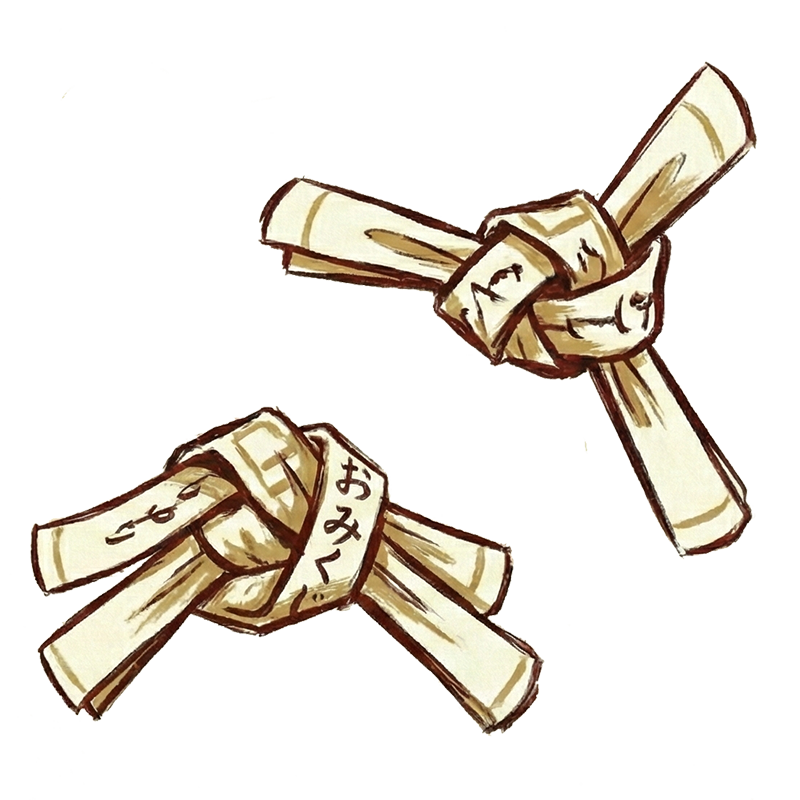
When you draw an omikuji, most people first look at the fortune ranking — “Great Blessing” or “Misfortune.” However, the waka poetry or Chinese verse written on the omikuji is actually the true message from the gods or Buddha. The fortune ranking is merely a “headline” indicating the general direction of your luck, while the poem contains specific advice directed at you right now. This article explains why waka and Chinese verses appear on omikuji, their historical background, and practical tips for reading and interpreting them.
御要旨
- The Waka on Omikuji Is Not a Bonus — It Is the Message Itself
- Waka on Omikuji Traces Back to the “Uta-ura” Tradition
- Chinese-Verse Omikuji Are Based on the “Ganzan Daishi Hyakusen”
- Joshidosha Produces About 70% of All Omikuji Nationwide — and Its Connection to Waka
- Meiji Jingu’s “Omikokoro” Is a Special Omikuji Composed Entirely of Waka
- Three Steps to Interpreting Waka on Omikuji
- Representative Omikuji Waka Examples with Modern Interpretations
- How to Interpret Chinese Verses on Omikuji
- Different Ways to Appreciate Waka and Chinese-Verse Omikuji
- Practical Ways to Apply Omikuji Waka and Chinese Verses in Daily Life
- Final Thoughts
The Waka on Omikuji Is Not a Bonus — It Is the Message Itself
After drawing omikuji, many people check only the fortune ranking and tie the paper without reading the waka. However, this is like receiving a letter and reading only the envelope without opening it.
The waka or Chinese verse is the “contents” of the omikuji, and the fortune ranking is merely the “envelope”. Jinja Honcho (the Association of Shinto Shrines) states that omikuji should not be drawn solely for fortune-telling purposes, but that what matters most is using its content as a guide for daily life (Source: Jinja Honcho).
Within just 31 syllables arranged in a 5-7-5-7-7 pattern, waka condenses seasonal imagery, nuances of the human heart, and life wisdom. Reading the waka carefully on your omikuji is the act of receiving what the gods or Buddha are trying to tell “you, right now.” (Judging an omikuji by its fortune ranking alone is like reviewing a movie after watching only the trailer.)
Waka on Omikuji Traces Back to the “Uta-ura” Tradition
Behind the presence of waka on omikuji lies an ancient Japanese divination tradition called “uta-ura” (poem divination). Uta-ura was an ancient custom where a miko (shrine maiden) entered a trance state and composed waka, conveying divine will through the poem. During the Heian period, it spread among aristocrats troubled by career and romantic concerns (Source: Waraku Web).
In other words, waka was not merely literary decoration but served as a “vessel” for delivering the words of the gods to humans. The presence of waka on modern omikuji is the result of this thousand-year-old tradition of “conveying divine will through poetry” being passed down.
From Uta-ura to Modern Omikuji
The history of uta-ura is ancient. In medieval Japan, people drew a strip of paper hung from a bow and judged fortune by the waka written on it. The “Tenmangu Rokujuyonshu Utaura Omikuji-sho” compiled during the Edo period contained waka, waka commentary, fortune readings, and category-specific advice — nearly identical in structure to modern omikuji.
This tradition spread to shrines nationwide as paper omikuji from the Meiji period onward, forming the current format. The waka on omikuji is not a relic of the past but the very essence of omikuji itself.
Chinese-Verse Omikuji Are Based on the “Ganzan Daishi Hyakusen”
While shrine omikuji feature waka poetry, temple omikuji often contain Chinese verses (kanshi). The prototype for these Chinese-verse omikuji is the “Ganzan Daishi Hyakusen” created by Ganzan Daishi Ryogen (912–985), a Tendai Buddhist monk of the Heian period.
The Ganzan Daishi Hyakusen uses 100 five-character quatrain verses (gemon — Buddhist poetic verses) obtained through prayer to Kannon to divine fortunes. Its origins trace to a Chinese divination called “Tenjiku Reisen,” which established the format of conveying divine teachings through Chinese verse (Source: Meijimura Meiji Note).
Shrines Tend to Use Waka, Temples Tend to Use Chinese Verse
Whether waka or Chinese verse appears on an omikuji generally depends on whether it was drawn at a shrine or temple.
| Type | Main Location | Form | Characteristics |
|---|---|---|---|
| Waka Omikuji | Shrines | 5-7-5-7-7 (31 syllables) | Composed in Japanese; conveys teachings through nature and seasonal imagery |
| Chinese-Verse Omikuji | Temples | Five-character quatrain (4 lines, 20 characters) | Written in classical Chinese; often accompanied by Japanese reading and modern translation |
However, this is not a strict rule. Some temples offer waka omikuji, and some shrines use Chinese-verse omikuji. (What matters most is paying attention to what is actually written on the omikuji you drew.)
Joshidosha Produces About 70% of All Omikuji Nationwide — and Its Connection to Waka
Currently, about 70% of all omikuji drawn at shrines nationwide are manufactured by Joshidosha, based at Nisho Yamada Shrine in Shunan City, Yamaguchi Prefecture. There is a fascinating story behind how Joshidosha’s omikuji spread across Japan.
In 1905 (Meiji 38), the 21st head priest of Nisho Yamada Shrine, Miyamoto Shigetane, argued that women should also serve in Shinto priesthood and established the “Dai Nippon Keishin Fujin-kai” (Greater Japan Women’s Association of Divine Reverence). The omikuji business was devised to fund these activities (Source: Made in Local).
The Waka on Joshidosha Omikuji Were Composed by Head Priests
All the waka featured on Joshidosha’s omikuji were composed by successive head priests of Nisho Yamada Shrine. The 21st head priest, Miyamoto Shigetane, belonged to the Myojo school (the romantic style of Yosano Tekkan and Akiko), while the 22nd, Miyamoto Kiyotane, belonged to the Araragi school (the realist style descended from Masaoka Shiki), with each poetic style reflected in the waka.
In other words, the waka on omikuji drawn at most shrines across Japan are works by two poet-priests who were active from the Meiji to Showa periods. This background is why omikuji waka possess such high literary quality.
Meiji Jingu’s “Omikokoro” Is a Special Omikuji Composed Entirely of Waka
When discussing the relationship between waka and omikuji, Meiji Jingu Shrine’s “Omikokoro” (Great Imperial Heart) is indispensable. Omikokoro differs significantly from typical omikuji — it has no fortune rankings. It consists entirely of poems by Emperor Meiji (gyosei — imperial poetry) and Empress Shoken (miuta — imperial consort’s poetry).
Emperor Meiji composed approximately 93,000 waka during his lifetime, and Empress Shoken composed approximately 27,000. From these, 15 poems each that serve as moral and ethical guidelines — 30 in total — were selected for Omikokoro (Source: Ministry of Land, Infrastructure, Transport and Tourism Multilingual Database).
White Paper Is Emperor Meiji, Yellow Paper Is Empress Shoken
Omikokoro is distinguished by paper color. White Omikokoro contains Emperor Meiji’s poems, while yellow Omikokoro contains Empress Shoken’s poems. Both include modern Japanese explanations below the waka, making the meaning accessible.
The absence of fortune rankings in Omikokoro reflects Meiji Jingu’s wish that visitors read the waka itself and reflect on their own way of living, rather than seeking a “good/bad” verdict. This could be considered the truest form of omikuji. (Some visitors feel disappointed that there is no “Great Blessing,” but Omikokoro exists on a level beyond the concept of fortune rankings altogether.)
Three Steps to Interpreting Waka on Omikuji
Many people feel “I don’t understand the meaning” when reading waka on omikuji. Waka written in archaic and classical Japanese can be difficult to grasp immediately with modern language sensibilities. However, by following these three steps, anyone can receive the waka’s meaning in their own way.
Step 1: Read It Aloud Three Times
Waka should not only be read with the eyes but also spoken aloud, which allows the rhythm and sound to convey meaning intuitively. The 5-7-5-7-7 rhythm is very natural in Japanese, and speaking it aloud helps the flow of words enter your body even when the language is archaic.
The first time, just follow the text. The second time, imagine the scene being described. The third time, read it as if it is being spoken directly to you. Just reading it three times should give you some impression, even from a waka that initially seemed incomprehensible.
Step 2: Find Keywords and Consider Their Meaning
Every waka contains “key” words. Natural imagery like “flower,” “wind,” “moon,” “cloud,” “path,” and “light” have been used since ancient times to symbolize human emotions and life situations.
| Common Waka Words | Symbolic Meaning | Omikuji Interpretation Example |
|---|---|---|
| Hana (Flower) | Beauty, peak, transience | Now is your best time, but do not let your guard down |
| Kaze (Wind) | Change, flow, influence | Change is coming; be flexible in response |
| Tsuki (Moon) | Hope, guidance, truth | There is light even in darkness; be patient |
| Kumo (Cloud) | Obstacle, confusion, anxiety | A temporary difficulty; it will clear eventually |
| Michi (Path) | Life direction, choice | A time to determine which direction to take |
| Haru (Spring) | Beginning, hope, rebirth | A good time to start something new |
| Yama (Mountain) | Difficulty, trial, height | Your efforts toward a goal will be rewarded |
When you find these keywords in a waka, overlay their symbolic meaning with your current situation. There is no “correct answer” in waka interpretation. What matters is what you personally feel from those words.
Step 3: Interpret It in Connection with Your Own Concerns
Try connecting the waka’s content with the worries or wishes you had in mind before drawing the omikuji. Omikuji is a message directed at “you, right now.” The same waka will be received very differently by someone worried about work versus someone worried about love.
For example, if a verse reads “petals scattered by the spring wind, where do they go,” someone considering a career change might read it as “it is time to ride the wind to a new place,” while someone struggling with relationships might interpret it as “let go of attachment and trust the natural flow.” (Omikuji waka is like a mirror. It reflects your heart and shows you the message you need.)
Representative Omikuji Waka Examples with Modern Interpretations
Let us look at examples of waka commonly found on omikuji to help you develop a concrete sense of how to interpret them. Here are some typical patterns from waka used in Joshidosha omikuji.
Waka Trends in Good-Fortune Omikuji
Omikuji with positive fortune rankings tend to feature waka with bright imagery and content encouraging progress.
For example, waka that describe the arrival of spring or flowers blooming are hints that things are progressing smoothly. A scene of “flowers finally blooming after a long winter” indicates the time has come for your efforts to bear fruit. Waka about light or sunrise suggest “a new development is coming” or “the path is opening.”
However, even Great Blessing omikuji may contain cautionary messages in the waka. If the poem describes flowers in full bloom scattering, it suggests “you are at the peak, so proceed carefully.” Being careless after drawing Great Blessing is like assuming you will pass a test without studying. By checking the waka content, you can receive “specific advice” that the fortune ranking alone cannot reveal.
Waka Trends in Bad-Fortune Omikuji
Waka in bad-fortune omikuji often depict harsh natural elements like rain, clouds, fog, and winter, but always contain a “sign of hope” within them.
For example, a verse like “waiting for the moon to rise beyond the cloud-covered mountain” means “visibility is poor now due to clouds, but the moon (hope) will eventually appear.” Bad-fortune waka do not describe “despair” but convey both “it is a time to endure” and “improvement awaits ahead.”
Being devastated by a bad fortune is like despairing over a “caution” result on a health checkup. If you can read the message embedded in the waka — “be cautious now, but light will surely come” — even a bad-fortune omikuji becomes a positive guide.
How to Interpret Chinese Verses on Omikuji
If you draw an omikuji at a temple with a Chinese verse (five-character quatrain), it may feel even more “unreadable” than waka. Classical Chinese is not commonly studied in modern Japanese education, and the original text alone can be impenetrable.
Understanding the Basic Structure of Chinese-Verse Omikuji
Chinese verses on omikuji most often take the form of “gogen zekku” (five-character quatrain): 5 characters per line times 4 lines = 20 characters total in a very compact format, following a “ki-sho-ten-ketsu” (introduction-development-twist-conclusion) structure.
| Line | Role | Interpretation Tips |
|---|---|---|
| Ki (Line 1) | Introduction. Sets the scene | What situation is being described? |
| Sho (Line 2) | Development. Expands on Line 1 | How is the situation developing? |
| Ten (Line 3) | Twist. Scene changes | The turning point; the core message is here |
| Ketsu (Line 4) | Conclusion. Wraps everything up | The final message; the conclusion |
Chinese-verse omikuji almost always include a Japanese reading (kakikudashi-bun) and modern translation alongside the original text. Start by reading the modern translation to grasp the overall meaning, then return to the original to appreciate the verse’s sound and dignity.
The “Ten” (Twist) Line Is Most Important in Chinese Verse
Among the ki-sho-ten-ketsu structure of Chinese verse, the most important line for omikuji is the “ten” (twist — Line 3). This is where the scene shifts dramatically, and where the core message the gods or Buddha most want to convey is concentrated.
For example, if Lines 1 and 2 describe “walking alone on a dark night road” and Line 3 shifts to “light begins to appear in the eastern sky,” the message is “times are difficult now, but signs of improvement will soon appear.” Read with the awareness that the “twist” line is the heart of the omikuji’s advice.
Different Ways to Appreciate Waka and Chinese-Verse Omikuji
Even within omikuji, waka and Chinese verses have different styles of communication. Neither is superior — each has its own unique appeal and flavor.
| Comparison | Waka (Shrines) | Chinese Verse (Temples) |
|---|---|---|
| Language | Japanese (classical) | Classical Chinese (with Japanese reading) |
| Expression Style | Conveys through imagery and sensation | Conveys through logical structure |
| Reading Experience | Soft, with lingering resonance | Powerful and dignified |
| Range of Interpretation | Wide; entrusted to the reader’s sensitivity | Relatively clear; guided by structure |
| Best For | Those who want to receive intuitively | Those who want to understand logically |
Waka omikuji contain much room for nuance and suggestion, so interpretation varies greatly by reader. This is not a flaw but rather waka’s characteristic of “letting the message the person needs naturally emerge.” Meanwhile, Chinese-verse omikuji have a clear ki-sho-ten-ketsu structure, making it easier to read the message logically.
Try drawing omikuji at both shrines and temples to discover which communication style resonates more with you.
Practical Ways to Apply Omikuji Waka and Chinese Verses in Daily Life
It would be a waste to “read and forget” the waka or Chinese verse on your omikuji. Here are some ways to make use of the message you received from the gods or Buddha in your daily life.
Take Your Omikuji Home and Reread It Periodically
It is perfectly fine to take your omikuji home. Keep it in your wallet or phone case, and reread the waka in quiet moments. You may discover a meaning that eluded you at the time of drawing — a realization that comes days later: “Ah, so that is what it meant.”
Omikuji waka often resonate more deeply after some time has passed than at the moment of drawing. Making a habit of rereading your omikuji waka periodically, like keeping a diary, can also serve as a way to objectively reflect on changes in your situation.
Write Out the Waka’s Meaning in Your Own Notes
Try copying the omikuji waka and adding a note beside it: “This is how I interpreted it.” This is an exercise in facing your inner self, creating a dialogue with yourself through the waka.
- Copy the original waka text
- Look up unfamiliar words and record their meanings
- Write down your thoughts in relation to your current situation
- Reread after 1 month and 3 months to see how your impression has changed
Continuing this practice will help you gradually become familiar with classical language and waka expressions, dramatically improving your comprehension the next time you draw omikuji. (It may feel tedious at first, but after 2–3 times, the world of waka suddenly becomes much more accessible.)
Share Omikuji Waka on Social Media for Multiple Perspectives
Posting omikuji waka on social media and sharing interpretations with friends and followers is another effective method. You will be surprised to find that the same waka is received completely differently by different people. Learning others’ interpretations can reveal perspectives you had never considered.
However, omikuji results are inherently personal messages. When sharing, it is best to limit it to the waka portion and avoid publicizing the fortune ranking or specific categories (love, finances, etc.).
Final Thoughts
The waka and Chinese verses on omikuji contain far deeper information than the fortune ranking. Waka inherits the Heian-period uta-ura tradition, and Chinese verse draws from the Ganzan Daishi Hyakusen lineage — both are “divine message delivery systems” with over a thousand years of history. Checking only the fortune ranking and tying up the omikuji is the same as not reading a letter that was delivered to you. The next time you draw omikuji, look at the waka or Chinese verse, read it aloud, consider the meaning of the keywords, and compare it with your current situation. There, you will always find the guidance you need right now.
Omikuji Sando offers personalized fortunes based on your birth date, available for free every day with 12 fortune levels. Why not draw today’s omikuji while reflecting on the divine messages hidden in waka poetry?
