
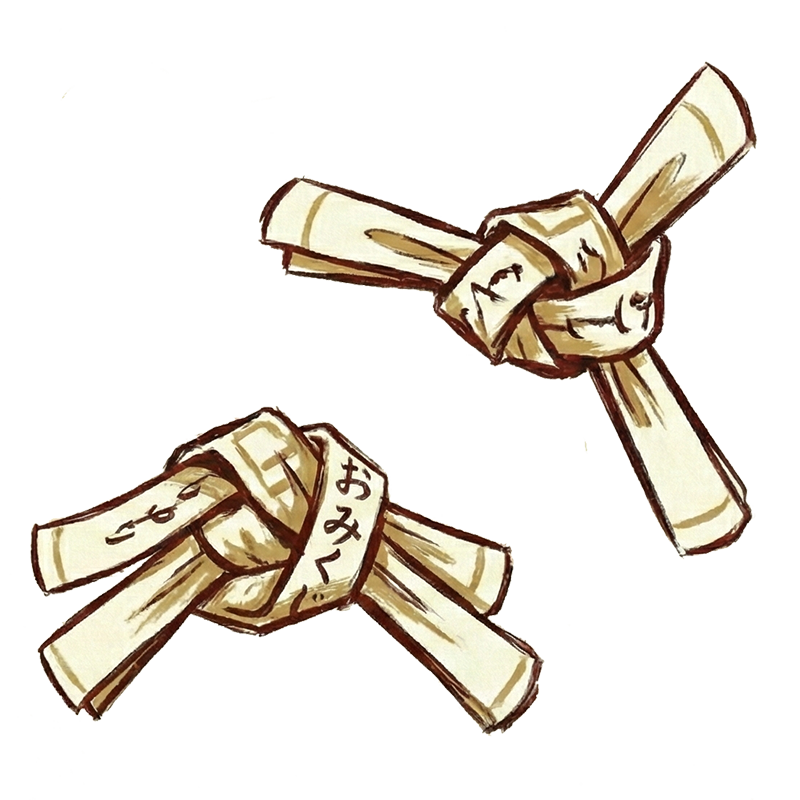
You can draw omikuji at both shrines and temples, but many people assume they are the same thing. In reality, shrine and temple omikuji differ clearly in content, history, and etiquette. Moreover, these differences were born from a national policy called “Shinbutsu Bunri” (Separation of Shinto and Buddhism) during the Meiji era. This article covers everything from the fact that omikuji originated at temples, to the characteristics of shrine and temple omikuji, differences in worship etiquette, and how to handle your omikuji after drawing it.
御要旨
- Omikuji Originated at Buddhist Temples
- The Meiji-Era Separation of Shinto and Buddhism Split Omikuji in Two
- Temple Omikuji Feature Chinese Verses, Shrine Omikuji Feature Waka Poetry
- Temples Tend to Have a Higher Chance of Drawing “Kyo” (Bad Fortune)
- Worship Etiquette Differs Greatly Between Shrines and Temples
- Tying or Taking Home: Shrines and Temples Have Different Perspectives
- Shrine or Temple: Which Is Better for Drawing Omikuji?
- Interesting Facts About Shrine and Temple Omikuji
- Final Thoughts
Omikuji Originated at Buddhist Temples
Today, many people associate omikuji with Shinto shrines, but omikuji actually originated in Buddhism. A Tendai Buddhist monk named Ganzan Daishi Ryogen (912–985) created the “Ganzan Daishi Hyakusen” (Ganzan Daishi’s Hundred Lots) during the Heian period, which is considered the prototype of modern omikuji.
Ganzan Daishi served as the 18th Zasu (head priest) of Enryaku-ji Temple on Mount Hiei. He prayed to Kannon (the Bodhisattva of Compassion) and received one hundred verses called “gemon” (Buddhist teachings arranged in poetic form), which he used to create a system for answering people’s troubles (Source: Enryaku-ji Irori-bata). This is the direct origin of today’s omikuji.
In other words, omikuji originated as “divine messages from Buddha,” born from Buddhist practice and prayer. It would be several more centuries before omikuji spread to Shinto shrines. (The image of “omikuji = shrine” is actually a relatively recent development in history.)
Ganzan Daishi Hyakusen Became Hugely Popular in the Edo Period
The Ganzan Daishi Hyakusen spread among common people during the Edo period. Jigen Daishi Tenkai, who served three generations of the Tokugawa shogunate, reportedly rediscovered one hundred verse slips in Togakushi, Shinano Province, guided by a dream of Ganzan Daishi. From there, the Ganzan Daishi Hyakusen spread to temples across Japan.
Omikuji of this era centered on verses written as five-character quatrains in classical Chinese, with a format nearly identical to modern omikuji. During the Edo period, shrines and temples were unified under “Shinbutsu Shugo” (syncretism of Shinto and Buddhism), so temple-originated omikuji naturally came to be drawn at shrines as well. (It was an era when the distinction between gods and Buddhas was blurred, much like how households had both Buddhist altars and Shinto shelves.)
Ganzan Daishi-do Hall at Enryaku-ji Remains the Birthplace of Omikuji
The Ganzan Daishi-do Hall in the Yokawa area of Enryaku-ji Temple on Mount Hiei preserves the omikuji format from over 1,000 years ago. Here, instead of visitors drawing omikuji themselves, monks listen to visitors’ concerns, chant sutras, and draw the omikuji on their behalf — continuing the original method (Source: Enryaku-ji Irori-bata).
This is very different from the modern style of shaking sticks out of a box, and represents the original form of omikuji as a ritual. It is a precious place where you can experience how omikuji was originally “a solemn act of receiving divine messages from Buddha.”
The Meiji-Era Separation of Shinto and Buddhism Split Omikuji in Two
The clear divide between shrine and temple omikuji was triggered by the “Shinbutsu Bunri Rei” (Edict for the Separation of Shinto and Buddhism) issued by the Meiji government in 1868. This policy forcibly separated shrines and temples that had been unified for centuries, requiring shrines to eliminate Buddhist elements.
Omikuji was no exception. Shrines could no longer continue using the Ganzan Daishi Hyakusen, which had been created by a Buddhist monk. As a result, shrines were compelled to develop their own omikuji, while temples continued to preserve their traditional Chinese-verse-based omikuji — creating two separate paths.
The fact that shrines and temples, which used the same omikuji until the Edo period, came to follow separate paths due to government policy is surprisingly little known. (The “fork in the road” for omikuji was political, not religious.)
Joshidosha Achieved Nationwide Distribution of Shrine Omikuji
When shrines needed their own omikuji during the Meiji era, a particular organization stepped onto the stage of history. Miyamoto Shigetane, the head priest of Nisho Yamada Shrine in Shunan City, Yamaguchi Prefecture, founded “Joshidosha” (Women’s Way Society).
Miyamoto established the “Dai Nippon Keishin Fujin-kai” (Greater Japan Women’s Association of Divine Reverence) to promote women’s social independence, and in 1906 launched its journal “Joshido.” To fund these activities, he began manufacturing shrine omikuji featuring waka poetry (Source: Shunan City Official Website).
Joshidosha still manufactures approximately 60–70% of all omikuji distributed at shrines nationwide, and it was also this company that invented the automatic omikuji dispensing machine. In other words, the majority of omikuji drawn at shrines across Japan were born from a Meiji-era women’s independence movement — a surprising piece of history.
Temple Omikuji Feature Chinese Verses, Shrine Omikuji Feature Waka Poetry
When comparing shrine and temple omikuji side by side, the most obvious difference is the literary expression. Temple omikuji feature Chinese verses (kanshi), while shrine omikuji feature waka poetry.
Temple Chinese Verses Are Direct Descendants of the Ganzan Daishi Hyakusen
The reason temple omikuji feature Chinese verses is straightforward: the original Ganzan Daishi Hyakusen itself was composed of five-character quatrains in classical Chinese. Since Buddhism was transmitted to Japan from the Chinese continent and scriptures were written in classical Chinese, it was natural to use Chinese verses to convey Buddhist teachings through omikuji.
Senso-ji Temple’s omikuji, called “Kannon Hyakusen” (Kannon’s Hundred Lots), directly inherits the tradition of the Ganzan Daishi Hyakusen. One hundred lots contain Chinese verses, and the structure of reading the poetry to receive Buddha’s message has remained virtually unchanged for 1,000 years.
Shrine Waka Poetry Is Based on the Belief That “Gods Compose Poems”
The reason shrine omikuji feature waka poetry is rooted in the Shinto belief that gods compose waka. The Kojiki and Man’yoshu contain numerous poems attributed to deities, and waka has long been cherished as the language connecting gods and humans.
When the Meiji-era Separation of Shinto and Buddhism required shrines to eliminate Buddhist elements, they adopted waka poetry in place of Chinese verses. The shrine omikuji produced by Joshidosha also featured waka, and this spread to shrines nationwide.
Meiji Jingu Shrine’s omikuji “Omikokoro” (Great Imperial Heart) is an example of this tradition taken to a unique level. Fifteen poems by Emperor Meiji and fifteen by Empress Shoken are used as omikuji, with no fortune rankings like “Great Blessing” or “Misfortune.” It embodies in its purest form the idea that the waka poem itself is a message from the divine.
| Comparison | Shrine Omikuji | Temple Omikuji |
|---|---|---|
| Literary Expression | Waka (5-7-5-7-7 tanka form) | Chinese Verse (five-character quatrain) |
| Written Name | Goshinsen (Sacred Divine Lots) | Gobutsusen (Sacred Buddha Lots) |
| Source of Message | Message from the gods | Message from Buddha |
| Cultural Background | Ancient Japanese Shinto tradition | Buddhist tradition from the Chinese continent |
(In practice, most modern omikuji include categories like “overall fortune,” “love,” and “finances” alongside waka or Chinese verses, making it harder to tell at a glance whether one is from a shrine or temple.)
Temples Tend to Have a Higher Chance of Drawing “Kyo” (Bad Fortune)
You may have heard that “temple omikuji have more bad fortunes.” This is not just a rumor — it is a tendency supported by actual data.
The Original Ganzan Daishi Hyakusen Allocates About 30% to Bad Fortunes
According to the original “Ganzan Daishi Omikuji-cho,” the traditional distribution is: Dai-kichi (Great Blessing) 16%, Kichi (Blessing) 35%, Kyo (Misfortune) 29%, and others 20%. In other words, roughly one in three people who draw omikuji receives a bad fortune. Senso-ji Temple’s “Kannon Hyakusen” faithfully preserves this tradition, maintaining a ratio of 30 out of 100 as Kyo (Source: CHANTO WEB).
Senso-ji maintains its stance of “conveying Kannon’s messages as they are, both good and bad,” and does not reduce the proportion of bad fortunes to accommodate visitors’ feelings. This is why Senso-ji is said to have a high rate of bad fortunes.
Many Shrines Reduce the Proportion of Bad Fortunes
On the other hand, many modern shrines intentionally keep the proportion of bad fortunes low. It is not uncommon for shrines to set the rate of bad fortunes at 1–5%, or to exclude Dai-kyo (Great Misfortune) entirely. The majority of shrines have a distribution where positive results are somewhat more likely.
This difference comes from differing religious stances. Temple omikuji have a strong educational aspect of “conveying Buddha’s teachings as they are,” where accepting harsh results is considered part of spiritual practice. In contrast, shrine omikuji tend to reflect a desire for “visitors to leave with positive feelings.”
| Comparison | Temple (Traditional Distribution) | Shrine (Modern Distribution) |
|---|---|---|
| Dai-kichi Rate | About 16% | About 15–20% |
| Kichi Rate | About 35% | About 30–40% |
| Bad Fortune Rate | About 29–30% | About 1–15% |
| Dai-kyo Inclusion | Often included | Many shrines exclude it |
| Distribution Philosophy | Convey Buddha’s teachings as they are | Consider visitors’ feelings |
(Just because bad fortunes are more common does not mean temple omikuji are “losers.” Bad fortune is Buddha’s teaching that “now is a time to be cautious,” and is actually a positive message meaning “things will improve from here.”)
Worship Etiquette Differs Greatly Between Shrines and Temples
Visiting the shrine or temple before drawing omikuji is the standard procedure, but the worship etiquette itself differs between the two. If you are going to draw omikuji, this is an important distinction to know.
At Shrines: “Two Bows, Two Claps, One Bow” with Hand Clapping
The basic worship at shrines follows “Nirei Nihakushu Ichirei” (two bows, two claps, one bow). First, bow deeply twice, then clap your hands twice, and finally bow deeply once more. The clapping (kashiwade) is meant to announce your presence to the gods.
This practice only became widely standardized at shrines nationwide relatively recently, originating from the “Jinja Saishiki” (Shrine Ritual Procedures) issued by the government’s ceremonial department in 1875. In other words, this etiquette itself was formalized during the Meiji era.
At Temples: “Palms Together, One Bow” Without Making Sound
The basic worship at temples follows “Gassho Ichirei” (palms together, one bow). Quietly place your hands together in front of your chest and bow once without making any sound. Do not clap. The gesture of pressing palms together (gassho) originated in India, the birthplace of Buddhism. The right hand represents Buddha, the left hand represents all sentient beings, and pressing them together symbolizes the unity of Buddha and humanity.
Some visitors accidentally clap at temples, but this is incorrect etiquette. This is an easy point of confusion between shrines and temples, so it is worth checking before you go to draw omikuji.
| Etiquette Comparison | Shrine | Temple |
|---|---|---|
| Basic Worship | Two Bows, Two Claps, One Bow | Palms Together, One Bow |
| Clapping | Clap twice | Do not clap (no sound) |
| Temizu (Hand Washing) | Yes | Yes |
| Incense | No | Yes (if incense burner is available) |
| Bell / Waniguchi | Ring the bell (suzu) | Strike the waniguchi |
| When to Draw Omikuji | After worship | After worship |
In either case, the correct order is to complete your worship before drawing omikuji. You may see some visitors drawing omikuji at the shrine office first and then worshipping, but the proper etiquette is to greet the gods or Buddha first and then receive your omikuji.
Tying or Taking Home: Shrines and Temples Have Different Perspectives
Many people wonder whether to “tie the omikuji to a tree” or “take it home.” On this point too, shrines and temples have subtly different perspectives.
At Shrines: Either Tying or Taking Home Is Fine
Many shrines have designated “omikuji tying racks” for tying your omikuji. There is a common belief that you should tie bad fortunes and take home good ones, but Jinja Honcho (the Association of Shinto Shrines) has not established specific rules about how many times you can draw or whether to tie or take home. Regardless of the result, both taking it home to reread periodically and tying it to entrust your fortune to the gods are perfectly acceptable.
At Temples: There Is Also the Idea of “Taking It Home as a Reminder”
Because temple omikuji have a strong character as “teachings from Buddha,” the more Buddhist approach is to take them home regardless of the result and reread them as a guide for daily behavior. Especially when you draw a bad fortune, it is considered “a warning you need right now,” and keeping it close to maintain awareness is seen as meaningful.
Of course, if the temple has a tying rack, you are welcome to tie your omikuji there. However, because temple omikuji have a strong character as “life lessons,” they are particularly worth taking home. Just as no one leaves their health checkup results at the hospital, personal guidance is more useful when kept close at hand.
Shrine or Temple: Which Is Better for Drawing Omikuji?
You might wonder, “So which is better for drawing omikuji?” The conclusion is that neither is superior. The best choice depends on what you are looking for from your omikuji experience.
Choose a Shrine If You Want to Leave Feeling Positive
If you are visiting for New Year’s or a celebration and hoping for a good result, shrine omikuji are more likely to deliver. Since many shrines set the proportion of bad fortunes lower, positive results tend to appear more often overall. The messages from the gods written in waka poetry are emotional and often warm the heart.
Choose a Temple If You Want Honest Advice, Even If Harsh
When you want to objectively examine your situation, or when you are at a crossroads in life, temple omikuji are more suitable. Temple omikuji that inherit the Ganzan Daishi Hyakusen tradition convey both good and bad news as they are. The Buddhist teachings embedded in Chinese verses are profound, offering new discoveries with each rereading.
To put it metaphorically, shrine omikuji are like “a supportive coach,” while temple omikuji are like “a mentor who gives honest feedback.” Both are needed in different situations, and the wisest approach is to choose based on your mood and circumstances.
- Want to start the new year on a bright note → Shrine omikuji
- Looking for answers to your worries → Temple omikuji
- Want to enjoy the elegance of waka poetry → Shrine omikuji
- Want to savor the deep teachings of Chinese verse → Temple omikuji
- Want a casual test of luck → Shrine omikuji
- Need advice at a turning point in life → Temple omikuji
Interesting Facts About Shrine and Temple Omikuji
In addition to the comparisons above, here are some interesting facts about shrine and temple omikuji. Knowing these will slightly change how you view omikuji the next time you draw one.
Omikuji Prices Are Similar at Both Shrines and Temples
The “hatsuho-ryo” (offering at shrines) or “ofuse” (offering at temples) for omikuji is typically around 100 to 300 yen at both. Technically, you do not “buy” them but “make an offering” — this terminology is common to both shrines and temples.
Novelty Omikuji Are More Varied at Shrines
In recent years, creative “novelty omikuji” have increased — such as omikuji inside animal-shaped ceramic figures, or omikuji where text appears when floated on water. Shrines tend to offer greater variety in these creative designs, and a growing number of young visitors come specifically for Instagram-worthy omikuji.
Temple omikuji tend to maintain a more traditional style, with the orthodox format of paper omikuji featuring Chinese verses and fortune readings. (This is not about which is better, but rather a difference in approach — “innovation” versus “tradition.”)
You Can Return Omikuji to a Different Shrine or Temple
If you take an omikuji home and later want to return it, you do not need to go back to the original shrine or temple. You can place it in the “old talisman collection box” at any nearby shrine or temple, where it will be respectfully burned in a ritual called “otakiage.” However, it is more courteous to return shrine omikuji to a shrine and temple omikuji to a temple when possible.
Final Thoughts
Although they share the name “omikuji,” shrine and temple omikuji actually differ in many ways — from their origins, content, and etiquette to the proportion of bad fortunes. The prototype of omikuji was created by the Heian-period Tendai Buddhist monk Ganzan Daishi Ryogen, and after the Meiji-era Separation of Shinto and Buddhism, shrines adopted waka poetry while temples kept Chinese verses, forming the two styles we know today. Each tradition carries its own philosophy. Drawing omikuji with this knowledge will add a new depth to your reading.
Even on days when you cannot visit a shrine or temple, you can enjoy the omikuji experience with “Omikuji Sando.” Draw your personalized fortune based on your birth date, available for free every day with 12 fortune levels. Why not receive the message you need today, just like a divine revelation?
