
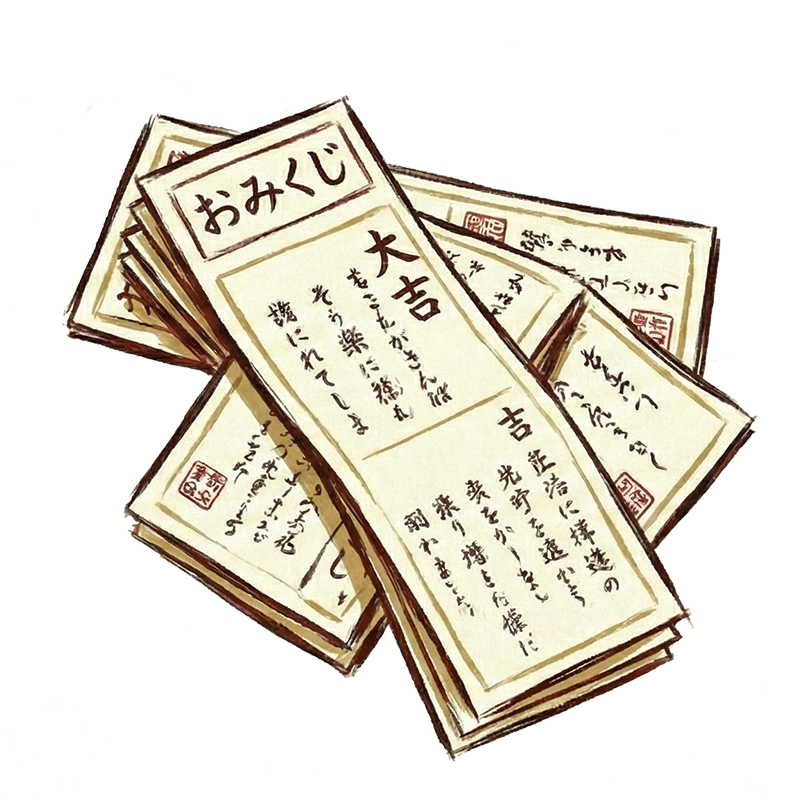
“Mizu-mikuji” (water omikuji)—a type where text magically appears on blank paper when dipped in water—has been growing in popularity, especially on social media, thanks to the completely unique experience it offers compared to regular omikuji. While water omikuji are available at shrines across Japan, particularly those associated with water such as Kifune Shrine and Yaegaki Shrine, not many people know exactly “where you can draw them” or “why text appears when the paper touches water.” This article explains the mechanism behind water omikuji from a technical perspective and introduces representative water omikuji spots nationwide by region.
御要旨
- Water Omikuji Use “Water-Responsive Ink” to Make Text Appear
- Kyoto’s Water Omikuji: A Competitive Region Rich in “Sacred Water Sites”
- The Kansai Region Offers Excellent Romance-Themed Water Omikuji
- The San’in and Chugoku Region Has a “Sacred Site” for Water Omikuji
- Water Omikuji in the Kanto Region Offer Easy Access from Central Tokyo
- In the Kyushu Region, Dazaifu Tenmangu’s Summer-Limited Water Omikuji Is Popular
- Five Tips to Fully Enjoy Your Water Omikuji Experience
- Water Omikuji Are Popular Because They Are “Experience-Based”
- The History of Water Omikuji Is Rooted in the Tradition of “Water Divination”
- Final Thoughts
Water Omikuji Use “Water-Responsive Ink” to Make Text Appear
The secret behind water omikuji is a watermark printing technology called “Aquafic Printing.” Ink that appears white when dry becomes transparent when it contacts water, revealing text and designs printed beneath. In Aquafic printing produced by Kyoto-based Flexo Print Co., text appears clearly without blurring or bleeding when dipped in water, and becomes invisible again when dried (Source: Aquafic Printing Official Site).
A Two-Layer Structure Creates the “Appearing” Effect
Water omikuji paper has a two-layer structure. First, text and designs are printed on the lower layer with regular ink, then a water-responsive ink (special ink that becomes transparent on contact with water) is printed over the top. When dry, the upper layer of white ink conceals the lower layer, making the paper appear blank. When dipped in water, the upper layer ink turns transparent, and the text printed on the lower layer “appears” to rise to the surface.
It’s important to note that this differs from thermochromic ink in principle. Thermochromic ink changes color with temperature changes, while the water-responsive ink used in water omikuji becomes transparent through contact with moisture—an entirely different technology. Since it returns to white when dried, you can make the text appear two to three times. (“It’s like magic!” many people exclaim, but it’s a legitimate printing technology.)
The Ink Formula Is Adjusted for Each Shrine’s Water Conditions
Because the location where water omikuji are dipped varies by shrine, the ink formulation is adjusted according to water temperature and quality. Some shrines use cold spring water, while others use flowing water from the temizu-sha (purification fountain), and the ink is carefully calibrated so text appears cleanly in each environment. The process from plate-making to delivery takes about one week for plate preparation and two to three weeks for printing and processing, with each sheet reflecting the craftspeople’s attention to detail (Source: Flexo Print).
Kyoto’s Water Omikuji: A Competitive Region Rich in “Sacred Water Sites”
Kyoto could be called the birthplace of water omikuji, with numerous shrines associated with water concentrated in the area. If visiting Kyoto, we recommend enjoying a “water omikuji pilgrimage” by visiting multiple shrines.
Kifune Shrine — The Iconic “Mizu-ura Mikuji” (Water Divination Omikuji)
When people think of water omikuji, the first name that comes up is Kifune Shrine in Sakyo Ward, Kyoto. This shrine enshrines Takaokami no Kami, the god of water, and its “Mizu-ura Mikuji” is known nationwide as the originator of water omikuji.
| Item | Details |
|---|---|
| Official Name | Mizu-ura Mikuji (Water Divination Omikuji) |
| Offering Fee | 200 yen |
| Dipping Location | Water basin beside the stone wall where sacred spring water flows in front of the main hall |
| Time Required | About 1 minute for text to appear |
| Special Feature | QR code included for English, Chinese, and Korean translations |
When you float the paper on the sacred spring water that emerges from the stone wall in front of the main hall, the fortune results appear along with categories such as romance, academics, and business. As the paper dries, the text gradually disappears again, and this dramatic effect of “the water god’s message vanishing” leaves a strong impression on visitors (Source: Kifune Shrine Official Site).
(Kifune Shrine is located deep in the mountains, so in summer the temperature is about 5 degrees cooler than the city center. The experience of dipping your hand in the cold sacred spring water itself becomes a refreshing “seasonal tradition.”)
Shimogamo Shrine — Water Omikuji at a World Heritage Site’s Mitarashi River
Shimogamo Shrine, formally known as Kamomioya Shrine, is one of the component sites of the World Heritage “Historic Monuments of Ancient Kyoto.” The water omikuji dipped in the Mitarashi River flowing through the shrine grounds is very popular.
| Item | Details |
|---|---|
| Offering Fee | 300 yen |
| Dipping Location | Mitarashi River (near Mitarashi Pond) |
| Fortune Categories | Travel, romance, academics, work, financial luck, health, wishes |
| Special Feature | During the annual July “Mitarashi Festival,” you can experience it alongside the foot-dipping ritual |
The quiet thrill of watching text slowly appear while the Mitarashi River murmurs around you is a sensation you cannot get from regular omikuji. Shimogamo Shrine is surrounded by the serene Tadasu no Mori forest, where you can enjoy the water omikuji experience and forest bathing simultaneously.
The Kansai Region Offers Excellent Romance-Themed Water Omikuji
Beyond Kyoto, the broader Kansai region also has shrines with distinctive water omikuji scattered throughout. The abundance of water omikuji at shrines known for romance and love-related blessings reflects the ancient belief in the connection between “water” and “bonds” (en).
Ikuta Shrine (Kobe, Hyogo) — Romance Water Omikuji in an Urban Forest
Ikuta Shrine, located in the heart of Kobe’s Sannomiya district, is a historically significant shrine said to have been founded in 201 AD. Known as a deity of matchmaking, visitors dip their water omikuji in the “Kinryu-sen” (Golden Dragon Spring) in the “Ikuta no Mori” forest north of the main hall.
| Item | Details |
|---|---|
| Offering Fee | 300 yen |
| Purchase Location | Shop beside the tower gate |
| Dipping Location | “Kinryu-sen” in Ikuta no Mori forest |
| Special Feature | Content focuses on romance and is reputed to be “highly accurate” |
Despite being just a few minutes’ walk from Sannomiya Station, stepping into the shrine grounds reveals a dense forest that makes you forget the urban bustle. The moment of floating a water omikuji on the surface of Kinryu-sen and waiting for text to appear is sure to be one of the most memorable experiences during a Kobe visit.
Meoto Daikokusha at Kasuga Taisha (Nara) — Romance Water Omikuji at a World Heritage Site
Meoto Daikokusha, located within the grounds of Kasuga Taisha in Nara, is the only shrine in Japan that enshrines the married couple of Daikoku-sama. Known for its heart-shaped ema (votive tablets), this shrine also offers water omikuji. When you float the divination paper in water, a fortune appears alongside charming deer illustrations. It’s a must-visit spot when visiting Kasuga Taisha.
The San’in and Chugoku Region Has a “Sacred Site” for Water Omikuji
The San’in and Chugoku region has shrines where you can experience particularly unique water divination. Among them, Yaegaki Shrine’s “Mirror Pond Divination” stands in a class of its own.
Yaegaki Shrine (Matsue, Shimane) — Float a Paper on the Mirror Pond to Divine Your Romantic Fate
The “Mirror Pond Divination” at Yaegaki Shrine is, strictly speaking, different from typical water omikuji (the text-appearing type). You place a coin (10 yen or 100 yen) on the divination paper and float it on the pond, and the time it takes for the paper to sink and where it sinks reveal the speed and distance of your romantic fate—a method unique to this shrine.
| Item | Details |
|---|---|
| Offering Fee | 100 yen |
| Purchase Location | Charm office north of the worship hall |
| Divination Method | Place a coin on the divination paper and float it on the Mirror Pond |
| How to Read Results | Sinks within 15 min = love comes soon; over 30 min = love takes time. Sinks nearby = someone close; sinks far away = someone distant |
The Mirror Pond is said to be the pond where Inada-hime-no-Mikoto, hiding from the eight-headed serpent Yamata no Orochi slain by Susanoo-no-Mikoto, used as her daily drinking water and mirror. It can divine all kinds of fate, not just romance and marriage, and proxy divination is also accepted (Source: Yaegaki Shrine Official Site).
(The heart-pounding anticipation while waiting for the paper to sink is an experience you absolutely cannot get from regular omikuji. When visiting with friends or as a couple, it’s great fun to see whose paper sinks first.)
Water Omikuji in the Kanto Region Offer Easy Access from Central Tokyo
The Kanto region also has multiple shrines where you can experience water omikuji. With locations spread across Tokyo, Kanagawa, Saitama, and Gunma, they are easy to incorporate into a day trip—a strength of the Kanto area.
Haruna Shrine (Takasaki, Gunma) — After Dipping in Sacred Spring Water, “Turn the Fortune Lantern” to Circulate Your Luck
Haruna Shrine, nestled midway up Mt. Haruna in Gunma Prefecture, is an ancient shrine with approximately 1,400 years of history, said to have been founded in 586 AD. The “Goshinsui Kaiun Omikuji” (Sacred Water Fortune Omikuji) offered here is known as one of the Kanto region’s premier water omikuji.
| Item | Details |
|---|---|
| Offering Fee | 200 yen |
| Dipping Location | Sacred spring water spot along the approach path |
| Fortune Categories | Childbirth, marriage prospects, romance, wishes, directions, lucky color, occupation, academics, travel, health—10 categories |
| Special Feature | After reading, insert it into the “Kaiun Toro” (Fortune-Circulating Lantern) to circulate your luck |
What sets Haruna Shrine’s water omikuji apart is the post-reading experience. Next to the water omikuji spot stands a “Kaiun Toro” (fortune-circulating lantern), where you insert your omikuji into the small window of your zodiac sign and then spin the lantern to “circulate your fortune.” The appeal lies not just in drawing the water omikuji, but in the entire sequence including the subsequent “fortune-circulating” action (Source: Haruna Tourism Association).
Enoshima Shrine (Fujisawa, Kanagawa) — Text Appears Accompanied by the Sound of a Suikinkutsu
Enoshima Shrine, situated on Enoshima island, enshrines one of Japan’s Three Great Benzaiten. The “Kaiun Mizu-mikuji” (Fortune Water Omikuji) available at the Nakatsumiya (Middle Shrine) can be experienced for just 100 yen. The water used to dip the omikuji comes from the “suikinkutsu” (water harp cave) near the Nakatsumiya. Waiting for the text to appear while listening to the clear tones resonating from the suikinkutsu offers an elegance unique to Enoshima.
(Since Enoshima is a tourist destination you can enjoy for an entire day, adding water omikuji as one of your “trip objectives” works out perfectly.)
Kawagoe Hachimangu (Kawagoe, Saitama) — Water Omikuji to Enjoy Alongside the Koedo Streetscape
Kawagoe Hachimangu, the guardian deity of Koedo Kawagoe with 1,000 years of history, offers water omikuji that reveal text when floated in the blue basin in front of the temizu-bachi (purification basin) in the shrine grounds. The offering fee is 200 yen, and its appeal lies in the easy access—you can stop by while strolling through Kawagoe’s kura-zukuri (warehouse-style) streets.
In the Kyushu Region, Dazaifu Tenmangu’s Summer-Limited Water Omikuji Is Popular
When it comes to water omikuji in the Kyushu region, Dazaifu Tenmangu in Fukuoka Prefecture leads the way. This shrine, dedicated to the god of learning Sugawara no Michizane, offers water omikuji during the summer season only.
Dazaifu Tenmangu (Dazaifu, Fukuoka) — A Seasonal Water Omikuji for Summer Refreshment
| Item | Details |
|---|---|
| Offering Fee | 200 yen |
| Availability | Summer only (typically June–September) |
| Purchase Location | Charm offering booth |
| Special Feature | Cool design featuring the arched bridge and summer lanterns |
Dazaifu Tenmangu’s water omikuji is available only during the summer, not year-round. The shrine’s official X (Twitter) account has introduced it as “a summer-limited water omikuji where text rises when dipped in water,” noting that the refreshing water cools both body and spirit during summer heat (Source: Dazaifu Tenmangu Official X). If you plan to visit Dazaifu in summer, be sure to enjoy this seasonal-exclusive experience.
(The “summer-limited” rarity further enhances the water omikuji’s value. Unlike shrines that offer them year-round, there’s an extra thrill of “I can only draw this now.”)
Five Tips to Fully Enjoy Your Water Omikuji Experience
Now that we’ve introduced water omikuji spots across Japan, here are some tips to make your experience even more rewarding.
Have Your Smartphone Camera Ready Before Dipping
The greatest highlight of water omikuji is the moment text appears on blank paper. Recording the process from dipping to full text revelation makes for beautiful, social-media-worthy video footage. However, please be fully mindful of photography etiquette within shrine grounds. Avoid using tripods so as not to disturb other worshippers, and finish photographing promptly if others are waiting.
Text Disappears When Dry, So Photograph the Results on the Spot
Water omikuji return to blank white paper when they dry. While you can re-dip them in water two to three times to make the text reappear, taking a photo while the text is clearly visible is the surest way to review it later at home. At shrines that allow take-home, placing the water omikuji in a small zip-lock bag makes it easier to preserve as a memento.
Visit Multiple Shrines for a “Water Omikuji Pilgrimage”
In Kyoto, you might visit Kifune Shrine and Shimogamo Shrine; in Kanto, Haruna Shrine and Kawagoe Hachimangu. A “water omikuji pilgrimage” visiting multiple spots in one day is also recommended. The atmosphere of each dipping location, the paper design, and the time it takes for text to appear all differ from shrine to shrine. Even though they’re all “water omikuji,” there’s joy in comparing each shrine’s unique character.
Weather Rarely Affects the Experience, But Watch Your Footing on Rainy Days
Since water omikuji are performed at outdoor water features, they can be experienced regardless of weather. In fact, rainy days at shrines mean fewer visitors, offering the advantage of a more leisurely, atmospheric water omikuji experience. However, areas around ponds and streams can be slippery, so wearing comfortable, sturdy shoes is recommended.
Offering Fees Range from 100–300 Yen; Having Coins Ready Is Reassuring
Offering fees for water omikuji vary by shrine but generally range from 100 to 300 yen. Here is a summary of fees at major shrines:
| Shrine | Location | Offering Fee |
|---|---|---|
| Kifune Shrine | Kyoto | 200 yen |
| Shimogamo Shrine | Kyoto | 300 yen |
| Ikuta Shrine | Kobe, Hyogo | 300 yen |
| Yaegaki Shrine | Matsue, Shimane | 100 yen |
| Haruna Shrine | Takasaki, Gunma | 200 yen |
| Enoshima Shrine | Fujisawa, Kanagawa | 100 yen |
| Kawagoe Hachimangu | Kawagoe, Saitama | 200 yen |
| Dazaifu Tenmangu | Dazaifu, Fukuoka | 200 yen |
To avoid being caught without coins at the offering booth, prepare plenty of 100-yen and 500-yen coins in advance. At shrines like Yaegaki, where you place coins on the divination paper, have 10-yen and 100-yen coins handy as well.
Water Omikuji Are Popular Because They Are “Experience-Based”
With regular omikuji, you simply shake out a numbered stick from a tube or draw a paper from a box and the result is immediate. Water omikuji, on the other hand, involve a three-step process: “dip in water,” “wait for text to appear,” and “read the result.” This creates a “pause” before the result is revealed. This waiting time is the greatest charm of water omikuji.
Just as the anticipation builds during the wait time for a theme park attraction, the excitement of wondering “Will text really appear on this blank paper?” multiplies the experience’s value many times over. Furthermore, the act of physically touching sacred water at shrine springs, ponds, and rivers imparts a sanctity that regular omikuji lack.
Social media sharing power has also boosted water omikuji’s popularity. The moment text appears on blank paper is photogenic and video-worthy, and posts about “water omikuji” on Instagram, X, and TikTok have been increasing year by year. The combination of visual beauty and experiential freshness is why water omikuji fit perfectly into today’s social media era.
The History of Water Omikuji Is Rooted in the Tradition of “Water Divination”
Water omikuji may seem like a recent trend, but water-based divination itself is an ancient Japanese tradition. The Mirror Pond divination at Yaegaki Shrine is a prime example, with its water divination based on the myth of Inada-hime-no-Mikoto having a history spanning hundreds of years. In ancient Japan, there was also “kukatachi” (trial by boiling water), a divine judgment where one’s hand was placed in boiling water to determine truth or falsehood. The bond between water and divination is deeply rooted in Japan’s Shinto culture.
Modern water omikuji can be seen as a recreation of this traditional concept of “divine will manifested through water” using the modern technology of Aquafic printing. The dramatic effect of a divine message appearing on blank paper evokes the sensation of the water deity directly bestowing words upon the worshipper. (In terms of fusing tradition and technology, water omikuji could be called an evolved form of Japan’s omikuji culture.)
Final Thoughts
Water omikuji use water-responsive ink printing technology to create the experience of “text appearing on blank paper.” From Kifune Shrine’s water divination omikuji to Yaegaki Shrine’s Mirror Pond divination to Haruna Shrine’s sacred water fortune omikuji, shrines across Japan offer unique water omikuji that leverage their own sacred water sites. Unlike regular omikuji, the process of “dipping in water” and “waiting for text” dramatically increases both anticipation and a sense of the sacred. When planning your travels or shrine visits, please consider adding the water omikuji spots introduced in this article to your itinerary.
Even on days when you can’t visit a shrine in person, there are still ways to enjoy omikuji. At Omikuji Sando, you can draw a fortune uniquely tailored to you based on your date of birth, across 12 fortune levels, for free every day.
