
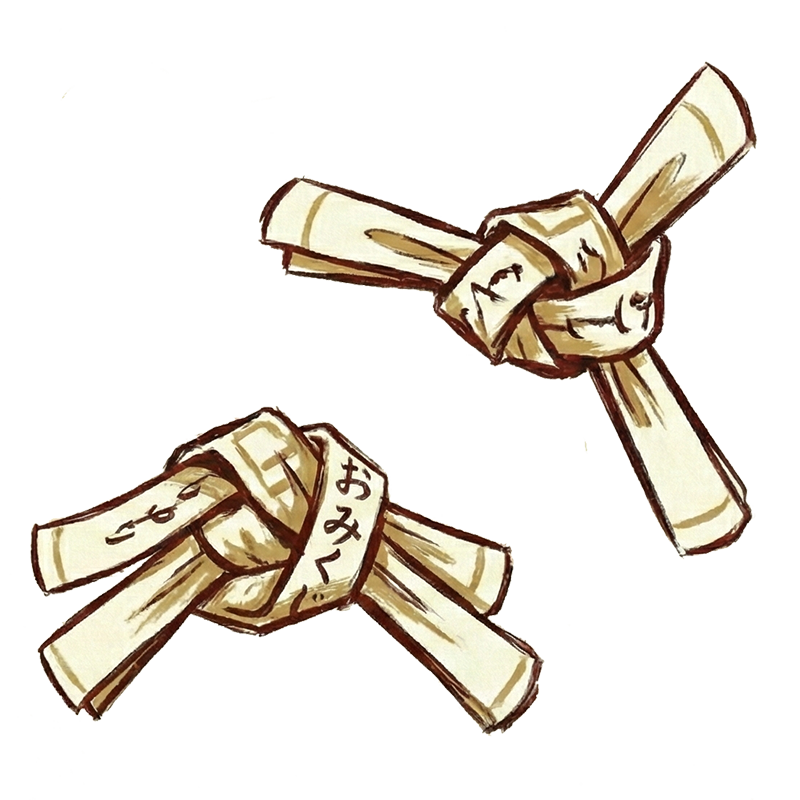
Imagine opening your omikuji only to find nothing written on it, or the text is nearly invisible. It’s natural to feel uneasy and wonder if it carries some ominous meaning. The truth is that a blank omikuji is almost always the result of a printing or manufacturing error. This article explains the specific causes of blank omikuji and the proper steps to take if you draw one.
御要旨
- The Most Common Cause of Blank Omikuji Is a Printing Error
- Understanding How Blank Omikuji Emerge from Joshidosha’s Manufacturing Process
- The Probability of Drawing a Blank Omikuji Is Extremely Low
- The Right Response to a Blank Omikuji Is to Ask for an Exchange
- Some Interpret a Blank Omikuji as Having Special Meaning
- Omikuji with Faded, Unreadable Text Can Also Be Exchanged
- If Your Water Omikuji Won’t Reveal Its Text, Check the Water Temperature and Soaking Method
- “Blank Omikuji” Reports on Social Media Follow Several Patterns
- How to Make the Most of a Blank Omikuji
- What to Do If You Realize It’s Blank After Getting Home
- In Closing
The Most Common Cause of Blank Omikuji Is a Printing Error
The most frequent reason an omikuji comes out blank is a defect during the manufacturing or printing process. It has no mystical significance and should be understood as a physical malfunction.
Approximately 70% of all omikuji distributed to shrines across Japan are produced by Joshidosha, a company based in Shunan City, Yamaguchi Prefecture. At Joshidosha, each sheet is folded by hand after printing, and during peak season before New Year, about 100 workers take turns handling the process (Source: Shunan City Official Website). With such large volumes being handled manually, it’s inevitable that a rare printing error or misfolded sheet slips through.
Specific causes of blank omikuji include:
- A paper feeding error in the printer, causing a sheet to pass through without ink transfer
- Only one side was printed during a double-sided printing process
- The printed side folded inward during the folding process, making the visible surface appear blank
- Humidity or aging caused the ink to fade until the text was nearly invisible
All of these are human or mechanical causes, and there is no mechanism built into omikuji to deliberately produce blank slips. (It is virtually impossible that a manufacturer would intentionally include blank omikuji.)
Understanding How Blank Omikuji Emerge from Joshidosha’s Manufacturing Process
To better understand how blank omikuji occur, it helps to know the full manufacturing process at Joshidosha.
Omikuji production at Joshidosha follows five major steps: typesetting, printing, cutting, folding, and boxing. The most labor-intensive step is folding, where local workers fold each omikuji by hand one at a time. During the year-end rush, tens of thousands of sheets are processed daily, creating the following risks for blank slips:
- Two sheets were fed through the printer roller simultaneously, leaving the bottom sheet without ink
- Printed and blank sides became indistinguishable during cutting and got mixed into the same bundle
- A sheet was folded with the printed side facing inward, making the opened surface blank
Since omikuji are placed into boxes in their folded state, it’s structurally difficult to verify whether each one is properly printed just by looking at the exterior. The handcrafted nature of Joshidosha’s omikuji is part of their charm, but it also means that extremely rare blank slips can occasionally make it through.
The Probability of Drawing a Blank Omikuji Is Extremely Low
While no exact statistics have been published on how often blank omikuji appear, based on the typical printing defect rate in manufacturing, it’s estimated to be roughly one in several thousand to tens of thousands.
Joshidosha’s annual production volume hasn’t been officially disclosed, but considering that approximately 60% of Japan’s roughly 80,000 shrines offer omikuji and Joshidosha supplies the majority, the annual volume is enormous. Most defective sheets are caught during the printing-to-boxing process, but it cannot be guaranteed that zero defective slips escape inspection.
In other words, drawing a blank omikuji is an extremely rare occurrence, which naturally makes it a surprising experience. (It’s not quite lottery-winning odds, but it’s far from a common event.)
The Right Response to a Blank Omikuji Is to Ask for an Exchange
If you draw a blank omikuji, the simplest and most reliable response is to explain the situation to the shrine office or amulet counter and request an exchange.
Omikuji are “granted” by the shrine, and a blank slip means the granting hasn’t properly occurred. Most shrines will happily replace it when you explain. Requesting an exchange is not disrespectful, and you will almost never be asked to pay an additional offering.
Tips for Requesting an Exchange
- Bring the blank omikuji with you (don’t throw it away)
- Tell the shrine office, “I drew an omikuji, but nothing was written on it”
- During busy periods, find an appropriate moment when staff can assist you
- Let the shrine take back the blank omikuji
Shrine staff are aware that manufacturing defects exist, so explaining politely will lead to a smooth resolution. (Redrawing is not considered “bad luck,” so feel free to request an exchange without worry.)
Some Interpret a Blank Omikuji as Having Special Meaning
Even though a printing error is the cause, some people find spiritual significance in drawing a blank omikuji. Here are some of the interpretations:
| Interpretation | Reasoning |
|---|---|
| Your fate is yours to create | Blank = nothing is decided yet. A positive message that you can shape your own fortune through your actions |
| A sign of being specially chosen | Drawing something so extremely rare is proof that you possess strong luck |
| A sign that all is well as-is | No message to deliver = you are fine just the way you are |
| A time for quiet self-reflection | Rather than relying on written words, it’s a hint to spend time facing your own heart |
These interpretations have no basis in Shinto doctrine or historical precedent. However, since the original role of omikuji is to “provide guidance for daily actions,” using a blank slip as a prompt to reflect on your own life aligns well with the spirit of omikuji.
Different Spiritual Perspectives Offer Varying Interpretations
Interpretations of blank omikuji also differ across spiritual viewpoints. Here are some representative perspectives:
The “nothingness as the highest state” view considers a blank omikuji to be even higher than Daikichi — a sort of “super Daikichi.” Nothing written = no obstacles, everything is going perfectly. This resonates with the Buddhist concept of “emptiness” (ku), and some interpret it as a message to “let go of attachments.”
The “free will” view interprets the blank as the deity intentionally choosing not to write an answer. “Your life is yours to decide. Don’t rely on omikuji — move forward with your own judgment.” This encouraging interpretation is particularly uplifting for those standing at a crossroads.
The “purification” view interprets a blank omikuji as a sign that past fortune has been reset and a new cycle is about to begin. All previous luck, both good and bad, has been wiped clean, and new fortune will be “written” from here.
None of these interpretations has official backing, but they all share one thing: “a blank omikuji should not be taken negatively.” Omikuji, like weather forecasts, are less about the result itself and more about how you act based on it. There is absolutely no need to view a blank omikuji in a negative light.
Omikuji with Faded, Unreadable Text Can Also Be Exchanged
Even if the omikuji isn’t completely blank, omikuji with faded text that can’t be read are also eligible for exchange.
Text fading can result from insufficient ink during printing or deterioration due to storage conditions. As paper products, omikuji can experience ink discoloration when stored in high humidity or direct sunlight for extended periods. Self-service omikuji boxes placed outdoors are particularly susceptible to weather damage, making faded text more likely.
Even if “the text is faint but partially readable,” if you cannot accurately understand the content, don’t hesitate to request an exchange. The purpose of omikuji is to receive the message properly, and taking home an unreadable slip defeats that purpose.
When Text on a Kept Omikuji Gradually Fades
Sometimes an omikuji is perfectly readable when drawn but gradually fades while stored at home. This is caused by aging of the paper and ink.
Omikuji are typically printed on thin washi or standard paper, and the ink is not specially designed for weather resistance. The following environments can cause text to become difficult to read within months to a year:
- Inside a wallet (body heat and moisture accelerate deterioration)
- Near windows or on a car dashboard (UV-induced fading)
- Near water sources (moisture causes ink bleeding)
If you want to preserve your omikuji long-term, keep it in a cool place away from direct sunlight, ideally tucked into a clear file or planner. (Since omikuji are meant to be “reread and applied to your actions,” maintaining readability makes practical sense.)
If Your Water Omikuji Won’t Reveal Its Text, Check the Water Temperature and Soaking Method
The increasingly popular “water omikuji” (mizu-mikuji) is a type where text appears on a blank sheet when dipped in water. These are commonly found at shrines associated with water, such as Kifune Shrine (Kyoto) and Futarasan Shrine (Tochigi). Occasionally, people report that “the text won’t appear” on these water omikuji.
Common Causes and Solutions for Text Not Appearing
| Cause | Solution |
|---|---|
| Not soaked long enough | Wait 30 seconds to 1 minute until the entire paper is thoroughly wet |
| Water temperature too cold | In winter, reactions are slower — be patient. Some shrines provide warm water |
| Only part of the paper touched the water | Lay the paper flat on the water surface to wet it evenly |
| Special ink quality deterioration | Consult the shrine office for a replacement |
Water omikuji are printed with special thermochromic or water-soluble inks, which react chemically when they contact water to reveal the text. Their manufacturing method is entirely different from standard omikuji, so the causes of blank results differ as well. If text still doesn’t appear after thorough soaking, the ink itself has likely deteriorated, and consulting the shrine office on the spot is your best bet.
“Blank Omikuji” Reports on Social Media Follow Several Patterns
Posts about drawing blank omikuji appear regularly on social media platforms like X (formerly Twitter) and Instagram. Analyzing these posts reveals three main patterns.
The most common is the “completely blank” pattern, where nothing is printed on either side. Responses from posters tend to be positive: “This is incredible,” “So rare!” Favorable replies like “That must be super Daikichi” and “proof of strong luck” are common. The second most common is the “one side blank” pattern, where the front shows the fortune ranking but the detailed back is blank. The third is the “folded the wrong way” pattern, where flipping it over reveals the printing — a simple mix-up.
Judging by social media reactions, very few people take a blank omikuji as a bad omen. Most people enjoy it as a rare experience. (It can even go viral as “content-worthy” material.)
How to Make the Most of a Blank Omikuji
Beyond exchanging it, there are other positive ways to use a blank omikuji. Here are some ways to turn this rare experience into something beneficial:
- Write your own goals or wishes on the blank paper, and carry it in your wallet or planner like a charm
- Record the date and location as your “lucky day,” since you beat odds of one in thousands to tens of thousands
- Draw a new omikuji at a different shrine (there is no taboo against drawing at different shrines)
The first option, “writing on the blank,” is especially meaningful. By writing your own intentions on paper received from a shrine, you give tangible form to the attitude that “I create my own fortune.” It’s a uniquely blank-omikuji way to enjoy the experience.
What to Do If You Realize It’s Blank After Getting Home
Sometimes you don’t notice the blank until after leaving the shrine. Some people carry the folded omikuji home without opening it on the spot, only discovering the blank when they unfold it at home.
If You Can Revisit the Same Shrine
The surest option is to bring the blank omikuji back to the same shrine. Explaining the situation at the shrine office will almost always result in an exchange. You typically won’t be asked for an additional offering when revisiting.
If Revisiting Is Difficult
If the omikuji was drawn at a distant shrine, revisiting may not be practical. In that case, consider these options:
- Keep the blank omikuji at home respectfully and return it to the shrine on your next visit
- Bring it to a nearby shrine and place it in the old talisman return box (for ritual burning)
- Embrace the blank as positive, viewing it as “I will forge my own destiny,” and keep it with you
Omikuji are sacred items granted by a shrine, so even a blank one should not be handled carelessly. If disposing, the respectful method is to purify it with salt, wrap it in white paper, and submit it for ritual burning. (Technically, discarding it as regular trash won’t bring misfortune, but treating it with care gives peace of mind.)
In Closing
If your omikuji is blank, the cause is almost certainly a manufacturing or printing defect. Producers like Joshidosha rely heavily on manual processes, and among the enormous volumes produced, an extremely rare blank can slip through. It is not a spiritual sign or an omen of bad luck, so there’s no need to worry. If you draw a blank, the best course of action is to request an exchange at the shrine office. If you discover it after returning home, simply return it on your next shrine visit.
If you’re disappointed that your omikuji was blank, why not check today’s fortune with Omikuji Sando? Omikuji Sando lets you draw your personalized fortune based on your date of birth, with 12 tiers of results, completely free every day. No risk of blanks, and you can enjoy omikuji anytime.
